








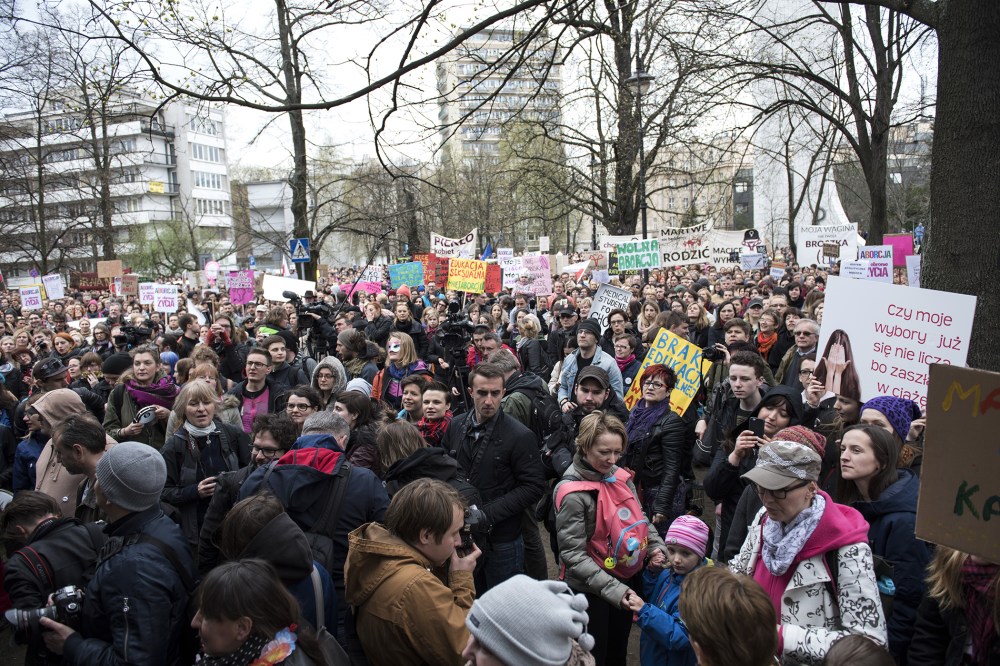
There’s one thing that both anti-abortion and abortion-rights activists agree on. A shift is underway in Europe — in politics, prosecution and protest. Battle lines are drawn for what threatens to be a nasty fight, with both sides taking cues from the U.S. In Part 3 of a series, NBC News examines the debate.
***
LONDON — Graphic pictures of aborted fetuses, prayer vigils and protesters. It’s no coincidence that the anti-abortion movement looks the same from London to Dublin to Warsaw.
It’s mostly Gregg Cunningham. The California-based activist has been farming out his imagery and strategies to like-minded groups in Europe for more than five years.
It started with the trained lawyer building a collection of thousands of photos.
“Aborted baby pictures didn’t really exist on any sort of commercial scale in the U.S. until we began to compile the archive that we use,” Cunningham explained.
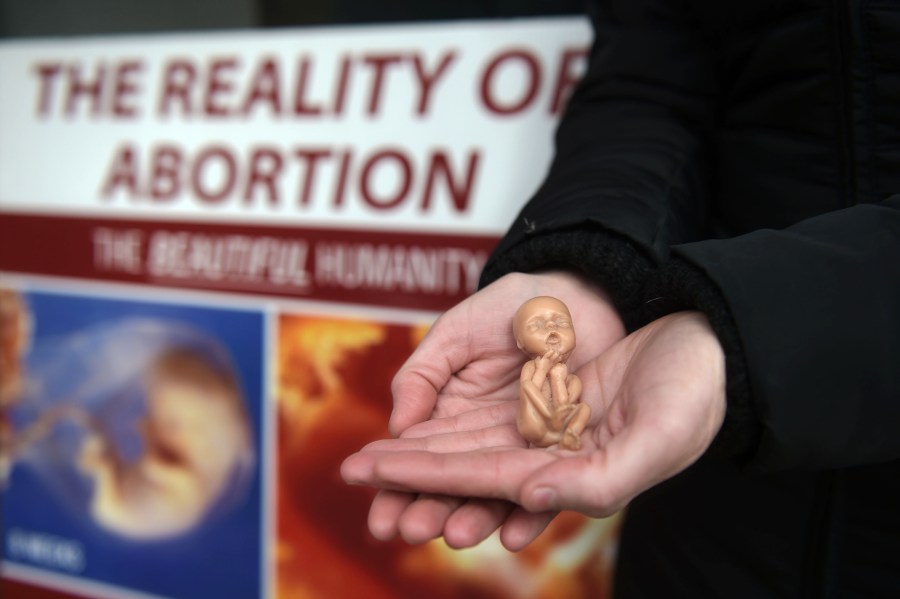
He won’t say how or where the images were shot but takes pride in their professional lighting.
“We invented the genre of aborted baby photos that were shot by commercial photographers,” Cunningham said. “We pioneered the use of that material here in the United States first.”
The Republican former two-term member of Pennsylvania’s House of Representatives regularly travels to Europe and shares his pictures — plus notes, advice and strategy.
Pro-abortion activists, providers and seekers in Finland, Sweden, Slovakia, the Czech Republic, Ireland, England and beyond have been confronted with the same photos of dismembered fetuses as American women from Austin to Buffalo.Some have had holy water thrown on them. Others are called “murderous whores” and are filmed.
RELATED: Complete coverage of Europe’s Abortion Fight
To them, the tactics employed by groups tied to the retired Air Force Reserve colonel constitute harassment. They say anti-abortion protesters outside of clinics make a difficult day even worse for women seeking terminations.
To Cunningham, though, “this is a war.” And that’s the “point” — to show something “really, really upsetting.”
Pentagon Past
Cunningham says his partnerships with like-minded campaigners were born from a “mutual affinity.” International groups troubled by abortion began to “cast about to try to find partners who had successful experience.” Some discovered his Center for Bio-Ethical Reform, which has offices in five states.
He says skills learned at the Pentagon studying “adversarial forces” — figuring out their strengths and weaknesses — helped to hone his “multi-pronged” and “synergistic” strategy.
Part one involves changing public opinion — which starts by changing minds.
“When we could illustrate the success of what we’re doing [in the U.S.] — we began to peddle it abroad,” he recounted.
In the U.K., for example, he believed it was critical to stamp out the idea that his abortion images might be offensive enough to be considered illegal.
So he specifically designed the posters with the U.K.’s Public Order Act — which governs riots, protests, harassment and the display of written material — in mind.
“We wanted to create signs that would be impossible to successfully prosecute and then use those signs to lure the Crown prosecutor into charging us,” he said. “Because we wanted to get into court and settle this idea that it was in some way problematic to display abortion pictures in public.”
That strategy worked and — in Cunningham’s words — prosecutors in England “took the bait.”
Anti-abortion activists Andrew Stephenson and Kathyrn Sloane were arrested in 2010 and 2011 — and ultimately put on trial for showing images “likely to cause harassment, alarm or distress.”
The case eventually was dismissed — which campaigners fighting against abortion rights claimed as a victory for free speech and a rebuke to their opponents. Cunningham hopes that will be a significant step in the battle to get the procedure outlawed across the U.K.
Lessons From History For Cunningham, it all comes back to history, social reform and — almost always in conversation — slavery. He is prone to cite the story of William Wilberforce, a British politician and Evangelical Christian who helped abolish the slave trade. Speeches in Parliament didn’t help Wilberforce “move public opinion one inch” on slavery, according to the Vietnam veteran. “Almost nobody in England had ever seen a slave … They didn’t have a picture in their heads of the terrible human suffering being endured by human beings who were being tortured to death so they could have sugar in their tea,” Cunningham said. RELATED: ‘Coat Hanger Rebellion’ Grips Poland That’s why Wilberforce switched tactics to using “very disturbing pictures” to illustrate slavery, according to Cunningham, who said only then did public opinion begin to shift. “That’s the history of social reform,” he added. And that’s been his strategy to end abortion since founding the Center for Bio-Ethical Reform — a strategy the 68-year-old says is no different than that of anti-war campaigners or Martin Luther King, Jr. He points out that the anti-segregation icon also saw the value in professional photographers. “It’s a long, long history of social reformers who have used shocking pictures to humanize victims of injustice whose humanity was being called into question whether it was was black people or unborn babies,” Cunningham said. And the idea that a woman has the right to decide about her own body? “Conceptually indistinguishable” from arguments made by plantation owners to justify slaves as property, he states. Historians, though, are quick to question boiling down the abolition movement’s success to shocking imagery and a change in Wilberforce’s tactics. “It’s a very, very dubious argument. That’s going much too far,” said Cambridge University’s Professor Robert Tombs, author of “The English and Their History.” Plus, Wilberforce? An abolitionist, yes, according to Tombs but “he’s not really known as a social reformer.” Cunningham says he’s open to differences of opinion or interpretation when it comes to history or science — but is insistent that his movement’s views be heard. But Wilberforce is why Cunningham bristles at accusations that the anti-abortion movement in the U.K. is being Americanized, calling it a “sort of mythical construct. “It looks American only to people who are dumb as a post about their own history,” he said. Read the rest at NBCNews.com.
Cassandra Vinograd Recommended


