








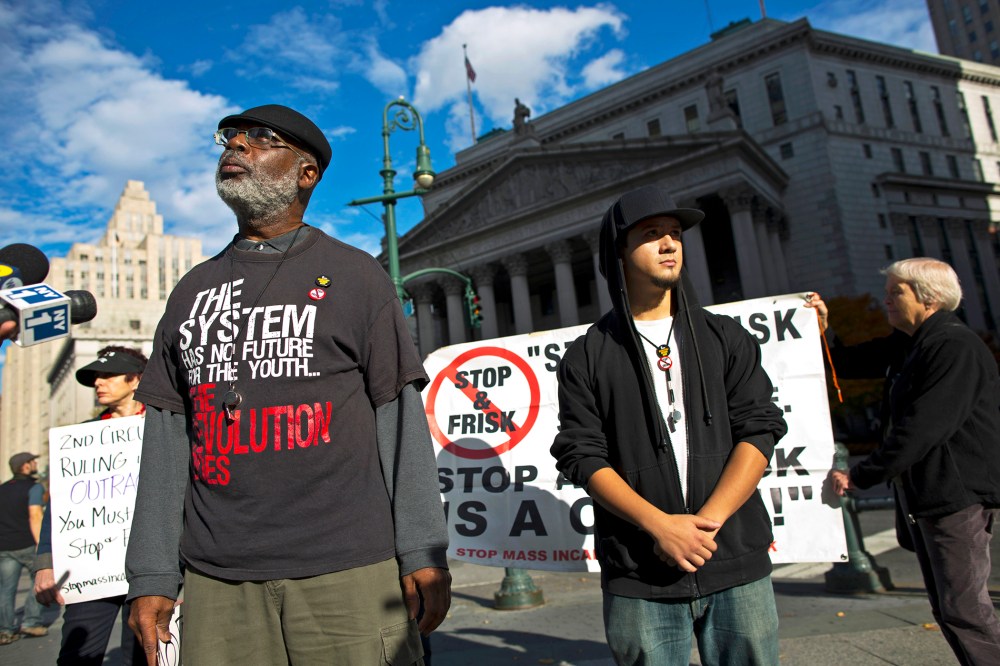
A new report released by the New York attorney general’s office on Thursday highlights just how ineffective New York City’s “stop-and-frisk” policy, which randomly targeted millions of minority residents, has been.
According to the analysis, just 1.5% of all stop-and-frisk arrests resulted in a jail or prison sentence. Just one in 50 stop-and-frisk arrests, 0.1%, led to a conviction for a violent crime or possession of a weapon. Close to half of all stop-and-frisk arrests did not result in a conviction.
The report is yet another chip at the credibility of the practice, a favored policy of outgoing Mayor Michael Bloomberg’s, in which millions of innocent minorities have been randomly stopped and sometimes frisked by the police. The new analysis is the first full accounting by the attorney general’s office of the policy’s impact on the criminal justice system in nearly 15 years.
“My office’s analysis of the city’s stop-and-frisk practices has broad implications for law enforcement, both in New York City and across the state,” said Attorney General Eric Schneiderman. “It’s our hope that this report – the first of its kind – will advance the discussion about how to fight crime without overburdening our institutions or violating equal justice under the law.”
Over the past decade more than 4 million New Yorkers have been targeted under the program. The vast majority of those stops occurred in mostly poor, mostly minority neighborhoods. Between 2004 and 2012, 4.4 million people were stopped. A weapon was found in less than 1% of the cases
A federal judge in August ruled that the NYPD violated the constitutional rights of those it targeted, overwhelmingly blacks and Latinos, saying the tactic amounted to “indirect racial profiling.”
Judge Shira Scheindlin called for a federal monitor to oversee sweeping reforms to the police department’s policy. Scheindlin blasted city leaders, including Mayor Bloomberg and top cop Raymond Kelly, writing in her decision that “the city’s highest officials have turned a blind eye to the evidence that officers are conducting stops in a racially discriminatory manner.”
But late last month an appeals court halted Scheindlin’s ruling. The court subsequently pulled the judge from all stop-and-frisk related cases, ruling that she failed to act impartially in the case by encouraging a class action lawsuit and giving media interviews following her decision. Lawyers for Scheindlin have since called her ouster from the case a “character assassination.”
Meanwhile, Mayor-elect Bill de Blasio, who campaigned vociferously against stop-and-frisk, has said he’ll implement a more responsible manner of policing. As the city’s public advocate, de Blasio’s office authored a report of its own. The report found that while minority men were the overwhelming targets of the random, largely unprovoked stops, the likelihood of a stop of an African-American uncovering a weapon was half that of white New Yorkers stopped. According to the report, the NYPD found a weapon in one out of every 49 stops of whites in the city in 2012, compared to one in every 71 stops of Latinos and one in every 93 stops of African-Americans. De Blasio’s opposition of stop-and-frisk was a hallmark of his campaign and garnered him the overwhelming support of black and Latino voters, propelling him through the Democratic primaries and on a clear path toward City Hall. The attorney general’s office report analyzed nearly 150,000 arrests between 2009 and 2012. The report concluded that the numbers of convictions of stop-and-frisk arrests were extremely low. Just one in 16 of the arrests led to a jail or prison sentence of more than 30 days. And almost a quarter of all stops, 24.7%, were dismissed before arraignment or resulted in a non-criminal charge. The report also highlighted the far reaching impacts, the collateral consequences, of stop-and-frisk arrests regardless of their outcome. Those consequences, according to the report, include threats of a possible loss of employment, housing, student loans, and immigration status. “The vast amount of data we analyzed over four years should serve as a helpful guide to municipalities and law enforcement officials around the state, where stop-and-frisk practices are used to varying degrees,” Scheiderman said in a statement upon the release of the report.
Trymaine Lee
Trymaine Lee is an NBC News correspondent. Recommended


