









The locus of attention has snapped to the Southern District of Florida this week after special counsel Jack Smith indicted former President Donald Trump in relation to his handling of classified documents. And because of the exceptional gravity of his case, Smith has become the leader of the pack of prosecutors bringing or contemplating charges against Trump. His work is vitally important in how it relates to and affects those other cases, setting the overall context of Trump’s legal troubles in four major existing or contemplated federal and state criminal cases. All have challenges — but all those challenges can be overcome.
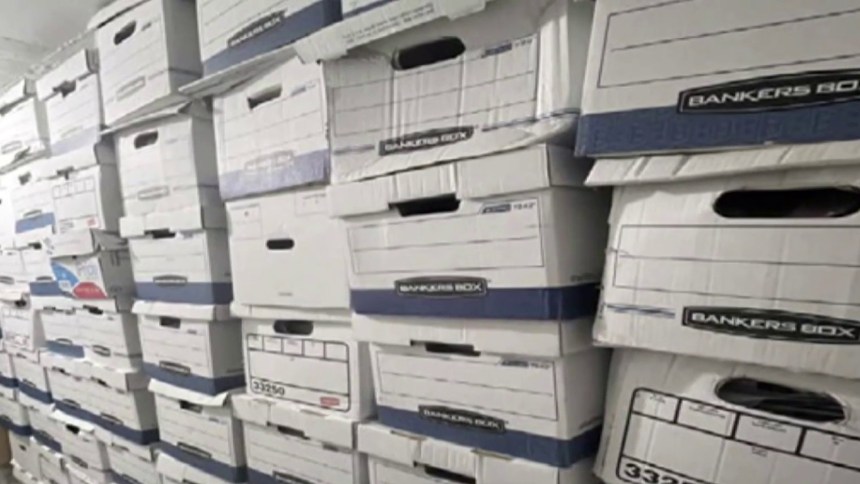
Let’s start with the Mar-a-Lago prosecution. The unsealed indictment makes a staggering case, supported by voluminous evidence. Backed by tapes, photos and other startling documentation, the government accuses Trump of retaining highly sensitive national defense information in violation of the Espionage Act and obstructing the federal government’s investigation of his post-presidency document possession.
The specter of recusal and reassignment will loom over Judge Aileen Cannon throughout these proceedings.
What about the assignment of U.S. District Judge Aileen Cannon to preside over the documents case? Last fall, Cannon was widely criticized for temporarily stopping the DOJ’s investigation in a related case and for appointing a special master to review the thousands of records seized by the FBI. A few months later, a three-judge panel from the 11th Circuit Court of Appeals, including two Trump appointees and a third who was on his shortlist for the Supreme Court, overruled and strongly criticized Cannon.
There are certainly procedural impediments Cannon can implement to significantly hobble the government’s case, such as slowing the commencement of a trial. But this case is so strong that, as long as she stays within the bounds of the law, it is unlikely she will be able to alter the ultimate outcome.
And if she strays too far, there is a strong legal case for her recusal. These issues will be raised if Cannon missteps again. Thus the specter of recusal and reassignment will loom over Cannon throughout these proceedings and if necessary will be addressed by the same 11th Circuit.
Then there is Smith’s possible prosecution of Trump for alleged 2020 election interference. The House Jan. 6 committee made a strong case for charges in its criminal referral to DOJ. Smith has been avidly pursuing them, including securing the testimony of former Vice President Mike Pence and — according to multiple reports — that of former chief of staff Mark Meadows. If that leads to an indictment as well, it will be in the venue where the majority of the wrongdoing occurred, the District of Columbia — and not before Cannon. How likely is it that Trump can dodge two powerful federal prosecutions?
Some worry that if Trump is convicted, but elected, he might try to pardon himself. For the federal cases, a presidential self-pardon is abhorrent to the Constitution and the principle that no person shall be a judge of their own case. If Trump tries that it would likely be rejected by the courts.
As for state cases against Trump — the charges brought in New York, and potentially in Georgia — neither would be subject to federal pardon, no matter who is president. New York Gov. Kathy Hochul won’t pardon Trump anytime soon. And in Georgia, Gov. Brian Kemp doesn’t even have the pardon power — that decision would be made by a bipartisan board.
If Fani Willis aims her quiver skillfully, she might strike a most dangerous blow at Trump. On top of avoiding the possibility of a pardon, both the New York case and the potential case in Georgia are also strong cases that could lead to Trump’s imprisonment. In New York, felony books and records counts are something of a specialty often brought by the Manhattan District Attorney Alvin Bragg’s office. Although at first glance this may appear to be a case only of financial fraud, it in fact carries great import for democracy — as the alleged conduct centers on Trump’s interference in the 2016 election via hush money payments that prevented the emergence of a damaging scandal that could have torpedoed his candidacy in the immediate wake of the “Access Hollywood” tapes scandal. What about the dire prediction that the case would be stalled in court? It is speeding ahead with a firm March 2024 trial date set, and Trump’s efforts to move the case to federal court have been ineffectual, bordering on frivolous. Moreover, the inclusion of tax-related charges will help the DA avoid potential issues related to federal campaign finance law pre-empting New York law and questions of state statutory interpretation. Given Trump’s lack of remorse, if he is found guilty, he could be sentenced to jail time. Finally, in Georgia, Fulton County District Attorney Fani Willis has been investigating Trump’s alleged interference in the 2020 election, and specifically the attempt to overturn his loss in Georgia. Reporting from CNN and The Washington Post indicates that she may bring a racketeering charge against Trump, using Georgia’s expansive RICO statute. This approach would allow her to allege violations of both state and federal laws encompassing multiple states, with Trump at the center of the scheme. Willis could bring charges as early as August, but she is wisely taking the time to get her case right. If she aims her quiver skillfully, she might strike a most dangerous blow at Trump. Even if an indictment is filed in August, that would still give Willis ample time to prosecute her case to trial before the 2024 election. Like in New York, in Georgia, Trump’s anticipated efforts to remove the case to federal court can be defeated, and the criminal proceedings there, too, would move ahead in state court under the applicable federal statute even while those removal issues are being litigated. Smith, Willis and Bragg, like all who practice in the criminal justice system, live with sudden ups and downs (see for example how the optimism over the strong charges by Smith was soon followed by pessimism about Cannon). The American people will now experience this roller coaster as well. There will be highs and lows for them and for all of us as the horsemen and women of Trump’s legal apocalypse barrel inexorably toward the former president. We are confident they will reach the finish line: justice and accountability.
Norman Eisen
Norman Eisen is a co-founder and board member of Democracy Defenders Action and publisher of The Contrarian. Eisen previously served as a U.S. ambassador and in senior White House and congressional staff roles. 


