








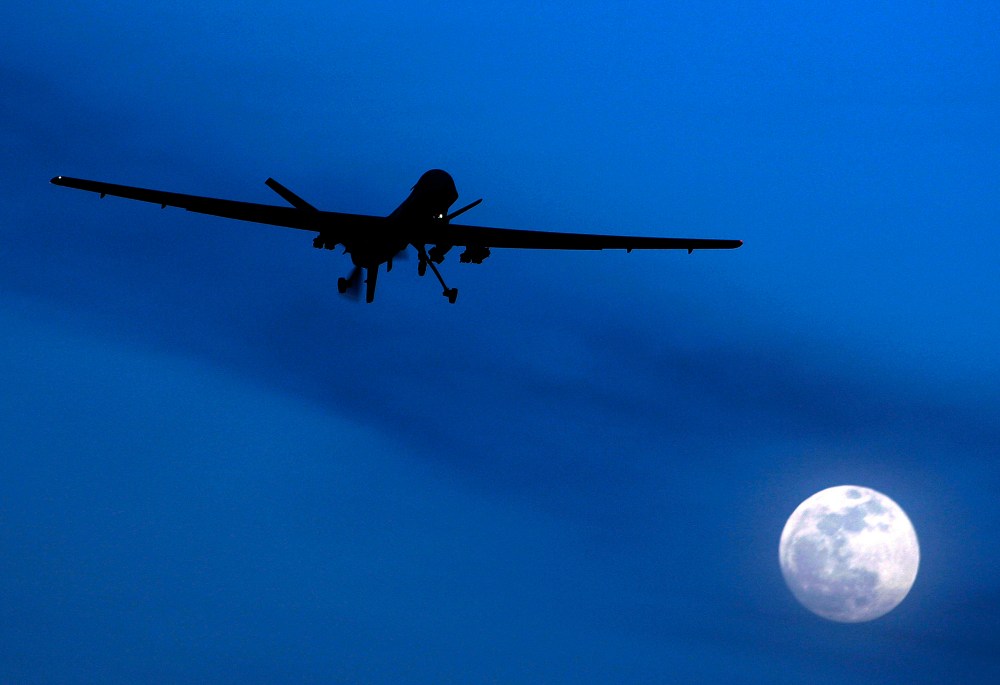
As ISIS claims responsibility for its second devastating terror attack against the West in six months, a dispute is playing out in Washington over whether the CIA should be using armed drones to kill the group’s leaders, NBC News has learned.
President Obama has ordered that the military, not the CIA, use drones to track and kill high-value ISIS terrorists in Iraq and Syria, with the CIA using its own drones for intelligence gathering.
But that arrangement has resulted in some missed opportunities to kill top ISIS operatives, U.S. officials tell NBC News.
Now, the leaders of the Senate Intelligence Committee are secretly urging Obama to reconsider and allow CIA drones to be armed.
The two senators, Republican Richard Burr of North Carolina and Democrat Dianne Feinstein of California, made the request in a classified letter to Obama, sent before the Brussels attacks.
Despite the bipartisan plea, Obama is not inclined to change what he believes is a successful high-value targeting effort against the terrorist group, U.S. officials say. The president wants to stick with his recent policy of keeping the CIA in a purely intelligence gathering role. He wants the military, rather than a civilian intelligence agency, to be the chief instrument of lethal force against terrorists.
The dispute marks the latest chapter in a long-running secret debate over the CIA’s future role in targeted killings, which have been the centerpiece of Obama’s counter-terrorism policy.
The U.S. government doesn’t officially acknowledge that the CIA kills terrorists with Hellfire missiles fired from pilotless drones, and no one interviewed for this story would speak on the record about what is a highly classified program.
While the CIA for years carried out the bulk of U.S. drone strikes against terrorists, that role now falls to the military’s Joint Special Operations Command, which is targeting ISIS leaders as part of the larger bombing campaign against the group in Iraq and Syria. The CIA supports the military by gathering intelligence, including with its own drones that are unarmed.
Burr and Feinstein sent a letter to the president after learning of occasions during which unarmed CIA drones observed militants on the kill list but were unable to do anything. The CIA passed the information on to the military, but no military drone or plane was available to carry out a strike before the drones lost sight of the targets, officials say.
Burr chairs the Senate Intelligence Committee, and Feinstein is the vice chairman. Both are regularly briefed on CIA activity.
“The feeling is, why aren’t we using every means at our disposal?” said one official familiar with the situation, who wouldn’t be named discussing a classified matter.
“I don’t see why the agency is being hamstrung the way they are in Syria,” said another government adviser familiar with the situation.
Administration officials, declining to be identified speaking about a classified program, say the CIA is enjoying great success using drones and other intelligence gathering to help the military kill ISIS leaders in Iraq and Syria. While the cooperation was not seamless in the early days of the effort, they say, the situation has improved over the last year as the U.S. has taken out dozens of senior ISIS figures.
After he took office in 2009, Obama ramped up CIA drone missile strikes in Pakistan and Yemen, viewing them as an effective tool for degrading al Qaeda. The CIA carried out hundreds of strikes, and the CIA’s technically secret role allowed the governments of those countries to deny that they were acceding to the controversial attacks on their soil. When the U.S. military does it, it can’t be so easily denied — at least in theory, although that difference is less apparent in the age of drone warfare.
But Obama and others came to believe that the focus on man hunting was siphoning resources and bandwidth from the CIA’s main mission of espionage. He also believed that as a legal and policy matter, if a terrorist needed to be killed, the military should do it.
So in 2013, he issued policy guidance stating that when possible, the military should carry out targeted strikes. And when the U.S. went to war against ISIS in Iraq and Syria in 2014, the president kept the CIA from using its fleet of armed drones, allowing the agency only to fly unarmed, intelligence gathering aircraft.
The military’s Joint Special Operations Command, which includes elements of the Navy SEALs and the Army’s Delta Force, has been working closely with the CIA to hunt down and kill senior ISIS militants. But in each case the military, not the CIA, pulls the trigger, officials say.
CIA Director John Brennan helped craft the policy as White House counter-terrorism adviser and has carried it out at the spy agency. He believes the CIA should retain a drone-strike capability for use in limited circumstances, but that the military should take the lead in targeted counter-terrorism strikes, officials say.
Burr and Feinstein sent their letter because of what officials called “missed opportunities,” during which CIA drones spotted either a senior militant or a group of ISIS fighters. The officials declined to be specific about the number or nature of the episodes because the details are classified. They said there have been occasions when CIA operators observed potential targets but the military could not get an aircraft to the locations in time to carry out a strike. Examples of that happening were briefed in secret to the intelligence committees, leading lawmakers to question whether the CIA drones shouldn’t be armed to allow a quicker response. Administration officials dispute that the missed opportunities had any real impact. In one case, the militant leaders who were missed were later killed in an air strike, officials said. Burr and Feinstein have long opposed Obama’s policy of transitioning drone killing from the CIA to the military, and have supported classified provisions in legislation to make it more difficult, officials say. Neither agreed to be interviewed. Feinstein has said publicly she believes the CIA is more discriminating and competent than the military when it comes to targeted killing. Her committee staffers review video of each CIA drone strike, while the armed services committees aren’t able to conduct such close oversight on each targeted military strike, congressional officials say. Ned Price, a spokesman for the National Security Council, would not address the Burr and Feinstein letter. “The President has been clear that we must be more transparent about both the basis of our counter-terrorism actions and the manner in which they are carried out,” he said. “As part of this commitment to transparency, the President has said that he will increasingly turn to our military to provide information to the public about our efforts.” One argument against the CIA conducting strikes in Iraq and Syria is that the effort against ISIS is considered a war, not a covert action. That means it falls under a different legal regime under both U.S. and international law than the U.S. counter-terrorism efforts in Yemen and Pakistan — distinctions that may be lost on most Americans. To address that legal issue, people familiar with Burr and Feinstein’s thinking say, armed CIA drones could come under temporary military authority when they launch Hellfire missiles at a target. In that scenario, a military commander would order the strike, and the CIA drone would carry it out. Despite the dispute over who should be firing the missiles, American officials say the effort to find and kill ISIS leaders has been one of the unqualified successes in an otherwise plodding air campaign. U.S. officials say air strikes neutralized a group of al Qaeda plotters they called the Khorasan Group, which was part of the Nusra front, Syria’s al Qaeda affiliate. And the effort has killed dozens of leaders, most recently Omar al-Shishani, a Chechen who was a key military commander. What’s not clear, however, is to what extent the manhunting effort is setting the group back strategically. ISIS still commands thousands of fighters who occupy large segments of Iraq and Syria. This article originally appeared on NBCNews.com.Recommended


Ken Dilanian is the justice and intelligence correspondent for MS NOW.