








On March 6, the Democratic National Committee will descend upon Flint, Michigan, to host the final debate before the Michigan primary. The cameras will follow them, stump speeches will be made and the Democratic presidential candidates will vie for support in states where black people make up a significant percentage of the voting bloc. But what happens when the cameras leave? What will happen to Flint — a community that has been abandoned repeatedly by government and corporate entities?
How does a water crisis happen in a state with 64,980 inland lakes and ponds, where one is never more than 6 miles from a natural water source? How does this happen in a place with an abundance of natural resources and booming manufacturing, services and high-tech industries? Really, how does this happen anywhere?
To know American history is to recognize that marginalized peoples have shouldered the burdens of progress while being denied its benefits. Certainly it’s true of Flint, Michigan.
The birthplace of General Motors, Flint was once an important hub for the United Auto Workers Union — one of the first major unions willing to organize black workers. Flint was once the land of opportunity. Today it looks like a war zone, house upon house left to fall into decay. This hasn’t been happening for two months, or even two years — this has been happening for decades.
RELATED: Geography of poverty: A journey through forgotten America
Make no mistake, this was allowed to happen because Flint is a city where the population is 56 percent black and the median household income is less than $30,000 per year. The poisoning of Flint epitomizes a larger crisis of black people being physically endangered and politically ostracized by their own government. Communities all over the country are having their access to health care, education and even water deliberately disrupted. As essential infrastructure and services are diminished, the lives and opportunities of black people atrophy under the weight of inequities.
The fight to protect our civil rights, the fight for economic justice and the fight for environmental justice are all connected. The deliberate poisoning of an entire city’s water supply stands as a litmus test for our nation. The central question of environmental justice is: Who reaps the benefits and who is carrying the burden of the adverse impact of a modern industrial society?

And it’s not just our water. We’ve long known that pollution from dirty energy sources takes a greater toll on the health of black communities. People of color breathe air with 38 percent more toxic nitrogen dioxide than white people. Forty percent of black Americans live in counties with ozone levels that violate federal air pollution standards. Sixty-eight percent of us live near a coal plant, putting us at a higher risk of heart and respiratory diseases.
Children of color are especially vulnerable. One in six black American children is diagnosed with asthma — compared to one in 10 of all children — and they often live closest to the power plants that are spewing out pollutants into the air. Asthma attacks caused by air pollution send our children to the emergency room three times as often as white Americans.
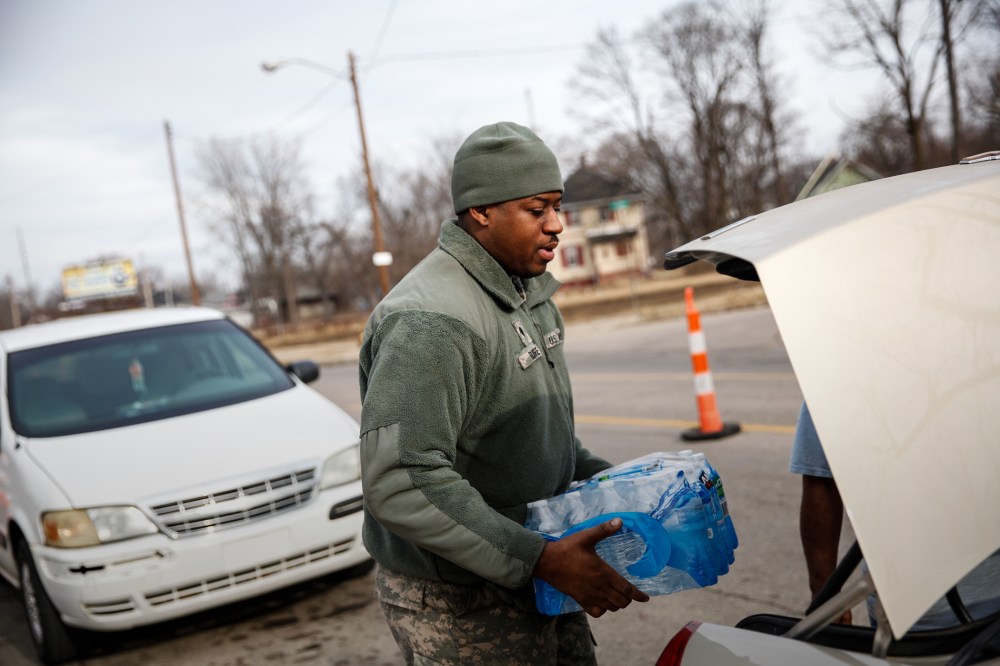
All of this threatens our economic health and livelihood. The impacts have been generations left with physical and mental disabilities as a direct result of bad decision-making. Many jobs that are affected by extreme weather — such as agriculture, construction and tourism — are held by low-income people of color. We’re often the first to lose their jobs in the event of an economic downturn due to climatic troubles. One can’t help but be reminded of this as residents in Flint work outside in sub-zero conditions, taking cases of water to areas that — according to members of the community — the Red Cross has refused to serve. Environmental justice affirms the right to political, economic, cultural and environmental self-determination of all peoples. Black Americans, more than any group save for Native Americans, have sacrificed much for a country that has rarely ever treated them as citizens. We simply must confront environmental racism and climate change with bold solutions, prioritizing communities most affected. So this week, as candidates walk through the streets of Flint looking for the best camera shot, they must do more than pay lip service to the needs of black communities. While the previous presidential debates have included brief discussions on issues important to black people, none have dedicated a significant amount on this — and none of them have spent any time of consequence discussing disproportionate climate change impacts, access to clean water and healthy food, and a just transition from fossil fuels. None of them have spent any time matching clean energy jobs to black workers who face the highest barriers to employment. None of them have spent any time discussing how to help black people deal with the impacts of environmental racism. The 2016 election is not just a referendum on the ideals and beliefs that will influence our nation’s future, it is a critical crossroads for racial justice. Just as Hillary Clinton and Bernie Sanders must be responsive to the black community on issues such as police brutality and economic inequality, they must also address the unique ways in which irresponsible environmental policy affects black communities. Rashad Robinson serves as executive director of ColorOfChange, the nation’s largest online civil rights organization.
Rashad Robinson Recommended


