








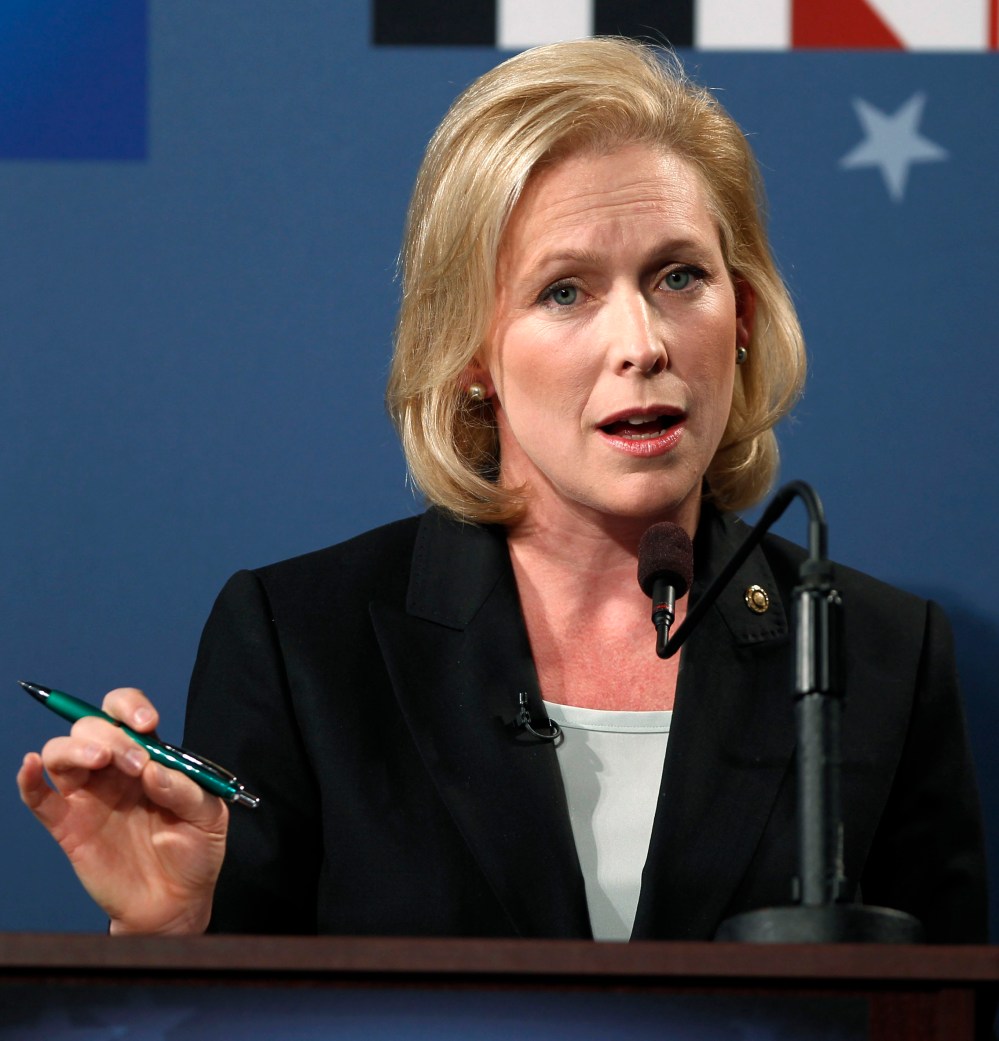
Back in 2006, Kirsten Gillibrand was just getting her feet wet in state politics. She was a moderate Democrat who campaigned as a common-sense centrist. She had to, in order to win her congressional election in the largely rural, upstate New York District-20 that had been a Republican stronghold for all but four years since 1913, and elected George W. Bush twice.
While serving her upstate constituents, on immigration and guns she sounded more like a Texas conservative than a New York liberal. She opposed efforts to extend state drivers’ licenses to illegal immigrants, and earned herself an “A” rating from the NRA, sponsoring a bill to delete background check information after 24 hours.
Then, she was appointed to Hillary Clinton’s Senate seat in 2008. On the day of her appointment, Mayor Michael Bloomberg publicly criticized her for her staunch opposition to gun control.
Suddenly, the moderate Gillibrand of 2006 needed a makeover, and quick, if she was going to make it in Bloomberg’s New York.
So a new-and-improved Gillibrand, one that was more politically palatable to New York liberal elites, was born, practically overnight.
Within two years, she had impressively turned that “A” rating from the NRA into an “F.”
She flipped on immigration, too, switching from a congresswoman who opposed all forms of amnesty to a Senator who co-sponsored the DREAM Act.
Lost in all the talk about Republicans primarying each other and running the party ever rightward is the story of Gillibrand, who is hardly the only Democrat forced to the far left of her party by an increasingly aggressive purification effort. And if gun control and immigration were important issues in 2008, purity on those issues is at the top of the minds for Democrats looking to run in 2014.
Democrats in the conservative districts won by Mitt Romney in 2012 are already fretting about President Obama’s hard tack to the left since getting re-elected.
As a Politico piece by Alex Isenstadt laid out this week, the Democratic apparatus that recruited candidates like Gillibrand and Gabby Giffords—“a tough-on-immigration, pro-gun, pro-business moderate who won an Arizona border district by casting herself as a centrist” no longer has an appetite for centrism on those issues. Now running as a moderate means running against the president. And Bloomberg. He’s already hard at work waving his purity wand around the country, last month spending $2 million waging war on a pro-gun Democrat in Illinois. Obama’s made no secret of his desire to take back the Republican-controlled House. And his re-election seems to have injected a new confidence in the administration and the Democratic party, one that is willing to ignore that many of the districts Dems want to win lean right. Will 2014 Democratic candidates cave to the pressure of Obama, Bloomberg and the Democratic apparatchik as compliantly as Gillibrand did? Or will the leftward lunge prove too perilous? Well, one thing’s certain. If “leftward ho” becomes “leftward no” in 2014, Kirsten Gillibrand will get to work on reversing her NRA rating yet again.
S.E. Cupp Recommended


