








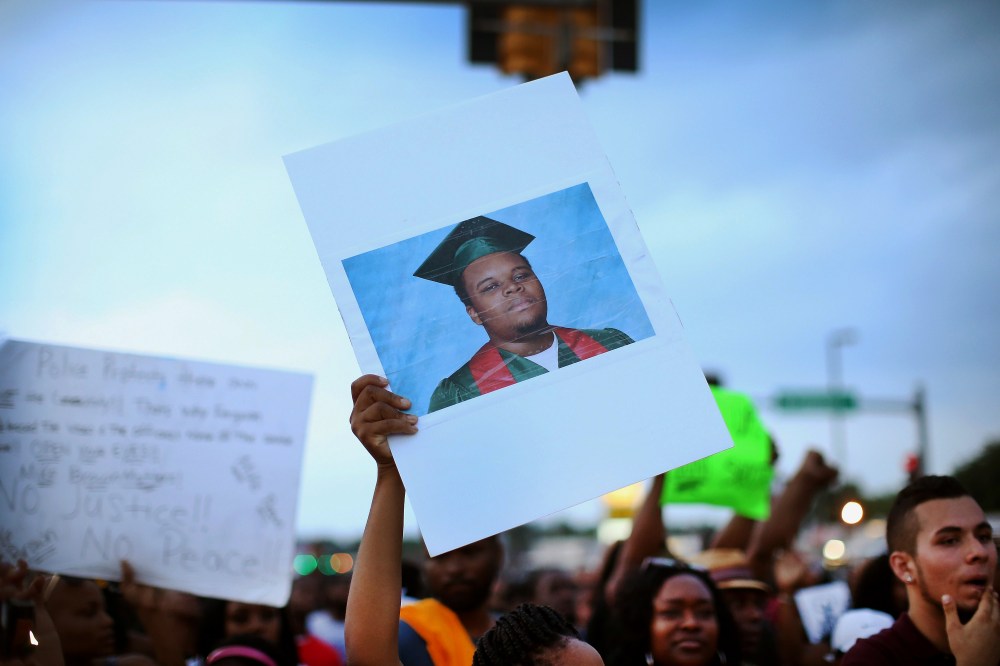
“A grand jury would indict a ham sandwich,” or so the saying goes. But whether the few selected to review the circumstances surrounding Michael Brown’s death will indict Darren Wilson — the officer who shot and killed the 18-year-old in broad daylight — depends considerably upon the county prosecutor.
Embattled St. Louis County Prosecuting Attorney Robert McCulloch presented preliminary evidence Wednesday to a grand jury for the investigation into the killing of Michael Brown, the unarmed, black teenager from Ferguson, Missouri whose shooting death at the hands of Wilson, a white police officer, has sparked nearly two weeks of protests. And while the empaneled citizens will be the ones to decide whether to indict Wilson, the evidence they see is entirely up to McCulloch, a man who has been called on to recuse himself from the case due to widespread mistrust in his ability to conduct an impartial investigation.
McCulloch, for his part, intends to continue leading the probe.
The grand jury reviewing Brown’s case — one of three selected to sit in the county each year — began in May and is scheduled to sit every Wednesday until September 10, according to The St. Louis Post-Dispatch, which reports that three of the jury’s 12 members are black. Should the Brown investigation require more time, as the prosecutor’s office has indicated it might, the current grand jury will continue past its mid-September end-date, without adding any additional cases to its roster; that is, the jurors’ sole focus will be the Brown incident, and no special grand jury will be assigned to the investigation.
Unlike criminal trials, grand jury proceedings afford no opportunity for a defense, and are highly permissive in terms of the evidence prosecutors are allowed to present. Hearsay evidence, for example, is admissible to a grand jury where it is generally forbidden in criminal trials. No judge presides over a grand jury hearing.
The St. Louis County Prosecutor’s Office told NBC News on Thursday that no incident report, narrative, or details from the investigation will be released to the public while there is a grand jury empaneled to review the incident.
Once all evidence has been presented, the grand jury assigned to Brown’s case will vote either “true bill” or “no true bill,” where nine votes of “true bill” would result in an indictment. If, however, the grand jury votes “no true bill,” Wilson would not be charged. Should the grand jury elect not to indict Wilson, the prosecutor’s office reserves the right to re-open the case if and when new or additional information is presented.
While the grand jury deliberates, no one but the empaneled members may be present.
McCulloch released a statement Tuesday saying Wilson had been interviewed by investigators and would be offered the opportunity to testify before the county grand jury. It is highly unusual, though, for subjects of investigations to testify before grand juries as their attorneys are not allowed to be present. Should Wilson be indicted, an arrest warrant would be issued in his name. Wilson would be processed by the prosecutor’s office where a bond hearing would take place, a trial docket would be opened, bail would be set, and Wilson would, in all likelihood, be released pending trial. But make no mistake, prosecuting cops is complicated business. “In New York and everywhere else,” reporters Matt Sledge and Saki Knafo wrote in an article for The Huffington Post, “prosecutors must closely collaborate with the police to build cases against criminals. If and when they bring charges against the cops, they risk poisoning a relationship with an indispensable partner.” The St. Louis County Prosecutor’s Office, meanwhile, stressed to NBC News on Thursday that it is cooperating with the concurrent federal investigation led by Attorney General Eric Holder, who visited Ferguson on Wednesday, and sharing information openly with federal investigators.
Rachel Kleinman Recommended


