








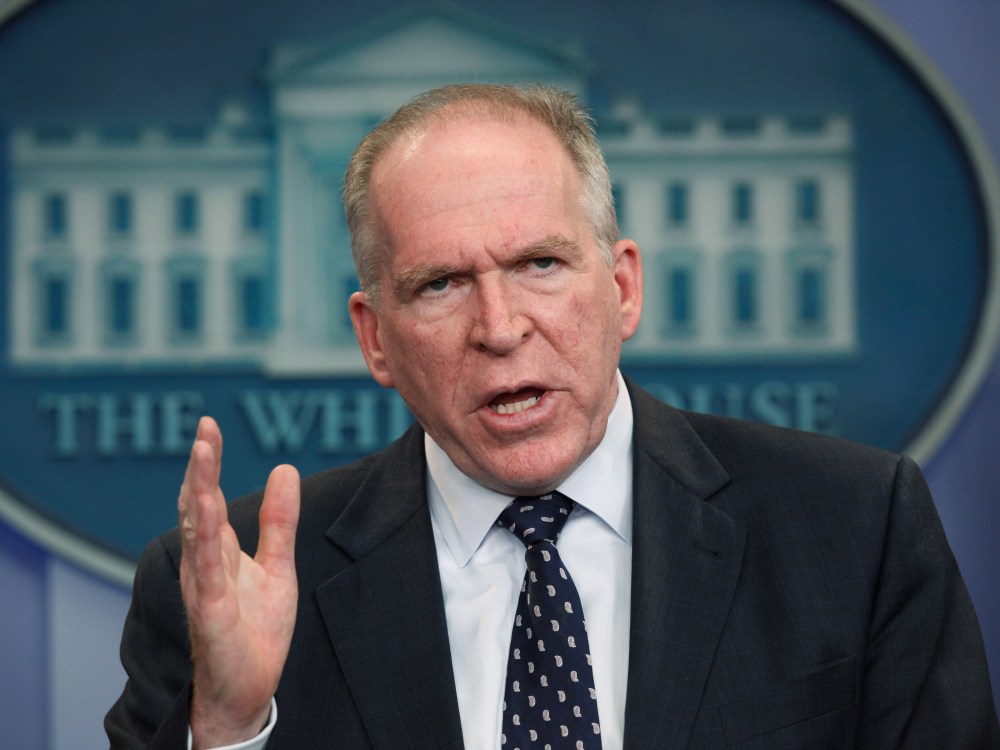
On Thursday, John Brennan will face a day-long Senate hearing on his nomination to become the next head of the Central Intelligence Agency.
Unlike Defense Secretary nominee Chuck Hagel, Brennan didn’t spend the weeks leading up to the hearing trying to placate resistant senators and it’s unlikely he’ll have to apologize for decade-old, insensitive remarks. Instead, he’ll be fielding questions on two controversial, top secret programs, giving the Senate a rare opportunity to exercise authority over a man who has historically withheld more than he’s divulged. At an advance meetings with senators, he was characteristically tight-lipped and senators reportedly left still skeptical.
The first crucial topic is the CIA’s rendition and interrogation program that many civil-liberties advocates say amounts to kidnapping and terror. Brennan has criticized the program and said that he protested the use of “enhanced interrogation techniques.” But a recent Associated Press story couldn’t find anyone to corroborate Brennan’s claims that he’d protested the use of torture during the Bush administration.
The second is the drone program, which Brennan designed, expanded, and implemented all over the Middle East. It’s Brennan who personally designed the “kill lists” with the collaboration of the president, and Brennan who has publicly maintained the legality of the secretive program over the years. The 16-page Justice Department memo outlining the government’s legal reasoning in using drones to attack and kill Americans says the government can legally kill U.S. citizens deemed a threat, even without evidence of an “imminent” attack. (The report published by NBC News late Monday is not the official memo, but is instead a “white paper” outlining the general, legal reasoning.)
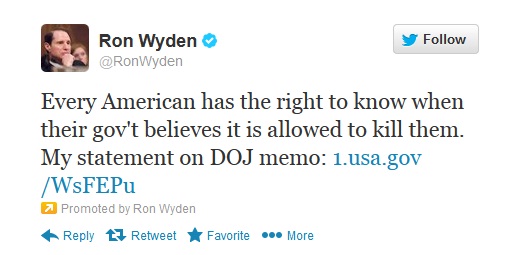
On Monday, a group of 11 senators wrote a letter to the president, asking for “any and all legal opinions” that describe the legality of drones to “deliberately kill American citizens.” Several of the letters signers are on the Intelligence Committee that will interview Brennan on Thursday. The senators wrote: “The executive branch’s cooperation on this matter will help avoid an unnecessary confrontation that could affect the Senate’s consideration of nominees for national security positions.” Late Wednesday, the president promised to release all the memos in hopes of placating the senators, particularly Sen. Ron Wyden, D-Ore., who has been particularly vocal in his opposition.
Speaking on Morning Joe, Wyden reaffirmed his skepticism and his desire for the Senate to exercise more oversight.
“Without transparency and without accountability we can’t strike the right balance between security and liberty,” he said from the Russell Rotunda. “Every American has the right to know when their government believes it’s allowed to kill them. I don’t think that, as one person said, that is too much to ask. And this idea that security and libery are mutually exclusive is something I reject.” Republican Senator Susan Collins of Maine complained on Fox News that the Obama White House has a double standard about transparency. “It was the Obama administration who released all these memos from the Office of Legal Counsel about the Bush administration treatment of detainees, so why the different standard [about the drone program]?” Senate sources confirmed to msnbc.com that drones would be a source of discussion at Brennan’s hearing, but despite the controversy engendered by the details in the report, sources say the Senate will be more interested in Brennan’s involvement in rendition and enhanced interrogation. It’s an issue the Senate Intelligence Committee has been curious about for awhile. The committee recently released a 6,000-page report on the interrogation program, issuing recommendations to keep it a thing of the past. (At an advance meeting with senators, Brennan noted he hadn’t read the report but promised to review it.)
Jane Timm Recommended


