








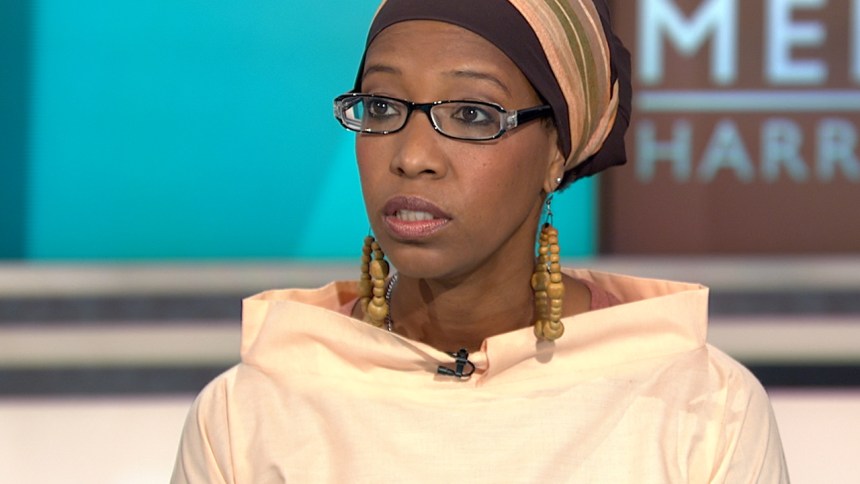
There are an overwhelming number of reports that hundreds of schools across the country are scheduled to be shut down. Host Melissa Harris-Perry discussed with her panel on Sunday the type of schools that are being targeted, and if race and socioeconomic considerations are factors in these decisions.
“This is a part of a national epidemic,” said Zakiyah Ansari of the Alliance for Quality Education. Ansari is a part of the Journey for Justice movement, in which supporters from 18 major cities across the country are set to be in Washington, D.C. on Tuesday to protest current education policies. The claim is that the Department of Education is responsible for “discriminatory closings of public schools,” targeting schools in low-income areas that teach children of color.
Sarah Garland, author of Divided We Fail, agreed with Ansari and added “for most people their high school is part of who they are and who the community is.” Garland spoke about schools being more than just a place for education in these areas. She explained that one criterion is used across the nation to evaluate schools, and that they are being shut down solely on this exam-based benchmark. “School is not just about getting high scores on tests.”
Worried about the future of the displaced students, NBC Latino contributor Victoria DeFrancesco Soto explained how some are suggesting technology as a viable replacement for each location. She mentioned that online classes are being devised in many places as an alternative to classroom teaching.
“The issue with going online is you need internet, you need a fast computer, [and] you need a parent or a supervisor who is there to help you,” DeFrancesco Soto said.
She explained her discomfort with the suggestion of online education as an option, noting that many of the children in the impacted areas may lack the resources needed to pursue that path.
Garland explained that in the past, there were different reasons surrounding shutting down schools in minority neighborhoods. To prevent “white flight,” districts would shut down schools in black neighborhoods and force the minority children to commute to the white areas. The adverse effect of desegregation was not felt until black teachers were losing their jobs en masse. In addition, separate programs within the schools were created which catered only to white students, leaving minority students with an inferior education. Harris-Perry spoke on the parallel between the issues during desegregation and the school closings occurring today. She noted that in both cases there was an obvious pursuit of positive goals, but also the failure to account for negative repercussions associated with achieving them. Ansari is hopeful about the impact her movement in D.C. will have on finding a solution, but she still believes a coast to coast effort will have the most influence. She said, “for sustainable change, the community must be engaged.” See below a video featuring the second half of our conversation.
Faiven Feshazion Recommended


