








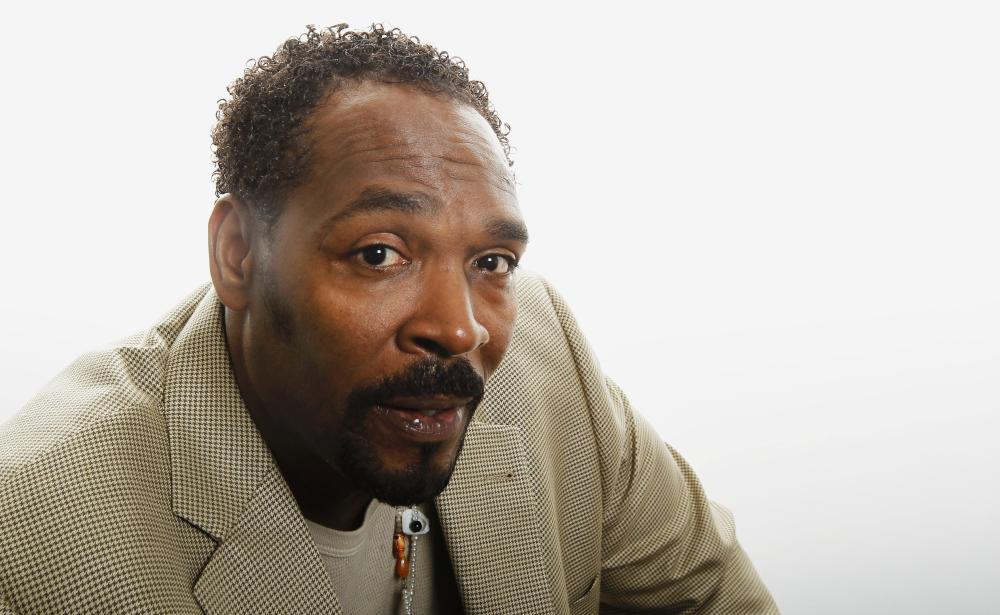
I had about two hours between the time I’d learned that Rodney King had been found dead in his pool — shortly before Melissa announced it as breaking news on Sunday’s show — and when I had to leave 30 Rock to cover the silent march protesting the New York City Police Department’s (in)famous stop-and-frisk policy. (If you’re unfamiliar with the policy, start with this, watch this, then read these. As for why they marched to Mayor Mike Bloomberg’s residence, this could be why.)
The juxtaposition of King’s death and the march seemed both portentous, and unfortunate. Most of all, I felt a sense of repetition.
The construction of Rodney King in the public sphere was, more than anything, of a catalyst. That seems the most appropriate designation for a man whose violent assault at the hands of a different set of police officers brought renewed national attention to (and displaying what everyone thought was unmistakable video evidence of) police brutality, racially motivated or otherwise. Rodney King was a catalyst 13 months later when the men who had almost killed him were not only set free, but declared “not guilty.” So, then, did thousands of L.A. residents declare their anger, visiting upon their own city the deadliest riots in the city’s history.
I was 16 years old on April 29, 1992, and that day echoed in my mind as I headed uptown to cover the march. I wondered just how much has really changed as I made my way through the hustle and bustle on 110th Street — the border between Manhattan’s front lawn and Harlem — which preceded the march. But right about 3:00pm, the chatter turned to shushing those who dared still speak. Watching the marchers and photographing all the way, I and two friends also covering it were struck by the power of the silence — especially given how a few rabble-rousers had helped to derail the Trayvon Martin march from Manhattan’s Union Square three months ago.
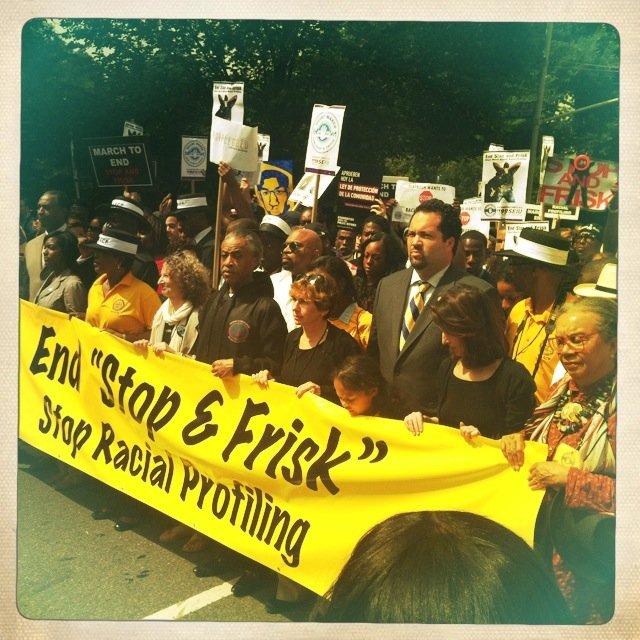
The silence of the thousands of people following our own Al Sharpton, Nation editor/publisher Katrina vanden Heuvel, and our guest earlier that morning, NAACP president and CEO Ben Jealous, was hardly a new tactic; Melissa noted in her introduction to her interview with Jealous that it goes all the way back to the early 1900s, and that’s just with the NAACP. But even noting that underscores, again, the theme of repetition.
Jealous noted on our show that the NYPD is on pace to break last year’s record of 685,724 stop-and-frisk stops, 87% of which involved black or Hispanic men, women, boys, and girls. I’d like to think I can still consider myself a young black man, and according to the New York Civil Liberties Union, there were more stops involving us in New York City last year than those of us who live in New York City. By a good 9,000 and change. This is why I saw poignancy in Sunday’s silent protest, for what else is there left to say? How much more can we as people of color shout, scream in anger, holler if we’re not being heard? If making demands in plain English doesn’t help, then perhaps the only language to be understood is action Twenty years ago, those actions took the form of violent riots; Sunday, they took the form of marching feet, signs held aloft with the images of Amadou Diallo, Sean Bell, and Trayvon Martin. Rodney King nearly became the subject of one of those signs, but he survived. His battle was one which African Americans had fought many times before outside of the glare of the cameras — and yet, despite the presence of a camera, had to fight again. The cameras, in a sense, later turned on him, repeating another theme of cultural strife in this country: subjecting those symbols of those of us who must suffer with its negative effects daily to the media microscope, chipping away at dignity all the while. There’s a reason why you’re seeing a lot of “flawed” and “complicated” in headlines about King’s death, as if having been an addict somehow validated him being beaten to within an inch of his life by L.A.’s Finest. (Aren’t we all flawed and complicated?) Perhaps the most egregious example is progress has begun, but the struggle continues. Perhaps King lived as long as he could as a modern, and unwilling avatar for racial justice, and whatever purpose he was here to serve was at an end. It isn’t cynical to not that 20 years after his name became a rallying cry, it isn’t all that surprising that certain Americans still have to demand to be regarded as equal citizens, or even human beings. What’s humbling is to consider how those same folks will likely have to do the same in another 20 years (and much longer after that), and whether they’ll be silent or screaming.
Jamil Smith Recommended


