








By any fair measure, reports on former White House National Security Advisor John Bolton’s book have jolted Donald Trump’s impeachment trial in ways that were difficult to predict as recently as a few days ago.
At the heart of the president’s defense is that he did not connect military aid to a vulnerable ally and investigations into his domestic enemies. Bolton, however, has written a book that says Trump personally told him that he’d withhold military assistance until Ukraine agreed to help go after the Biden family. Or put another way, a prominent far-right Republican is a first-hand witness who can discredit Team Trump’s principal defense.
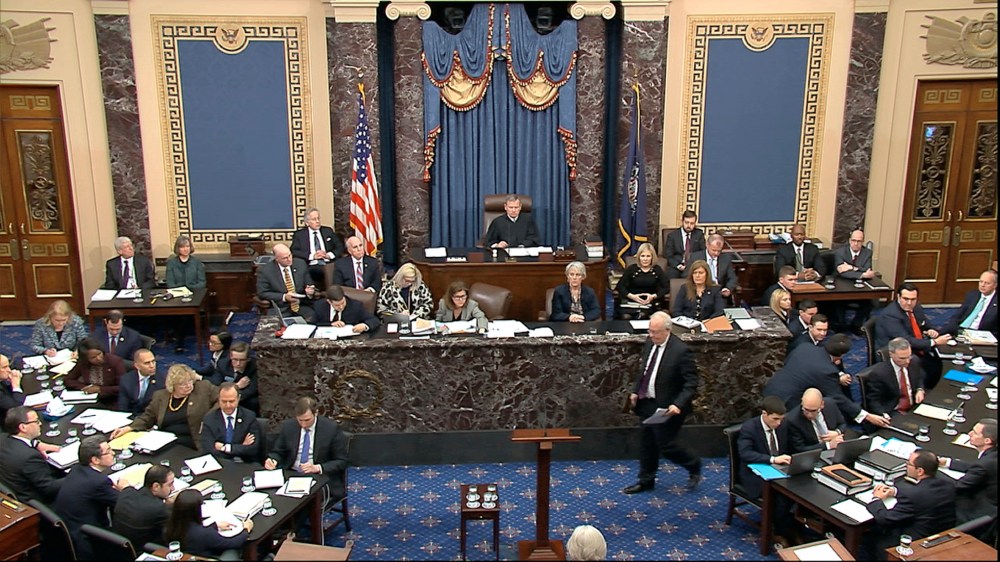
It was against this backdrop that the president’s defense attorneys spent their first full day on the Senate floor, making oral arguments during the impeachment trial. By and large, Trump’s lawyers ignored the subject that had jolted the political world, though there was one notable exception. NBC News reported:
[Alan] Dershowitz, a frequent defender of the president on cable news, argued Monday night that even if Bolton’s allegations against Trump are true, they wouldn’t rise to the level of impeachment.
“If a president, any president, were to have done what the Times reported about the content of the Bolton manuscript, that would not constitute an impeachable offense. Let me repeat: nothing in the Bolton revelations, even if true, would rise to the level of an abuse of power or an impeachable offense,” Dershowitz said on the Senate floor.
This comes on the heels of Dershowitz arguing in a recent television interview that presidential abuses of power cannot be the basis for impeachments, and presidents caught abusing their power should face no congressional consequences.
In a way, reaching this point was probably inevitable. The initial defense from Trump and his allies was that the president did not do what he was accused of doing. But as the mountain of uncontested documentary evidence grew, and the facts pointed in an incriminating direction, the original line proved untenable. It had to be replaced with a defense that accommodated the truth.
Which, naturally, led to the “even if true” defense — a line that effectively says that even if Trump is guilty of what he’s been accused of, it simply doesn’t matter.
The Washington Post‘s Greg Sargent had a good piece along these lines, riffing on an argument he heard from one of Trump’s Fox News allies: “It has long been obvious that Republicans would ultimately converge on this final defense of President Trump: Even if he did everything he has been accused of doing, and perhaps a lot more that we don’t know about, it’s absolutely fine!” Greg wrote this 11 days ago. It looks like he was onto something. The larger question, of course, is whether Senate Republicans are prepared to embrace this tack with the same enthusiasm as Dershowitz. For the most part, GOP senators spent yesterday expressing skepticism about Bolton and his perspective, suggesting they didn’t much care about his ability to shred a foundational White House defense. How long until they decide that Trump is innocent even if he’s guilty?
Steve Benen is a producer for "The Rachel Maddow Show," the editor of MaddowBlog and an MS NOW political contributor. He's also the bestselling author of "Ministry of Truth: Democracy, Reality, and the Republicans' War on the Recent Past." Recommended


