President Obama’s top spokesman on Wednesday said the botched execution in Oklahoma “fell short” of humane standards. It was the latest volley in a deluge of criticism for the state’s execution procedure and its Republican governor, Mary Fallin, who promised a thorough investigation while defending the state’s handling of the matter.
Clayton Lockett and Charles Warner were scheduled to be executed two hours apart from one another on Tuesday at the state penitentiary in McAlester, Oklahoma. Lockett, the first to die, suffered a heart attack after officials injected him with a lethal drug.
%22At%20the%20end%20of%20the%20day%2C%20how%20we%20punish%20says%20as%20much%20about%20us%20as%20about%20those%20we%20punish.%22′
As the drug was being administered, Lockett reportedly shook uncontrollably and gritted his teeth, even licking his lips, before the eventual failure of his vein, according to reporters from The Associated Press who were present at the prison for the execution. He remained unconscious and was pronounced dead in the chamber 45 minutes after personnel administered the drug, according to the governor’s office.
Fallin subsequently ordered the Department of Corrections postpone Warner’s execution until May 13 in order to investigate what happened. Fallin on Wednesday said she will extend the stay for execution if the review has not been completed by that date. She expects the review process to be deliberate and thorough.
“I believe the legal process worked. I believe the death penalty is an appropriate response and punishment to those who commit heinous crimes against their fellow men and women. However, I also believe the state needs to be certain of its protocols and procedures,” Fallin said during a press briefing on Wednesday.
President Obama believes there are some crimes so heinous that the death penalty is warranted, White House Press Secretary Jay Carney said Wednesday.
“But it’s also the case that we have a fundamental standard in this country that even when the death penalty is justified, it must be carried out humanely. And I think everyone would recognize that this case fell short of that standard,” he said.
A group of ex-corrections department officials released a joint statement Wednesday calling for an independent investigation.
“We cannot know how last night’s events happened without a full independent inquiry by a credible, outside third party whose findings should be made public,” the former officials said in a statement released by The Constitution Project, an advocacy group focused on criminal justice. “And no further executions should be carried out in Oklahoma until Mr. Lockett’s death is fully investigated and all the facts are known.”
Warner’s lawyer, Madeline Cohen, has requested an autopsy by an independent pathologist and disclosure from the state about the purity, efficacy, and source of the drug administered.
“Without question, we must get complete answers about what went wrong,” Cohen said in a statement on Tuesday. “Until much more is known about tonight’s failed experiment of an execution, no execution can be permitted in Oklahoma.”
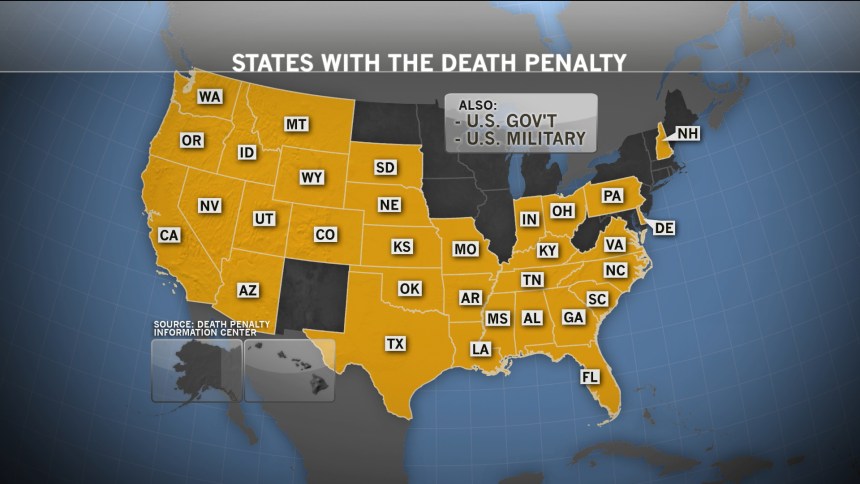
Officials in Oklahoma and the 31 other states that use the death penalty have scrambled recently to find new suppliers of lethal injection drugs after several pharmaceutical companies stopped carrying the medication because of ethical concerns. In some cases, officials have executed prisoners hastily with drugs — often obtained in secrecy — never before used for the indicated purpose.
Officials used a three-drug cocktail, never used before in Oklahoma, to first cause unconsciousness, then stop respiration, and ultimately end the beating of the heart. But the first drug apparently wasn’t administered correctly, which subsequently caused the other two to falter.
“To restore public confidence in our criminal justice system, and to ensure that the events of last evening are never again repeated, states should suspend lethal injections unless effective and transparent standards are in place to protect the constitutional rights of convicted prisoners,” said Mark White, former Texas governor and co-chair of The Constitution Project’s Death Penalty Committee. He oversaw 19 executions during his term from 1983 to 1987.
Lawyers for both convicted prisoners previously filed a lawsuit demanding the state reveal details on the specific drugs they planned to use. The action delayed their deaths as the Oklahoma Supreme Court earlier this month halted their executions until this week. Fallin intervened, issuing a stay of execution that resulted in scheduling both men to die on the same day this week.
“What happened in Oklahoma last night is a particularly vivid illustration of the unreliability of lethal injection,” Austin Sarat, author of “Gruesome Spectacles: Botched Executions and America’s Death Penalty,” told msnbc. “Last night is an indication of what can happen in a situation in which states like Oklahoma are so wedded to capital punishment that they are willing to use previously untested drug combinations.”
Lockett was found guilty of the 1999 murder of a 19-year-old woman who was raped, shot, and buried alive. Warner received a death penalty sentence for raping and killing his girlfriend’s 11-month-old baby daughter in 1997.
The 8th Amendment of the U.S. Constitution protects Americans from cruel and unusual punishments, including torture. The standard remains that the death penalty is constitutional if it imposes on individuals no more pain than is necessary.
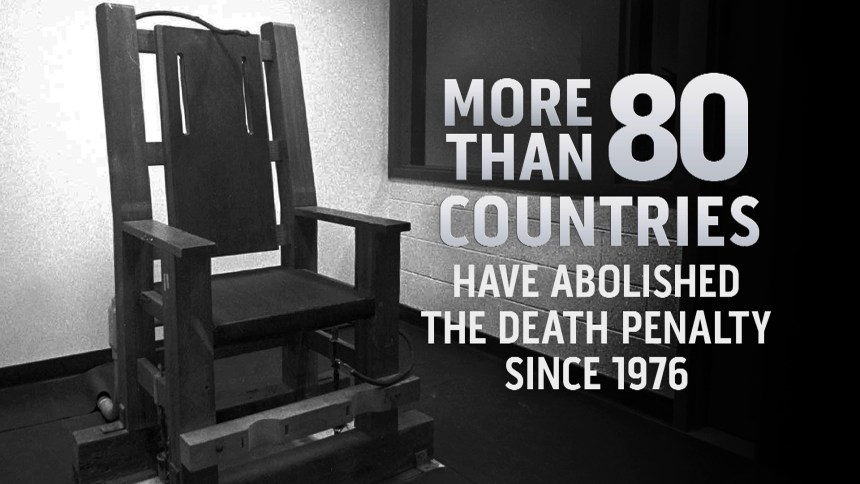
More than two-thirds — or 141 countries — have abolished the death penalty, according to Amnesty International. Domestically, 18 states currently don’t practice capital punishment. Annual death sentences have dropped significantly since 2000, when about 150 executions were administered. There were 39 executions in 2013, a 10% decline from 2012 when there were 43 deaths from lethal injections.
The incident this week in Oklahoma “should really make the American people across this nation ask: ‘What does it mean to have the death penalty? What does it mean to allow states to sanction an individual’s killing?’” Thenjiwe McHarris, senior campaigner for Amnesty International USA, told msnbc. “It should not just alarm the American public, but it is time for people across this nation to recognize that the death penalty is not just cruel, it is inhumane and it needs to end in this country permanently,” she said. “The death penalty is not about justice, it is about politics. It’s time for the governor not just to make a statement, but to make sure no more executions happen in the state of Oklahoma.” VIDEO: Controversial execution botched in Oklahoma Lethal injections are the last frontier in the technologies of the death penalty, said Sarat, who is also a professor of jurisprudence at Amherst College in Amherst, Massachusetts. Methods of capital punishment transitioned from hanging to electrocution to lethal gas before implementation of the current lethal injection practice. Officials believed each new use would produce humane execution, Sarat said. %22The%20death%20penalty%20is%20not%20about%20justice%2C%20it%20is%20about%20politics.%22′ Oklahoma lawmakers in 1977 enacted the state’s current death penalty law, which states that executions must be carried out by lethal injection. Previously, the original law in the state allowed officials to perform executions by electrocution, which was later ruled unconstitutional by the U.S. Supreme Court. Oklahoma officials have executed 191 men and three women between 1915 and 2014, according to the Oklahoma Department of Corrections. Lockett is the third executed inmate in Oklahoma so far this year. Three percent of executions were botched throughout the 20th century, Sarat said. Since the introduction of lethal injection in 1977, however, about 7% resulted in mishandling. In January, Dennis McGuire was put to death in Ohio using a combination of intravenous drugs that had not been used previously in a lethal injection execution. The killing took nearly 25 minutes, marked by 10 minutes of the inmate gasping for air and struggling to breathe. “This is not an isolated incident in Oklahoma. This is something we’re seeing across the nation. The claim that lethal injection is a humane way to take someone’s life makes that claim not only false, it makes that claim ridiculous,” McHarris said. Americans’ support for the death penalty as punishment for murder has remained static in the low 60-percentile since 2010, according to a Gallup poll published last January. The high point occurred in 1994 when 80% of residents favored execution. Additionally, the majority of adults in all party groups said they agreed with the death penalty, including 80% of Republicans and 51% of Democrats. “The challenge now is to see that the problem of botched executions is not a problem of, ‘Oh, just an unfortunate accident.’ The lesson in history is that there is no technological magic bullet that will guarantee that we can execute in a way that is humane and comports with the dignity of those who we are trying to punish,” Sarat said. “At the end of the day,” he added, “how we punish says as much about us as about those we punish.”
Michele Richinick Recommended