








You knew it when you smelled it.
That overpowering musky cologne would hit your nasal cavities first, the bottled-up scent of the popular guy you had a secret crush on. And then you’d hear it: techno club beats, blasting so loud you could feel the bass reverberate in your chest. And finally, you’d see it: Two college-age shirtless white guys, all visible abs and effortlessly swoopy hair, flanking either side of the entrance.
Just walking by an Abercrombie & Fitch, the generically whitebred, preppy mall chain store of millennial nightmares, was an experience of sensory overload.
In the late 1990s and early 2000s, just walking by an Abercrombie & Fitch, the generically white-bread, preppy chain store of millennial nightmares, was an experience in sensory overload. Twenty years later, the memory is still seared into my brain, right alongside the Sbarro pizza my friends and I would eat at the mall food court after a long Saturday afternoon of shopping and chilling.
The exclusionary nature of Abercrombie was always strongly implied, but harder to grasp clearly. Especially when you were, like me, in middle school and high school — arguably the years when many kids want nothing more than to effortlessly blend in — during the brand’s cultural zenith. But a new Netflix documentary, “White Hot: The Rise and Fall of Abercrombie & Fitch,” describes explicitly what many of the young people buying up A&F’s generic polo shirts and low-rise denim pants knew implicitly: The clothes came secondary to the vibe. Because what Abercrombie was selling in its heyday was a culture — the cool crowd. And “cool” had guardrails. It was white. It was thin. It was affluent. It had highly visible abs. It was wearing a graphic tee with a moose head printed on it.
“White Hot,” directed by Alison Klayman, traces the way in which Abercrombie’s clear-eyed exclusionary branding facilitated both its precipitous rise and its ultimate recession from mainstream relevance. One former employee described the company’s hiring practices, cost and imagery as representative of “the worst parts of American history.”
Abercrombie & Fitch as millennials know it really began with Les Wexner. (Yes, the same Les Wexner who reportedly helped facilitate Jeffrey Epstein’s rise). Wexner, founder of L Brands, acquired Abercrombie & Fitch, then a failing elite sportsmen brand that catered to the likes of Teddy Roosevelt, in 1988. He soon realized that revamping the company for its historical consumer — middle-aged athletic white dudes — wasn’t going to work. So in 1992, he brought in Mike Jeffries as CEO.
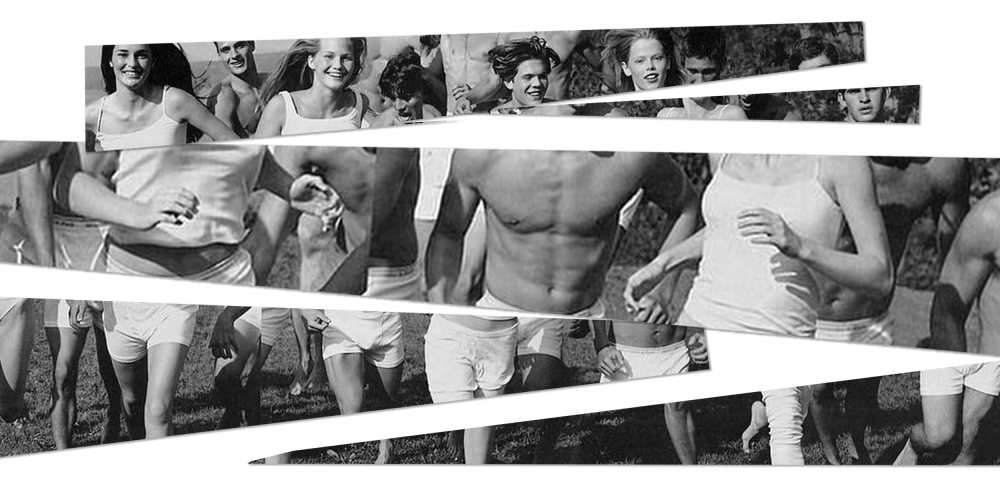
Jeffries is the one who made A&F into an arbiter of cool, with stores whose windows were blocked by shutters, and where hardbodied male models “guarded” the entrances. Jeffries leaned on acclaimed photographer Bruce Weber to create the brand’s signature aesthetic — black and white, preppy Americana, centered on the half-naked male form. (Weber has since faced allegations of sexual assault and harassment from models, all of which he has denied.)
Jeffries obsessively monitored the attractiveness of sales associates, and gave store managers handbooks with racist rules about appearance like “a neatly combed, attractive, classic hairstyle” is acceptable, but “dreadlocks are unacceptable for men and women.” Under Jeffries’ stewardship, the company’s seemingly discriminatory hiring practices spurred a class-action lawsuit in 2003. Years later, when an A&F store refused to hire a young Muslim woman because she wore a hijab, the company fought the case all the way up to the Supreme Court, which ultimately ruled against Abercrombie, 8-1.
The A&F leader obsessively monitored the attractiveness of sales associates, and gave store managers handbooks with racist rules about appearance.
Under Jeffries’ leadership, it’s hard to overstate how completely the Abercrombie aesthetic made its way into suburban schools across the country. (Especially in white, affluent communities.) For those of a certain age and socioeconomic class, even if you never shopped at one of its aggressively perfumed stores, you probably have feelings about the brand. Maybe A&F was aspirational for you. Maybe it was corny. Maybe it was just stupidly overpriced. Maybe it was intimidating. Either you were in, or you were out — just the way Jeffries liked it.
“Fashion is selling us belonging, confidence, cool, sex appeal,” Washington Post critic-at-large Robin Givhan says in “White Hot.” “In some ways, the very last thing that it’s selling is actual garments.”
In that sense, Abercrombie wasn’t just selling the masses racist, xenophobic graphic tees. It was selling reassurance to insecure teenagers that if they could fit their bodies into these clothes, and see their faces in the faces (and abdomens) of the models plastered on the store walls, then they were going to be all right. Maybe better than all right. To be chosen by Abercrombie — to work in its stores or model its clothes — or to easily fit into Abercrombie (the brand famously didn’t make sizes bigger than “large”) was synonymous with desirability. And what teenager doesn’t crave the reassurance that they are wanted?
And Jeffries made no bones about his mission to market exclusivity. “In every school there are the cool and popular kids, and then there are the not-so-cool kids,” Jeffries told reporter Benoit Denizet-Lewis in 2006. “Candidly, we go after the cool kids. We go after the attractive all-American kid with a great attitude and a lot of friends. A lot of people don’t belong [in our clothes], and they can’t belong. Are we exclusionary? Absolutely.”
Even with my thin privilege and white privilege, I always knew implicitly that I was not the type of girl who would ever be recruited to be an Abercrombie sales associate. I was too Jewish and too brunette and a little too awkward in my newly pubescent body. I was more of an American Eagle gal — it was a little cheaper and a little less intimidating — but that didn’t stop me from perusing the A&F shelves and jokingly taking a Christmas polaroid with one of the local shirtless models. (The marketing budgets these stores must have had. Absolutely wild!) In the early aughts, so many young people seemed to exist in relation to the Abercombie ideal, an ideal that had no qualms about expressing outright disgust for entire segments of its potential customer base.
To be fair, Abercombie didn’t exist in a vacuum. This was an era in which young women’s bodies were not only considered fair game for consumption, but also for detailed, excruciating critique. (This was, after all, the era of Jessica Simpson’s “mom jeans” gaffe and the constant stream of degrading tabloid headlines about a whole plethora of young female celebrities.) The micro miniskirts and 3-inch rise jeans that were so very on trend seemed designed to display the torsos of women and girls, and thus open them up to outside evaluation and often scorn. Indeed, what “White Hot” ultimately elucidates is that Abercrombie didn’t do anything particularly remarkable. It simply capitalized on a depressing reality of American culture that hasn’t fundamentally changed: It’s racist, it’s sexist and it’s fatphobic. As Givhan put it, Abercombie’s meteoric rise is really “an incredible indictment of where our culture was, just 10 years ago. It was a culture that enthusiastically embraced a nearly all sort of WASPy vision of the world. It was a culture that defined beauty as thin and white and young. And it was a culture that was happy to exclude people.” No one waved a magic wand and fixed those things in the last decade or two. But what has changed is our collective willingness to tolerate such overt garbage. In the years since Abercrombie’s cultural peak, social media created the ability for consumers to give feedback publicly and amplify it tenfold. The body positive movement gained steam and showed many fashion brands that resisting inclusive sizing meant leaving big money on the table. People in marginalized bodies simply have more channels to demand better from the brands that make money off of them, or in relation to them. In 2014, years after the brand’s “cool” factor had begun to wane, Jeffries stepped down as CEO. Naturally, he got a big exit package, and a white woman, Fran Horowitz, was brought in to clean up the mess. Since then, Abercrombie has indeed launched a rebrand. Their stores are no longer doused in the signature fragrance “Fierce.” The images on the brand’s website and in stores include Black faces and other people of color, as well as bodies of more sizes and gender expressions. The clothes are less aspirational, and more practical, stylish basics for the very millennials who once felt excluded. As micro minis and low-rise jeans once again begin to dominate the runways and stores, I can feel my anxiety levels rising. Racism, sexism and fatphobia can all be propagated through fashion just fine with or without Abercrombie & Fitch. High-end brands are still engaging in tone-deaf cultural appropriation. Fat people are still fighting for true inclusivity from the fashion industry, not just a handful of size-16 models in advertisements. Apparel brands are still failing to do more than give lip service to gender equity. But for now, when I walk by an Abercrombie at one of the country’s remaining malls or scroll through their app on my phone, I don’t see an aspirational lifestyle. I blessedly just see some clothes.
Emma Gray
Emma Gray, a freelance journalist focused on the intersection of gender, culture and politics, is the author of "A Girl's Guide to Joining the Resistance." She is a co-host of the podcast “Love to See It” and a co-author of the newsletter “Rich Text,” and she has spent the last 10 years as a senior reporter and editor at HuffPost. 


