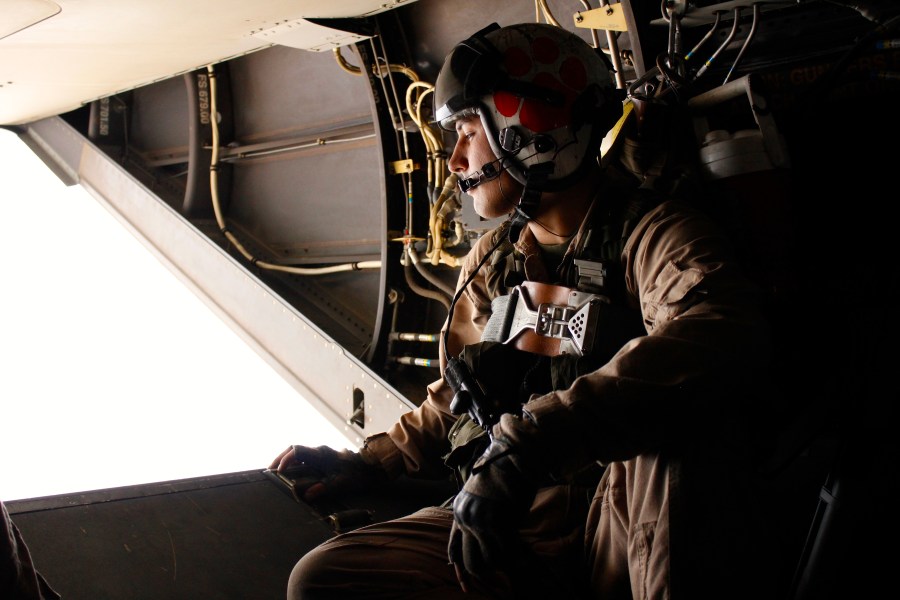
KATHMANDU, Nepal — Major Jason Laird lifts the Boeing V-22 Osprey up through thick, blinding clouds heading eastward, where neatly terraced hills along a lush mountainside are pockmarked by evidence of landslides and the homes they brought down with them.
To his right, he and other members of the U.S. Marines delivering aid can peer down to a valley sprinkled with bright orange dots, the plastic sheeting nearly everyone in Nepal has been sleeping under since the 7.8 magnitude earthquake struck two weeks ago.
Nearly 600,000 homes were destroyed, 7,900 people killed, and more than 16,000 injured. The death toll is rising as search missions continue to find bodies of natives and tourists in hard to reach trekking areas. Aftershocks are still occurring on a daily basis, so people are sleeping in tents to avoid the risk of not making it out of their homes in time, as was the fate that befell so many here.
“Visibility in the Himalayas is challenging,” Laird notes, an understatement given the conditions on this overcast day. Still, it’s the clearest day he’s had since Marines began airlifting aid supplies across this battered country on May 4.
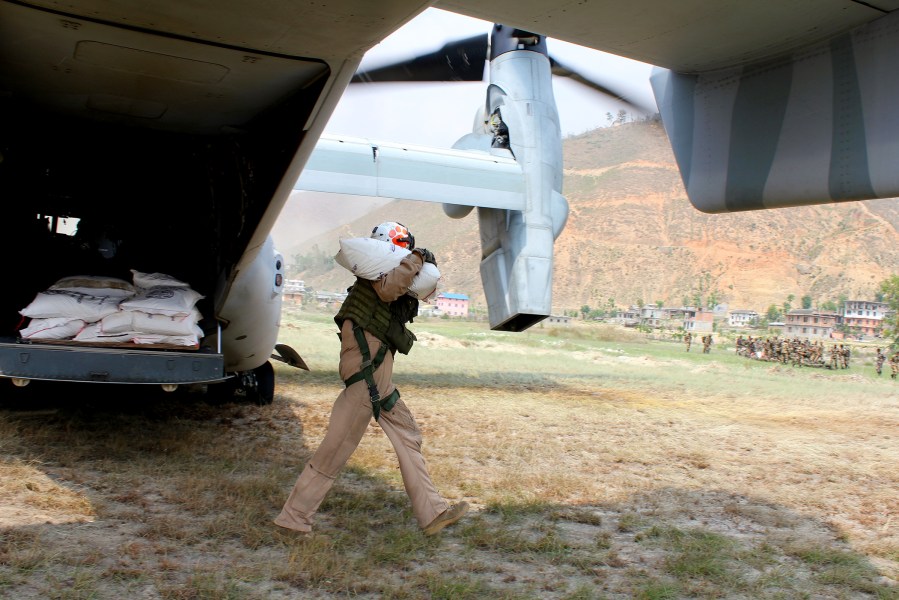
Landing at a small airfield in the village of Panchkal, the propellers create a cloud of dust that nearly obscures the line of Nepalese military forces that has been waiting for the aid mission to arrive. As soon as the dust settles, the marines on board scoop up white bags of rice weighing dozens of pounds, run down the ramp and lay them on the grass. Nepalese troops will distribute the 1,000 kilos of rice to hungry local residents.
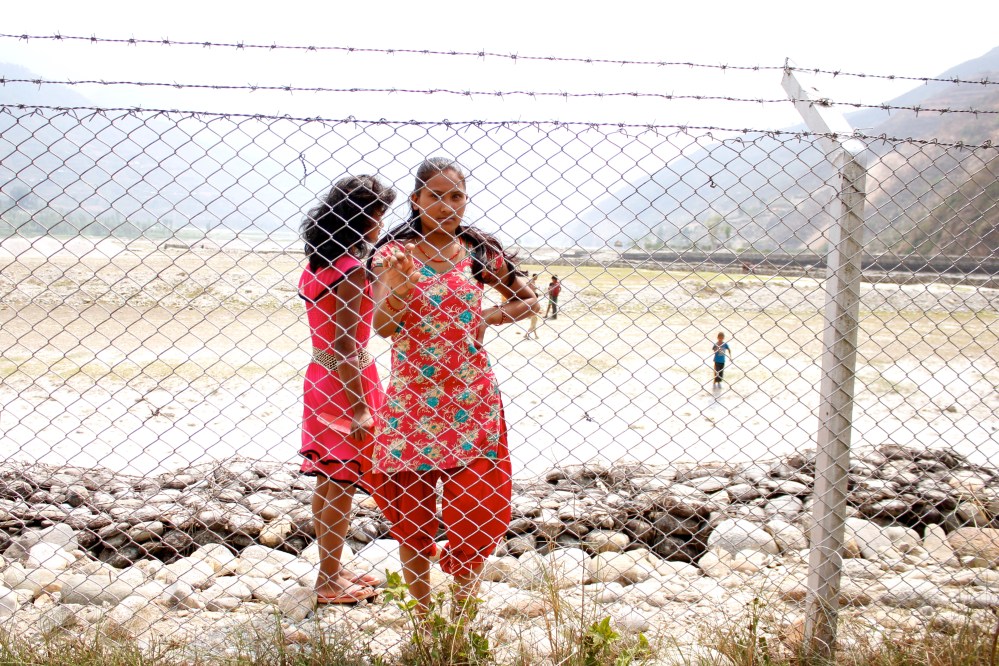
From behind a fence just beyond the landing strip, about 20 children stare at the marines as if they are candy behind a shop window. David Dequeljoe, of Guyton, Georgia, is prepared and heads over to the young group with chocolates he brought all the way from the airport in Kathmandu. As the Osprey takes off, he waves. The children, dressed in brightly colored Western-style clothing, like T-shirts and shorts for the boys and dresses or traditional saris for the girls, all with black hair and enormous smiles, wave and wave and wave until the Osprey is thousands of feet back in the air.
“I wish we could help even more,” the 24-year-old Dequeljoe said after arriving back at the base the marines have set up in a small corner of the airport in Kathmandu.
As of Friday, there are 322 U.S. forces in Nepal, and more could be on the way. Aside from the marines — who’ve been delivering food, plastic sheeting and other aid to villages throughout the country — there are also about 40 U.S. Air Force personnel based in another corner of the airport runway. Their purpose here is to make sure aid shipments are processed efficiently. After the backlog of shipments at the airport frustrated aid workers earlier this week, supplies are now moving steadily in and out of the runway, Air Force Colonel Lee Anderson, Commander of the 36th Contingency Response Group based in Guam.
For many of the military personnel on the ground here, this is not their first trip to Nepal. In November, the U.S. military held a training exercise to prepare them for a possible earthquake response, said Colonel John Armellino, the deputy commander of U.S. forces in Nepal.
“We trained here with the Nepalese government and military,” said Armellino who is based in Okinawa, “so when we got here this week we already knew the people, the places, and we were ready to go.”
Personnel from the U.S. Agency for International Development also participated in the November training and some 130 personnel are in Nepal now as part of relief efforts.
“Our work here is picking up every day, and we’re making the operation more efficient every day,” said Bill Berger, the USAID’s Disaster Assistant Response Team (DART) leader in charge of coordinating the U.S. government response in Nepal. “More and more of our materials are coming in,” he said.
Delivery from the air is crucial and U.S. forces are currently operating three C-17’s, four Ospreys and a Huey helicopter for relief missions.
With monsoon season quickly approaching, Berger said the most crucial aid item right now is the plastic sheeting people are using as makeshift tents to replace their damaged and dangerous homes. According to a U.S. embassy spokesman, the U.S. has now delivered plastic sheeting for about 17,500 people.
According to Nepal’s Ministry of Affairs, the U.S. is one of 52 countries providing much needed aid in the aftermath of the earthquake. A visit to Nepal’s only international airport makes that apparent.
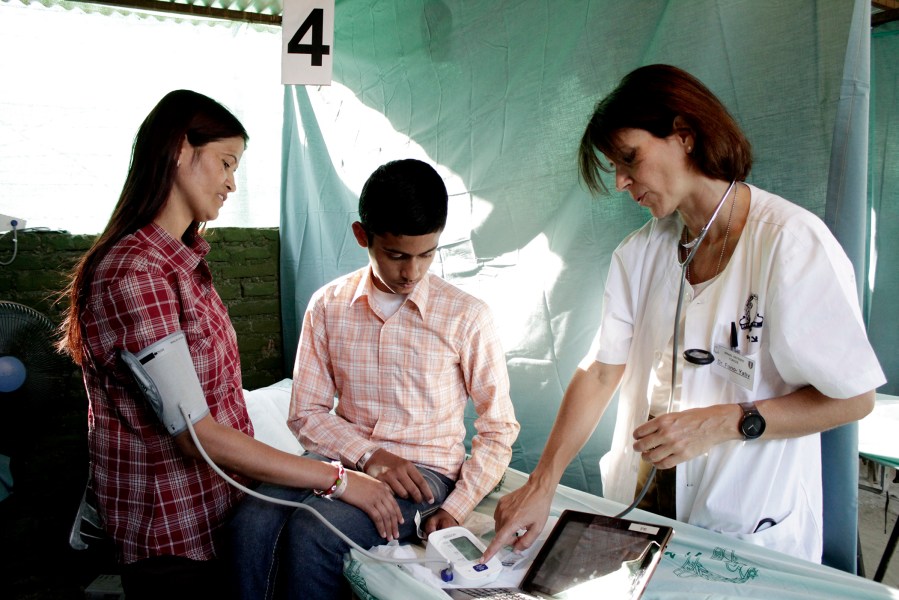
Israel is operating a field hospital in Kathmandu — flown in on five military aircraft — that has treated more than 1,500 patients, performed 90 life-saving surgeries, and delivered eight babies. Among the quake victims being treated here is 19-year-old Sagar Majhi, who was brought to the hospital by the Nepalese military without his right arm. He was in bed playing with his cellphone when the quake struck, and wasn’t able to escape his house quickly enough. As he was running out of his room, the wall fell on his arm, and the ceiling fell on his head. He’s been at the hospital since the day it opened its doors on April 28. His forehead is now covered by a deep long line of stitches, and his nub of a shoulder is wrapped in thick bandages. Before the earthquake, Majhi had been a dancer, training at a school in Kathmandu. After he recovers he plans to go back to his village, Udaypur, to live with his parents and “forget the world of dance,” he says. “I’ll never be able to dance again.” Another young patient, 12-year-old Nangsal Tamang, was rescued from the rubble by her 18-year-old brother who had been searching for her for five days. He finally found her under a pile of rocks in the woods near their home, next to their aunt, who failed to make it out alive. The Israeli doctors treated Tamang for a fractured skull and internal bleeding. Tamang is now recovering with her brother by her side, but it’s been a difficult process, said her Israeli nurse Revital Elias. When the girl arrived at the hospital from her village eight hours away, she had long black hair. But in order to operate on her fractured skull and perform blood extraction to stop internal bleeding, doctors shaved her entire head. Now, her face is framed by a bloody bandage wrapped around half of her head. Since her operation on April 29, Tamang hadn’t smiled once – until five days later when she regained some movement on the left side of her body. Since then, she has been blowing bubbles with her nurses, and laughing at the volunteer clowns who perform for the young patients throughout the day. “It was so hard to see her so sad,” said Elias, looking over at Tamang. “I couldn’t go back to Israel without seeing her smile.” While the international response right now is focused on immediate emergency relief, aid experts expect the recovery process to take years. After all, “these things aren’t done overnight,” says Bill Berger of USAID, adding that it will take “many, many years” for Nepal to recover. The United Nations has requested a total of $423 million to fund emergency aid operations in Nepal. Yet despite commitments of $29 million from the U.S. government and an additional $137 million from other international donors, the UN reports that just 10% of its goal – approximately $42 million – has actually been funded so far. And of the $29 million the U.S. has pledged, just $7 million has actually been contributed, according to the UN Financial Tracking Service. As of now, U.S. forces have no official exit date from their mission in Nepal. But according to pilot Major Laird and his fellow marines, Laird says, “as long as they have stuff for us to move, we’ll be here to help out.”
Yardena Schwartz Recommended