








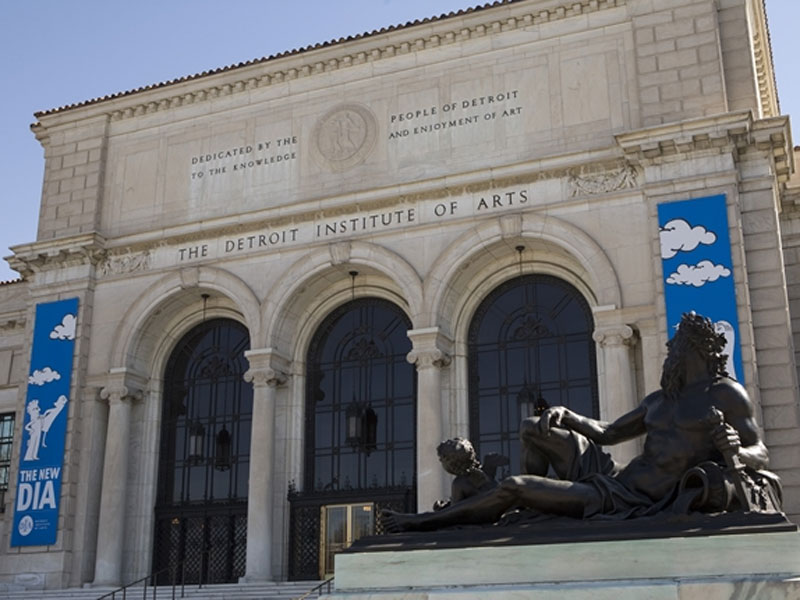
Outraged leaders in Michigan and the art world are waiting anxiously–and angrily–to see if the city will try to sell off its prized art collection.
The mere idea of an everything-must-go sale on a museum seems almost unimaginable. But Detroit now faces this scenario as the city’s emergency manager considers cashing in the collection of the Detroit Institute of Arts to help pay down its $15 billion-plus debt.
“It’s sickening,” Graham Beal, the director, president, and CEO of the Detroit Institute of Arts told msnbc. It’s “deeply dismaying that we have been put in this position.”
This is look-under-the-couch-cushions time for Detroit, which is teetering on the edge of municipal bankruptcy–and prized artworks are not off limits, according to the city’s new emergency manager, Kevyn Orr. Appointed by Republican Gov. Rick Snyder in March, the bankruptcy lawyer warned the museum last week the DIA’s collection could be declared an asset if they had to file bankruptcy and creditors come calling.
The Detroit Institute of Arts disputes Orr’s authority to do such a thing. The legal issues are murkier than an artists’ paint water cup. The city technically owns all the artwork at the building itself, but the place is run by a nonprofit group. Further complicating matters, under a “tax millage” vote–taken less than one year ago–residents of Wayne, Oakland, and Macomb counties signed on for higher property taxes to support the DIA in exchange for free admission. That makes the stakes higher and the related legal issues even more complex.
Plus, it’s difficult to assess the collection’s true value since many of the pieces were gifts from patrons to the museum. The museum gets only rough estimates (for insurance purposes) when they’re about to lend a piece to another museum, said Beal. Individual pieces alone–by such artists as Matisse, Poussin, van Gogh, Warhol, and Bruegel, for example–could be worth in the tens or hundreds of millions, depending on who you ask.
Beal has not spoken directly to Orr about the issue, but he “would like to persuade him that this is not in the best interest of the long-term of the region and this city.”
Since news broke that DIA’s collection could be on the market, the museum has received a deluge of “alarmed emails” from members of the public and the art community. “People think it’s a terrible idea,” said Beal.
“The idea of selling off assets in order to pay off the city’s debts–it speaks volumes of what is wrong with having an emergency manager,” said Keith Johnson, president of the Detroit Federation of Teachers, in an interview with msnbc. “From an educators’ perspective, it’s inconceivable to deny our young people the opportunity” for an arts education “that we’re fortunate to have at the DIA.”
Johnson considers a thriving cultural outpost “one of keys to a vibrant city” for attracting visitors and new residents alike, something the cash-strapped Motor City is in dire need of at the moment. He compared the concept of giving up the DIA’s “priceless” collection to a wedding ring–“there are some things that you simply do not sell off.”
The art community continues to follow developments in Michigan with watchful eyes, concerned that such a betrayal of the museum honor code could someday prompt other cities to take similar action in desperate times.
Christine Anagnos, Executive Director of the Association of Art Museum Directors, said “a museum’s collection is held in public trust”–it’s a “bedrock principle” of the field. “The sale of works from a museum collection to provide funds for any purpose other than strengthening that collection would be a very serious breach of the nationally recognized standards for the field and would be of deep concern,” Anagnos told msnbc in an emailed statement. “The Association of Art Museum Directors strongly encourages the Detroit Emergency Manager and everyone involved in the process of addressing the city’s fiscal issues to preserve this irreplaceable collection to ensure that it will remain in place as a cornerstone for the city’s resurgence.” Thomas P. Campbell, director and CEO of the Metropolitan Museum of Art in New York, expressed outrage at the DIA’s situation. In a statement issued on Friday, Campbell said the shocked residents of Detroit “are joined by the millions of people who admire the Detroit Institute of Arts and the entire cultural community who rightly believe that art is a permanent, rather than a liquid, community asset. Even in the darkest days of New York City’s fiscal crisis of 1975, and the national economic meltdown of 2008, the cultural treasures closely identified with our own city were never on the table—never considered an asset that might be cashed-in during a crunch to bridge a negative balance sheet.” One progressive group suggested letting the art go would not only be bad for the state but also haunt Gov. Snyder’s political career, the same way Mitt Romney couldn’t shake off his infamous “Let Detroit Go Bankrupt” op-ed as a presidential candidate. “Auctioning off priceless works of art to satisfy Wall Street bondholders is not a solution to the challenges that face Detroit,” said Zack Pohl, Executive Director of Progress Michigan in a statement to msnbc. “This would rob residents and students of cultural opportunities, while still failing to create a long-term plan to address Detroit’s fiscal challenges. Gov. Snyder needs to publicly reject this proposal, otherwise he may suffer the same political fate as Mitt Romney by letting Detroit go bankrupt.” For now, Gov. Snyder remains steadfast in his support of the emergency manager and hinted they must consider all options, even Detroit’s crown jewels. “From a fiduciary point of view, he has to give fair notice that these are assets of the city,” Snyder said this week. “It’s about what’s good for the citizens and the public, and that’s where you can argue that things like Belle Isle and the DIA and a least a number of the assets that are the premier pieces, have been clearly important for a long time for the livelihood of the city.” He added, “I’m letting Kevyn do his job as a practical matter.”
Sarah Muller Recommended


