The Rachel Maddow Show WEEKNIGHTS 9PM ETMorning Joe WEEKDAYS 6AM ETDeadline: White House with Nicolle Wallace Weekdays 4PM ETThe Beat with Ari Melber Weeknights 6PM ETThe Weeknight Weeknights 7PM ETAll in with Chris Hayes TUESDAY-FRIDAY 8PM ETThe Briefing with Jen Psaki TUESDAYS – FRIDAYS 9PM ETThe Last Word with Lawrence O’Donnel Weeknights 10PM ETThe 11th Hour with Stephanie Ruhle Weeknights 11PM ET
After a long day do you just throw whatever you have in the fridge together and call that dinner?
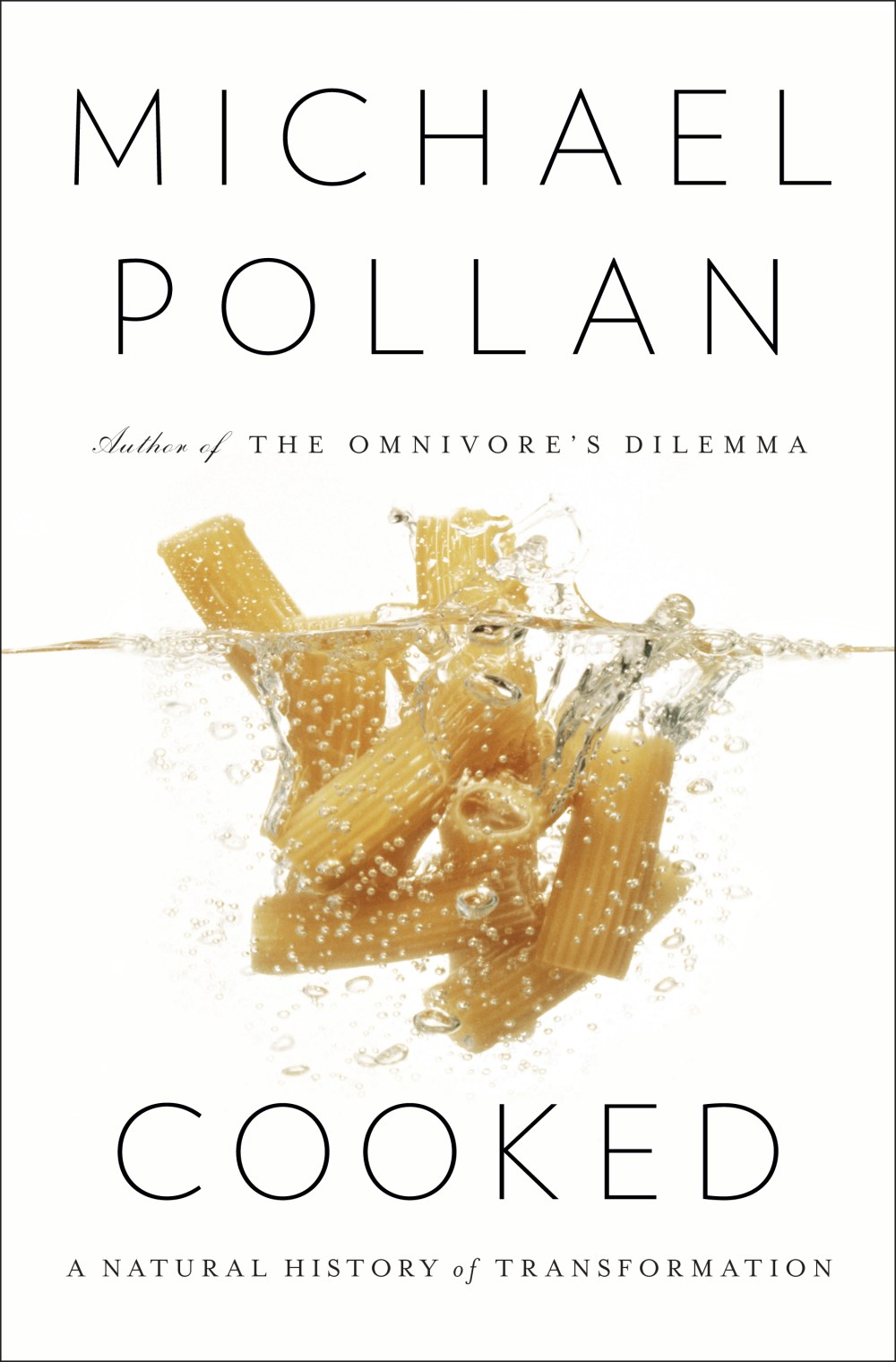
Cooked_300dpi
By
Abby Borovitz
After a long day do you just throw whatever you have in the fridge together and call that dinner? According to Michael Pollan, Author of Cooked: A Natural History of Transformation and the best seller Omnivore’s Dilemma” how we transform plants and animals into our daily meals really does matter. Renowned author Pollan explores cooking basic techniques in a four-part approach: fire, water, air, and earth.
Be sure to tune in at 3:40 p.m. for the full conversation with Pollan who points out in his book that so much of our cooking is about comfort. “The smell of bread baking never fails to improve a house or mood,” he says in his book.
You can check out a full excerpt from his book below.
Excerpted from COOKED by Michael Pollan. Reprinted by arrangement with The Penguin Press, a member of Penguin Group (USA), Inc. Copyright (c) Michael Pollan, 2013.
At a certain point in the late middle of my life I made the unexpected
but happy discovery that the answer to several of the questions that
most occupied me was in fact one and the same.
Cook.
Some of these questions were personal. For example, what was the
single most important thing we could do as a family to improve our
health and general well-being? And then what would be a good way
to better connect to my teenage son? (As it turned out, this involved
not only ordinary cooking but also the specialized form of it known
as brewing.) Other questions were slightly more political in nature.
For years I had been trying to determine (because I am often asked)
what is the most important thing an ordinary person can do to help
reform the American food system, to make it healthier and more sustainable?
Another related question is, how can people living in a highly
specialized consumer economy reduce their sense of dependence and
achieve a greater degree of self-suffi ciency? And then there were the
more philosophical questions, the ones I’ve been chewing on since I
fi rst started writing books. How, in our everyday lives, can we acquire
a deeper understanding of the natural world and our species’ peculiar
role in it? You can always go to the woods to confront such questions,
but I discovered that even more interesting answers could be had simply
by going to the kitchen.
I would not, as I said, ever have expected it. Cooking has always
been a part of my life, but more like the furniture than an object
of scrutiny, much less a passion. I counted myself lucky to have a
parent—my mother—who loved to cook and almost every night
made us a delicious meal. By the time I had a place of my own, I
could fi nd my way around a kitchen well enough, the result of nothing
more purposeful than all those hours spent hanging around the
kitchen while my mother fi xed dinner. And though once I had my
own place I cooked whenever I had the time, I seldom made time for
cooking or gave it much consideration. My kitchen skills, such as they
were, were pretty much frozen in place by the time I turned thirty.
Truth be told, my most successful dishes leaned heavily on the cooking
of others, as when I drizzled my incredible sage-butter sauce over
store-bought ravioli. Every now and then I’d look at a cookbook or
clip a recipe from the newspaper to add a new dish to my tiny repertoire,
or I’d buy a new kitchen gadget, though most of these eventually
ended up in a closet.
In retrospect, the mildness of my interest in cooking surprises me,
since my interest in every other link of the food chain had been so
keen. I’ve been a gardener since I was eight, growing mostly vegetables,
and I’ve always enjoyed being on farms and writing about agriculture.
I’ve also written a fair amount about the opposite end of the
food chain—the eating end, I mean, and the implications of our eating
for our health. But to the middle links of the food chain, where
the stuff of nature gets transformed into the things we eat and drink,
I hadn’t really given much thought.
Until, that is, I began trying to unpack a curious paradox I had
noticed while watching television, which was simply this: How is it
that at the precise historical moment when Americans were abandoning
the kitchen, handing over the preparation of most of our meals to
the food industry, we began spending so much of our time thinking
about food and watching other people cook it on television? The less
cooking we were doing in our own lives, it seemed, the more that
food and its vicarious preparation fascinated us.
Our culture seems to be of at least two minds on this subject. Survey
research confi rms we’re cooking less and buying more prepared
meals every year. The amount of time spent preparing meals in
American households has fallen by half since the mid-sixties, when I
was watching my mom fi x dinner, to a scant twenty-seven minutes a
day. (Americans spend less time cooking than people in any other nation,
but the general downward trend is global.) And yet at the same
time we’re talking about cooking more—and watching cooking, and
reading about cooking, and going to restaurants designed so that we
can watch the work performed live. We live in an age when professional
cooks are household names, some of them as famous as athletes
or movie stars. The very same activity that many people regard as a
form of drudgery has somehow been elevated to a popular spectator
sport. When you consider that twenty-seven minutes is less time than
it takes to watch a single episode of Top Chef or The Next Food Network Star,
you realize that there are now millions of people who spend more
time watching food being cooked on television than they spend actually
cooking it themselves. I don’t need to point out that the food you
watch being cooked on television is not food you get to eat.
This is peculiar. After all, we’re not watching shows or reading
books about sewing or darning socks or changing the oil in our car,
three other domestic chores that we have been only too happy to
outsource—and then promptly drop from conscious awareness. But
cooking somehow feels different. The work, or the process, retains an
emotional or psychological power we can’t quite shake, or don’t want
to. And in fact it was after a long bout of watching cooking programs
on television that I began to wonder if this activity I had always taken
for granted might be worth taking a little more seriously.
I developed a few theories to explain what I came to think of as the
Cooking Paradox. The fi rst and most obvious is that watching other
people cook is not exactly a new behavior for us humans. Even when
“everyone” still cooked, there were plenty of us who mainly watched:
men for the most part, and children. Most of us have happy memories
of watching our mothers in the kitchen, performing feats that sometimes
looked very much like sorcery and typically resulted in something
tasty to eat. In ancient Greece, the word for “cook,” “butcher,” and
“priest” was the same—mageiros—and the word shares an etymological
root with “magic.” I would watch, rapt, when my mother conjured
her most magical dishes, like the tightly wrapped packages of
fried chicken Kiev that, when cut open with a sharp knife, liberated a
pool of melted butter and an aromatic gust of herbs. But watching an
everyday pan of eggs get scrambled was nearly as riveting a spectacle,
as the slimy yellow goop suddenly leapt into the form of savory gold
nuggets. Even the most ordinary dish follows a satisfying arc of transformation,
magically becoming something more than the sum of its
ordinary parts. And in almost every dish, you can fi nd, besides the
culinary ingredients, the ingredients of a story: a beginning, a middle,
and an end.
Then there are the cooks themselves, the heroes who drive these
ittle dramas of transformation. Even as it vanishes from our daily
lives, we’re drawn to the rhythms and textures of the work cooks
do, which seems so much more direct and satisfying than the more
abstract and formless tasks most of us perform in our jobs these days.
Cooks get to put their hands on real stuff, not just keyboards and
screens but fundamental things like plants and animals and fungi.
They get to work with the primal elements, too, fi re and water, earth
and air, using them—mastering them!—to perform their tasty alchemies.
How many of us still do the kind of work that engages us in a
dialogue with the material world that concludes—assuming the
chicken Kiev doesn’t prematurely leak or the souffl é doesn’t collapse—
with such a gratifying and delicious sense of closure?
So maybe the reason we like to watch cooking on television and
read about cooking in books is that there are things about cooking
we really miss. We might not feel we have the time or energy (or the
knowledge) to do it ourselves every day, but we’re not prepared to see
it disappear from our lives altogether. If cooking is, as the anthropologists
tell us, a defi ning human activity—the act with which culture
begins, according to Claude Lévi-Strauss—then maybe we shouldn’t
be surprised that watching its processes unfold would strike deep
emotional chords.
The idea that cooking is a defi ning human activity is not a new one.
In 1773, the Scottish writer James Boswell, noting that “no beast is a
cook,” called Homo sapiens “the cooking animal.” (Though he might
have reconsidered that defi nition had he been able to gaze upon the
frozen-food cases at Walmart.) Fifty years later, in The Physiology of Taste,
the French gastronome Jean Anthelme Brillat-Savarin claimed that
cooking made us who we are; by teaching men to use fi re, it had
“done the most to advance the cause of civilization.” More recently,
Lévi-Strauss, writing in The Raw and the Cooked in 1964, reported that
many of the world’s cultures entertained a similar view, regarding
cooking as the symbolic activity that “establishes the difference between
animals and people.”
For Lévi-Strauss, cooking was a metaphor for the human transformation
of raw nature into cooked culture. But in the years since
the publication of The Raw and the Cooked, other anthropologists have
begun to take quite literally the idea that the invention of cooking
might hold the evolutionary key to our humanness. A few years ago,
a Harvard anthropologist and primatologist named Richard Wrangham
published a fascinating book called Catching Fire, in which he argued
that it was the discovery of cooking by our early ancestors—and
not tool making or meat eating or language—that set us apart from
the apes and made us human. According to the “cooking hypothesis,”
the advent of cooked food altered the course of human evolution. By
providing our forebears with a more energy-dense and easy-to-digest
diet, it allowed our brains to grow bigger (brains being notorious
energy guzzlers) and our guts to shrink. It seems that raw food takes
much more time and energy to chew and digest, which is why other
primates our size carry around substantially larger digestive tracts and
spend many more of their waking hours chewing—as much as six
hours a day.
Cooking, in effect, took part of the work of chewing and digestion
and performed it for us outside of the body, using outside sources of
energy. Also, since cooking detoxifi es many potential sources of food,
the new technology cracked open a treasure-trove of calories unavailable
to other animals. Freed from the necessity of spending our days
gathering large quantities of raw food and then chewing (and chewing)
it, humans could now devote their time, and their metabolic
resources, to other purposes, like creating a culture.
Cooking gave us not just the meal but also the occasion: the practice
of eating together at an appointed time and place. This was something
new under the sun, for the forager of raw food would have
likely fed himself on the go and alone, like all the other animals. (Or,
come to think of it, like the industrial eaters we’ve more recently become,
grazing at gas stations and eating by ourselves whenever and
wherever.) But sitting down to common meals, making eye contact,
sharing food, and exercising self-restraint all served to civilize us.
“Around that fi re,” Wrangham writes, “we became tamer.”
Cooking thus transformed us, and not only by making us more
sociable and civil. Once cooking allowed us to expand our cognitive
capacity at the expense of our digestive capacity, there was no going
back: Our big brains and tiny guts now depended on a diet of cooked
food. (Raw-foodists take note.) What this means is that cooking is
now obligatory—it is, as it were, baked in to our biology. What Winston
Churchill once said of architecture—“First we shape our buildings,
and then they shape us”—might also be said of cooking. First we
cooked our food, and then our food cooked us.
If cooking is as central to human identity, biology, and culture as
Wrangham suggests, it stands to reason that the decline of cooking in
our time would have serious consequences for modern life, and so it
has. Are they all bad? Not at all. The outsourcing of much of the work
of cooking to corporations has relieved women of what has traditionally
been their exclusive responsibility for feeding the family, making
it easier for them to work outside the home and have careers. It has
headed off many of the confl icts and domestic arguments that such a
large shift in gender roles and family dynamics was bound to spark.
It has relieved all sorts of other pressures in the household, including
longer workdays and overscheduled children, and saved us time that
we can now invest in other pursuits. It has also allowed us to diversify
our diets substantially, making it possible even for people with no
cooking skills and little money to enjoy a whole different cuisine
every night of the week. All that’s required is a microwave.
These are no small benefi ts. Yet they have come at a cost that we
are just now beginning to reckon. Industrial cooking has taken a substantial
toll on our health and well-being. Corporations cook very
differently from people do (which is why we usually call what they
do “food processing” instead of cooking). They tend to use much
more sugar, fat, and salt than people cooking for people do; they also
deploy novel chemical ingredients seldom found in pantries in order
to make their food last longer and look fresher than it really is. So it
will come as no surprise that the decline in home cooking closely
tracks the rise in obesity and all the chronic diseases linked to diet.
The rise of fast food and the decline in home cooking have also
undermined the institution of the shared meal, by encouraging us to
eat different things and to eat them on the run and often alone. Survey
researchers tell us we’re spending more time engaged in “secondary
eating,” as this more or less constant grazing on packaged foods
is now called, and less time engaged in “primary eating”—a rather
depressing term for the once-venerable institution known as the meal.
The shared meal is no small thing. It is a foundation of family life,
the place where our children learn the art of conversation and acquire
the habits of civilization: sharing, listening, taking turns, navigating
differences, arguing without offending. What have been called the
“cultural contradictions of capitalism”—its tendency to undermine
the stabilizing social forms it depends on—are on vivid display today
at the modern American dinner table, along with all the brightly colored
packages that the food industry has managed to plant there.
These are, I know, large claims to make for the centrality of cooking (and not cooking) in our lives, and a caveat or two are in order.
For most of us today, the choice is not nearly as blunt as I’ve framed
it: that is, home cooking from scratch versus fast food prepared by
corporations. Most of us occupy a place somewhere between those
bright poles, a spot that is constantly shifting with the day of the
week, the occasion, and our mood. Depending on the night, we might
cook a meal from scratch, or we might go out or order in, or we might
“sort of” cook. This last option involves availing ourselves of the various
and very useful shortcuts that an industrial food economy offers:
the package of spinach in the freezer, the can of wild salmon in the
pantry, the box of store-bought ravioli from down the street or halfway
around the world. What constitutes “cooking” takes place along a
spectrum, as indeed it has for at least a century, when packaged foods
fi rst entered the kitchen and the defi nition of “scratch cooking” began
to drift. (Thereby allowing me to regard my packaged ravioli with
sage-butter sauce as a culinary achievement.) Most of us over the
course of a week fi nd ourselves all over that spectrum. What is new,
however, is the great number of people now spending most nights at
the far end of it, relying for the preponderance of their meals on an
industry willing to do everything for them save the heating and the eating.
“We’ve had a hundred years of packaged foods,” a food-marketing
consultant told me, “and now we’re going to have a hundred years of
packaged meals.”
This is a problem—for the health of our bodies, our families, our
communities, and our land, but also for our sense of how our eating
connects us to the world. Our growing distance from any direct,
physical engagement with the processes by which the raw stuff of
nature gets transformed into a cooked meal is changing our understanding
of what food is. Indeed, the idea that food has any connection
to nature or human work or imagination is hard to credit when
it arrives in a neat package, fully formed. Food becomes just another
commodity, an abstraction. And as soon as that happens we become
easy prey for corporations selling synthetic versions of the real
thing—what I call edible foodlike substances. We end up trying to
nourish ourselves on images.
Now, for a man to criticize these developments will perhaps rankle
some readers. To certain ears, whenever a man talks about the importance
of cooking, it sounds like he wants to turn back the clock, and
return women to the kitchen. But that’s not at all what I have in mind.
I’ve come to think cooking is too important to be left to any one gender
or member of the family; men and children both need to be in
the kitchen, too, and not just for reasons of fairness or equity but
because they have so much to gain by being there., In fact, one of the
biggest reasons corporations were able to insinuate themselves into
this part of our lives is because home cooking had for so long been
denigrated as “women’s work” and therefore not important enough
for men and boys to learn to do.
Though it’s hard to say which came fi rst: Was home cooking denigrated
because the work was mostly done by women, or did women
get stuck doing most of the cooking because our culture denigrated
the work? The gender politics of cooking, which I explore at some
length in part II, are nothing if not complicated, and probably always
have been. Since ancient times, a few special types of cooking have
enjoyed considerable prestige: Homer’s warriors barbecued their own
joints of meat at no cost to their heroic status or masculinity. And ever
since, it has been socially acceptable for men to cook in public and
professionally—for money. (Though it is only recently that professional
chefs have enjoyed the status of artists.) But for most of history
most of humanity’s food has been cooked by women working out of
public view and without public recognition. Except for the rare ceremonial
occasions over which men presided—the religious sacrifi ce,
the July 4 barbecue, the four-star restaurant—cooking has traditionally
been women’s work, part and parcel of homemaking and child
care, and therefore undeserving of serious—i.e., male—attention.
But there may be another reason cooking has not received its
proper due. In a recent book called The Taste for Civilization, Janet A.
Flammang, a feminist scholar and political scientist who has argued
eloquently for the social and political importance of “food work,”
suggests the problem may have something to do with food itself,
which by its very nature falls on the wrong side—the feminine side—
of the mind-body dualism in Western culture.
“Food is apprehended through the senses of touch, smell, and
taste,” she points out, “which rank lower on the hierarchy of senses
than sight and hearing, which are typically thought to give rise to
knowledge. In most of philosophy, religion, and literature, food is
associated with body, animal, female, and appetite—things civilized
men have sought to overcome with knowledge and reason.”
Very much to their loss.
II.
The premise of this book is that cooking—defi ned broadly enough
to take in the whole spectrum of techniques people have devised
for transforming the raw stuff of nature into nutritious and appealing
things for us to eat and drink—is one of the most interesting and
worthwhile things we humans do. This is not something I fully appreciated
before I set out to learn how to cook. But after three years
spent working under a succession of gifted teachers to master four of
the key transformations we call cooking—grilling with fi re, cooking
with liquid, baking bread, and fermenting all sorts of things—I came
away with a very different body of knowledge from the one I went
looking for. Yes, by the end of my education I got pretty good at making
a few things—I’m especially proud of my bread and some of my
braises. But I also learned things about the natural world (and our
implication in it) that I don’t think I could have learned in any other
way. I learned far more than I ever expected to about the nature of
work, the meaning of health, about tradition and ritual, self-reliance
and community, the rhythms of everyday life, and the supreme satisfaction
of producing something I previously could only have imagined
consuming, doing it outside of the cash economy for no other
reason but love.
This book is the story of my education in the kitchen—but also in
the bakery, the dairy, the brewery, and the restaurant kitchen, some
of the places where much of our culture’s cooking now takes place.
Cooked is divided into four parts, one for each of the great transformations
of nature into culture we call cooking. Each of these, I was
surprised and pleased to discover, corresponds to, and depends upon,
one of the classical elements: Fire, Water, Air, and Earth.
Why this should be so I am not entirely sure. But for thousands of
years and in many different cultures, these elements have been regarded
as the four irreducible, indestructible ingredients that make up
the natural world. Certainly they still loom large in our imagination.
The fact that modern science has dismissed the classical elements,
reducing them to still more elemental substances and forces—water
to molecules of hydrogen and oxygen; fi re to a process of rapid oxidation,
etc.—hasn’t really changed our lived experience of nature or the
way we imagine it. Science may have replaced the big four with a
periodic table of 118 elements, and then reduced each of those to evertinier
particles, but our senses and our dreams have yet to get the
news.
To learn to cook is to put yourself on intimate terms with the laws
of physics and chemistry, as well as the facts of biology and microbiology.
Yet, beginning with fi re, I found that the older, prescientifi c
elements fi gure largely—hugely, in fact—in apprehending the main
transformations that comprise cooking, each in its own way. Each
element proposes a different set of techniques for transforming nature,
but also a different stance toward the world, a different kind of
work, and a different mood.
Fire being the fi rst element (in cooking anyway), I began my education
with it, exploring the most basic and earliest kind of cookery:
meat, on the grill. My quest to learn the art of cooking with fi re
took me a long way from my backyard grill, to the barbecue pits and
pit masters of eastern North Carolina, where cooking meat still means
a whole pig roasted very slowly over a smoldering wood fi re. It was
here, training under an accomplished and fl amboyant pit master, that
I got acquainted with cooking’s primary colors—animal, wood, fi re,
time—and found a clearly marked path deep into the prehistory of
cooking: what fi rst drove our protohuman ancestors to gather around
the cook fi re, and how that experience transformed them. Killing and
cooking a large animal has never been anything but an emotionally
freighted and spiritually charged endeavor. Rituals of sacrifi ce have
attended this sort of cooking from the beginning, and I found their
echoes reverberating even today, in twenty-fi rst-century barbecue.
Then as now, the mood in fi re cooking is heroic, masculine, theatrical,
boastful, unironic, and faintly (sometimes not so faintly) ridiculous.
It is in fact everything that cooking with water, the subject of
part II, is not. Historically, cooking with water comes after cooking
with fi re, since it awaited the invention of pots to cook in, an artifact
of human culture only about ten thousand years old. Now cooking
moves indoors, into the domestic realm, and in this chapter I delve
into everyday home cookery, its techniques and satisfactions as well
as its discontents. Befi tting its subject, this section takes the shape of a
single long recipe, unfolding step by step the age-old techniques that
grandmothers developed for teasing delicious food from the most
ordinary of ingredients: some aromatic plants, a little fat, a few scraps
of meat, a long afternoon around the house. Here, too, I apprenticed
myself to a fl amboyant professional character, but she and I did most
of our cooking at home in my kitchen, and often as a family—home
and family being very much the subject of this section.
Part III takes up the element of air, which is all that distinguishes