








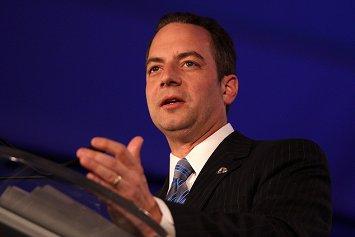
It’s been about four months since Republicans struggled through a difficult election cycle, and a five-member Republican National Committee panel has been hard at work coming up with a series of proposals intended to help get the party back on track. Last week, RNC Chair Reince Priebus offered a hint: he didn’t want msnbc to host debates for Republican presidential candidates.
Today, however, Priebus went into considerably more detail, publishing a 100-page report called the Growth and Opportunity Project” — or G.O.P. — intended to be an autopsy on what went wrong and a roadmap for what the party should do next.
Culled from more than 52,000 contacts with voters, party consultants and elected officials, it calls for drastic changes to almost every major element of the modern Republican Party.
“When Republicans lost in November, it was a wake-up call. And in response I initiated the most public and most comprehensive post-election review in the history of any national party,” Priebus said Monday morning at the National Press Club. “As it makes clear, there’s no one reason we lost. Our message was weak; our ground game was insufficient; we weren’t inclusive; we were behind in both data and digital; our primary and debate process needed improvement.”
The entirety of the report is online here.
When it comes to issues, one of the document’s biggest surprises is that it explicitly calls on Republican policymakers to “embrace and champion comprehensive immigration reform,” a policy many, if not most, congressional Republicans remain deeply skeptical of.
On a related note, Priebus seems eager, if not desperate, to expand the party’s outreach to minority communities, and he committed this morning to an initial $10 million investment. Of course, what the RNC will tell these communities remains something of a mystery — no amount of outreach can overcome GOP policy goals such as “self deportation” and “the most sweeping voting restrictions since Jim Crow.”
The RNC chief also talked up the idea of throwing all kinds of party money at technological infrastructure, though the RNC has said this before and failed miserably.
But in addition to immigration, there are some other entirely unexpected elements to the RNC’s new approach.
I was amazed, for example, when Priebus said, in reference to his party’s outreach to LGBT voters, “I think Sen. Portman made some pretty big inroads last week. I think it’s about being decent. I think it’s about dignity and respect, that nobody deserves to have their dignity diminished, or people don’t deserve to be disrespected.”
Given Republican standards, what Reince was expected to say was, “We believe marriage is between a man and a woman,” but it’s not. He didn’t go so far as to endorse Portman’s line or even say whether he agreed with it, but the RNC chairman made it seem as if the party is now willing to tolerate dissent on this hot-button issue in ways that (a) are a departure from the recent past; and (b) are likely to infuriate the religious right movement.
Also note, the new document added a point that “third-party groups that promote purity are hurting our electoral prospects.” The RNC didn’t name names, but the line reinforces the perception of growing tension between the party establishment and a far-right activist base, including the Club for Growth. The simmering “civil war,” in other words, is far from over, and the party’s new report may yet make these divisions more pronounced. There was also this amazing paragraph in the report: “We have to blow the whistle at corporate malfeasance and attack corporate welfare. We should speak out when a company liquidates itself and its executives receive bonuses but rank-and-file workers are left unemployed. We should speak out when CEOs receive tens of millions of dollars in retirement packages but middle-class workers have not had a meaningful raise in years.” Let me get this straight: when Democrats say this, it’s socialistic class warfare, but when the RNC says the same thing, it’s fine? Priebus also seems almost preoccupied with debates, hoping to prohibit their existence before Sept. 1, 2015, and limiting the total number of debates to no more than a dozen. Candidates who balk will risk the RNC stripping them of delegates. The point of this is likely two fold. First, the debates push the candidates to pander to extremist candidates and stake out positions well to the right of the mainstream. Fewer debates means fewer problems that are easily thrown into attack ads. Second, debates are critical for upstart candidates with limited financial resources — the RNC, then, wants to help stack the deck a bit for establishment candidates with more money and better name recognition. Similarly, the RNC is eying a compressed nominating calendar — wrapping up the primaries no later than mid-May, with a convention to follow in late June or July. This, too, further helps the party establishment influence the outcome by giving the early favorites a better chance of early success, followed by a longer general election phase.
The place for in-depth analysis, commentary and informed perspectives. Recommended


