








On the night he won re-election, President Obama ad-libbed a line in his victory speech: referencing election reform, he said, “By the way, we have to fix that.” He brought up the issue again in his inaugural address: “Our journey is not complete until no citizen is forced to wait for hours to exercise the right to vote.”
And it was clearly a top priority in last night’s State of the Union address.
“We must all do our part to make sure our God-given rights are protected here at home. That includes one of the most fundamental right of a democracy: the right to vote. When any American, no matter where they live or what their party, are denied that right because they can’t afford to wait for five or six or seven hours just to cast their ballot, we are betraying our ideals.
“So tonight, I’m announcing a nonpartisan commission to improve the voting experience in America. And it definitely needs improvement. I’m asking two long-time experts in the field — who, by the way, recently served as the top attorneys for my campaign and for Governor Romney’s campaign — to lead it. We can fix this, and we will. The American people demand it, and so does our democracy.”
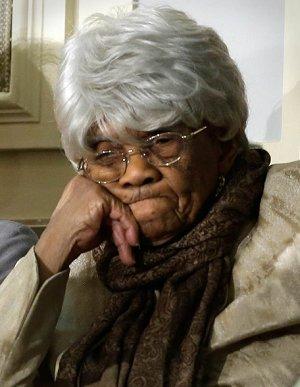
Obama pointed to Desiline Victor, a 102-year-old woman in North Miami, who was told when she arrived at her polling place that there would be a six-hour wait — which she endured.
What kind of modern democracy forces a 102-year-old woman to wait in line for six hours to participate in her own democracy? Ours is.
In an environment in which nearly all policymaking is almost impossible, election reform will be a heavy lift, but not for the usual reasons. This isn’t about deficits or big government; this is about the Republican Party’s deliberate campaign to make voting more difficult.
The American mainstream sees inexcusably long voting lines and the worst voting restrictions since Jim Crow and thinks it’s a national disgrace, but for GOP policymakers, the problems are a feature, not a bug. The more voters are able to participate in an election, the harder it is for Republicans to win, so the results are predictable — a policy agenda that creates longer voting lines on purpose, closes early-voting windows, addresses imaginary voter fraud through punitive voter-ID laws, and restricts voter-registration drives.
Obama’s case for reform is compelling, but the challenge comes from Republican satisfaction with the status quo. Still, the issue’s role in the State of the Union will further raise its visibility, and at least creates a chance for legislative action. Michael Waldman, president of Brennan Center for Justice, which specializes in these issues, liked what he heard from the president. “Tonight, the president spoke powerfully of the need to improve the way we run elections in America. He’s absolutely right. His appointment of a new bipartisan commission is an important step, focusing on improving the experience of voters. This should be a critical part of the larger mission of modernizing elections so every eligible citizen can vote and have that vote counted. The moving story of Desiline Victor, told by the president tonight, underscores how vital this mission is. We urge the commission to think boldly, and we urge the Congress to do its part by enacting minimum national standards to modernize elections.” It’s worth noting that the commission has its own hurdles. Obama clearly wants the panel to have bipartisan credibility, but by tapping Mitt Romney’s lawyer, the White House has made Ben Ginsberg the commission’s co-chair — that would be the same Ben Ginsberg who helped represent the Swift Boat liars’ smear campaign against John Kerry in 2004. In 2006, Ginsburg famously said, “Just like really with the Voting Rights Act, Republicans have some fundamental philosophical difficulties with the whole notion of Equal Protection.” The president’s goals may be admirable, but Ginsberg’s inclusion suggests expectations for this commission should probably be kept in check.
The place for in-depth analysis, commentary and informed perspectives. Recommended


