








In 2012, an engaged couple, David Mullins and Charlie Craig, went to Masterpiece Cake in Denver to order a cake for their wedding reception. Jack Phillips, the baker who owns the shop, told them, “I’m sorry, guys, I can’t do that.”
It wasn’t because he was too busy. Masterpiece Cake operates under Philips’ religious principles — he refuses to make Halloween cakes, too — and the owner said making a cake for a gay couple would force him to express a view he personally objects to.
Mullins and Craig filed a complaint with Colorado’s Civil Rights Commission, and the state ultimately agreed that Phillips could not discriminate among prospective customers.
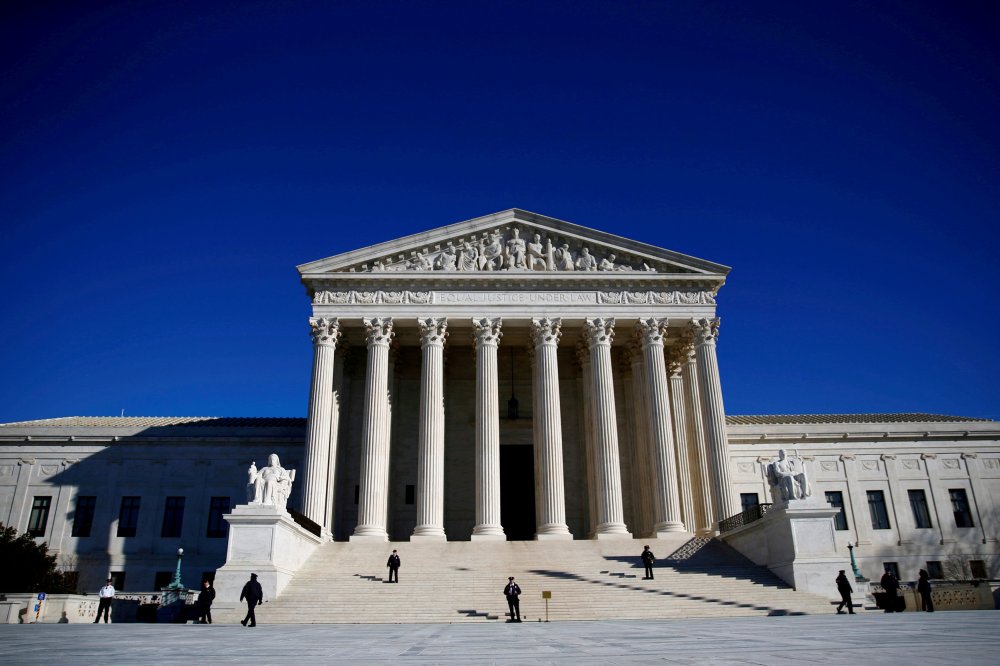
A lengthy legal controversy ensued, and the case managed to work its way to the U.S. Supreme Court. This morning, a court’s majority sided with the baker — but the ruling didn’t resolve the question of whether businesses can discriminate against LGBT clientele. NBC News’ Pete Williams reported:
[T]he opinion was a narrow one, applying to the specific facts of this case only. It gave no hint as to how the court might decide future cases involving florists, bakers, photographers and other business owners who have cited religious and free-speech objections when refusing to serve gay and lesbian customers in the wake of the Supreme Court’s 2015 same-sex marriage decision.
In the 7-2 decision, the court said legal proceedings in Colorado had shown a hostility to the baker’s religious views. Monday’s ruling was written by Justice Anthony Kennedy, who also wrote the Supreme Court’s same-sex marriage decision.
The ruling is online here (pdf). Justices Ruth Bader Ginsburg and Sonia Sotomayor were the only dissenters.
Ordinarily, court watchers might look for a decision from the high court to address underlying legal questions, which in turn can serve as a guide to lower courts dealing with related disputes. But in Masterpiece Cakeshop v. Colorado Civil Rights Commission, the justices resolved … very little.
For example, who lost today? Slate‘s Mark Joseph Stern explained that the answer is “everybody who hoped this decision would definitively settle the ostensible clash between LGBTQ rights and religious freedom. In the end, Masterpiece Cakeshop barely resolves anything and doesn’t even touch the free-speech claim at the center of the case. Instead, it punts that question, leaving lower courts (and American society) to continue fighting about how, exactly, Justice Anthony Kennedy should feel about it. A great wedding cake might leave you wanting more, but Masterpiece Cakeshop just leaves you craving something you can actually sink your teeth into.” So why did the baker win? Because as far as the high court is concerned, the Colorado Civil Rights Commission acted in a way that was hostile toward Phillips’s faith. Sherrilyn Ifill, who leads the NAACP Legal Defense Fund, explained, “It’s fair to say the court ruled ‘for the baker,’ but not in the way that phrase implies.” Ifill added that it’s more accurate to say the justices struck down the Colorado Civil Rights Commission’s decision because a majority of the justices concluded “the baker did not receive a fair hearing.” There was no shortage of related questions at issue in this case; they’ll apparently have to be answered at another time.
Steve Benen is a producer for "The Rachel Maddow Show," the editor of MaddowBlog and an MS NOW political contributor. He's also the bestselling author of "Ministry of Truth: Democracy, Reality, and the Republicans' War on the Recent Past." Recommended


