








Under existing law, some congressional leaders have the power to request individual tax returns from the Treasury Department. That power, created in the wake of the Teapot Dome scandal in the 1920s, has been rarely used.
But with Donald Trump’s presidency posing novel challenges, congressional Democrats have been moving forward with a slow process, building a case that will culminate with a formal appeal to the administration for the president’s tax materials.
As we were reminded yesterday, to assume that the Treasury Department will comply with the request would be a mistake.
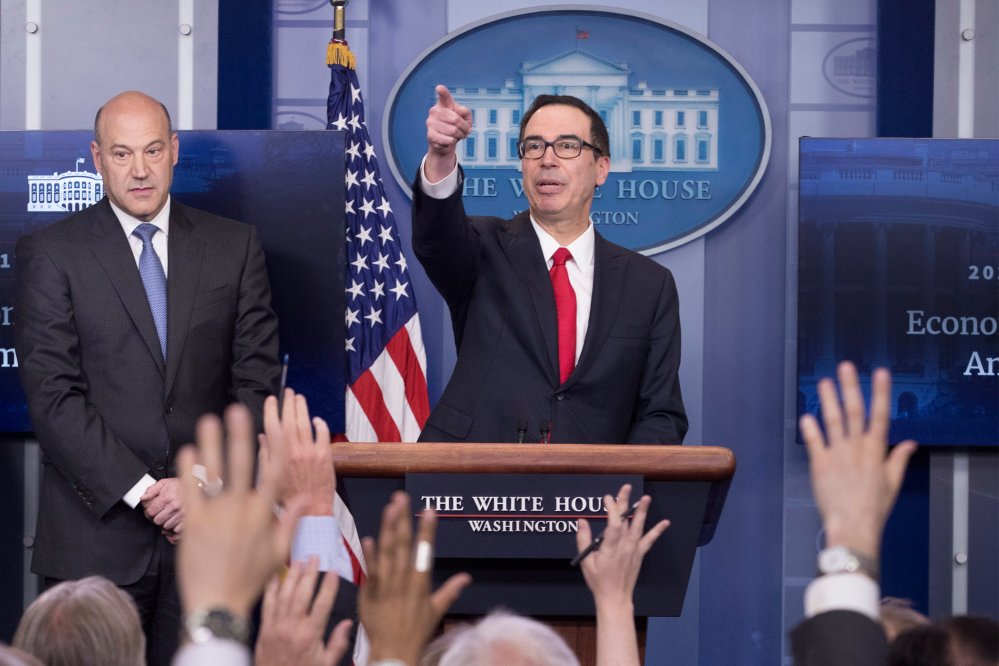
Treasury Secretary Steven Mnuchin suggested Thursday he will protect President Donald Trump’s privacy if he receives a request from House Democrats for Trump’s tax returns.
At a House Ways and Means Committee hearing, Mnuchin was asked whether he would meet a request for Trump’s past tax returns. Chairman Rep. Richard Neal, D-Mass., is expected to formally ask for those as Democrats seek to shed light on Trump’s financial dealings and potential conflicts of interest.
“We will examine the request and we will follow the law … and we will protect the president as we would protect any taxpayer” regarding their right to privacy, Mnuchin said.
The trouble, of course, is the conflict between the first half of that sentence and the second.
Under existing federal law, if the chairman of the House Ways and Means Committee requests a specific set of tax returns, the secretary of the Treasury is supposed to “furnish” the documents for the lawmaker. The privacy rights of the individual taxpayer may be relevant, but it doesn’t (ahem) trump the legal mechanism that gives the chairman the authority to access the materials.
Mnuchin specifically told lawmakers yesterday, “We will protect the president as we would protect any individual taxpayer under their rights.”
I suppose some may see some ambiguity in the comments — one House Democrat yesterday described the secretary’s words as “mumble jumble double talk” — but I think it’s fair to say the Treasury chief is not eager to cooperate with a congressional request for Trump’s tax returns. And what, pray tell, happens if Congress makes a request under existing law and Mnuchin throws the appeal in the trash? The issue would go to the same place too many of our political disputes end up: in the courts. NBC News’ report on this added, “The unprecedented move likely would set off a huge legal battle between Trump’s administration and Democrats controlling the House. The fight could take years to resolve, possibly stretching beyond the 2020 presidential election.” I won’t pretend to know how, whether, and when this will be resolved, but after Michael Cohen’s recent testimony, I can say the case for obtaining the president’s tax returns has never been stronger.
Steve Benen is a producer for "The Rachel Maddow Show," the editor of MaddowBlog and an MS NOW political contributor. He's also the bestselling author of "Ministry of Truth: Democracy, Reality, and the Republicans' War on the Recent Past." Recommended


