









Sen. Susan Collins (R-Maine), one of seven Senate Republicans who voted to convict Donald Trump in last week’s impeachment trial, shared a few thoughts yesterday about her party’s future. In an interview with WMTW in Maine, the newly re-elected GOP senator stressed the importance of not being defined by You Know Who.
“I think we need to get away from the idea that the Republican Party is just one person and adherence to just one leader,” she said.
Collins didn’t use the former president’s name, but she didn’t have to. Indeed, a variety of other GOP senators — including Sens. Richard Burr (N.C.) and Ben Sasse (Neb.), both of whom also voted to convict Trump — have made similar comments in recent days.
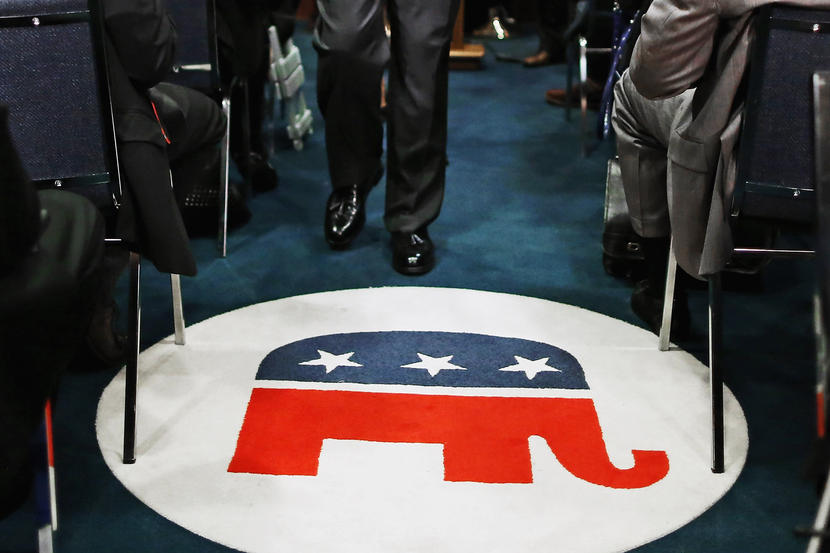
But there’s a nagging question lingering in the background. If, to borrow Collins’ phrasing, Republicans moved away from “the idea that the Republican Party is just one person,” how else would the GOP define itself in 2021?
Business Insider‘s Josh Barro had a smart piece along these lines yesterday, explaining that the intra-party fights plaguing Republicans right now have nothing to do with the future and everything to do with fealty to a semiretired failed president who isn’t even in office anymore.
Partly this reflects the former president’s success in building a personality cult for himself. But there is another issue that goes deeper to the problems facing the GOP. Even if Republicans sought to move on from Trump under leadership from McConnell and the hapless puddle of jelly that leads their conference in the House, Rep. Kevin McCarthy, what would they move on to?
That’s not a rhetorical question. It’s easy to see the Democrats’ ambitious policy agenda, and it’s equally easy to understand Republicans’ reflexive opposition to Democrats’ plans. But with the House poised to vote next week, for example, on a $1.9 trillion COVID relief package, I’m hard pressed to explain the GOP’s arguments against it. Indeed, those expecting GOP officials to present credible alternatives to Democratic proposals on much of anything will very likely be disappointed over the course of the next two years.
Barro added, “[E]ven if they aren’t talking about Trump, Republicans still don’t have a message about what they have to offer voters…. It may not be so much about his force of personality and grip on the electorate as that the GOP has nothing to replace him with.”
Quite right. For the first time since 1854, the Republican Party didn’t even bother to write a platform last year, announcing instead that it would simply endorse whatever Donald Trump said he liked. Six months later, the post-policy party still appears wholly indifferent toward governing, public policy, and working constructively on trying to solve serious problems. There’s no shortage of coverage on the Republican Party’s ongoing “cold war” and “protracted civil war,” but what sometimes gets lost is the fact that the GOP’s conflict isn’t really about anything meaningful. Republicans have in years past fought all kinds of bitter, forward-thinking, intra-party conflicts over ideological and substantive priorities, but in 2021, GOP officials are stuck in a more narrow and parochial fight: they’re at odds over whether Trump (a) is a dangerous autocrat, and (b) secretly won the election he lost. There isn’t even a hint of a conversation about the party’s policy goals. Some might be tempted to argue that this is to be expected given that Republicans have lost control of the levers of federal power. Republicans are the opposition party, at least in D.C., so it stands to reason that it will need time to come to terms with its 2020 setbacks and shape its governing vision for the future. The problem with this defense is that GOP leaders don’t even appear to be trying, stuck instead on trying to decide whether or not to celebrate their failed former leader. These are not the efforts of a serious governing party.
Steve Benen is a producer for "The Rachel Maddow Show," the editor of MaddowBlog and an MS NOW political contributor. He's also the bestselling author of "Ministry of Truth: Democracy, Reality, and the Republicans' War on the Recent Past."
Latest Post
Recommended


