








We talked back in May about Sen. Chuck Grassley’s unnerving confusion about the federal judiciary. The Iowa Republican — who, as the ranking Republican on the Senate Judiciary Committee, is expected to know the basics of this stuff — complained the Obama administration was pushing a “court-packing” strategy in which the president would nominate judges to fill existing vacancies. It was left to Sen. Sheldon Whitehouse (D-R.I.) to gently explain that Grassley had no idea what he was talking about.
I hoped at the time that this was an amusing-but-isolated misstep involving a Republican senator who routinely gets baffled by details. But Grassley has apparently convinced his friends.
It may not be factually accurate, but some Republican senators just can’t resist accusing President Barack Obama of “court-packing” as he tries to fill empty seats on the D.C. Circuit Court of Appeals.
During a Wednesday hearing on one of Obama’s key judicial nominees, Nina Pillard for the D.C. Circuit, Republicans on the Senate Judiciary Committee resurrected the claim that the president’s effort to fill three vacancies on the court amounts to “court-packing.”
A wide variety of GOP senators are now pushing the claim, and this includes Sen. Ted Cruz (R-Texas), a graduate of Harvard Law School, who whined this week about the Obama administration’s efforts to “pack the court.”
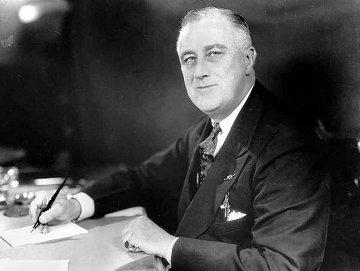
Part of this is annoying because folks who should clearly know what court-packing is have either (a) forgotten the definition of the term; or (b) decided Americans are easily fooled into believing nonsense. For the record, in the interest of informing Republican senators (or folks who may be misled by Republican senators), “court packing” was an FDR-era idea in which the executive branch would expand the number of seats on a bench in order to tilt the judiciary in the president’s favor. The idea was floated in the 1930s, but not seriously pursued.
It’s not at all what the Obama White House in mind now.
And that leads us to other reason this is annoying: the right is trying to turn routine American governance into something controversial.
The U.S. Court of Appeals for the District of Columbia Circuit, widely seen as the nation’s second most important federal bench, has three vacancies. President Obama has selected three non-controversial nominees to fill those vacancies. Republicans perceive this as outrageous, but it’s really just Civics 101. That the GOP wants to characterize the basics of our constitutional system as shocking and offensive is more than a little bizarre. Indeed, as we discussed in May, when this argument first came up, during Reagan’s two terms, he named nine judges to the D.C. Circuit. Was this “court packing”? No, it was a president sending judicial nominees to the Senate, which then confirmed those nominees. It’s the way the system is supposed to work, whether you like the president at the time or not. Senate Republicans would have us believe that judicial nominations — not the individual nominees, but the existence of the nominations themselves — are now so controversial that they must resist. Election results don’t matter; the constitutional process doesn’t matter; the merit of the nominees doesn’t matter. This isn’t just twisted, it requires the GOP to make up entirely new definitions to terms we’re already familiar with. If we’re going to have a debate about the judiciary, fine. But can we at least avoid the temptation to make stuff up?
The place for in-depth analysis, commentary and informed perspectives. Recommended


