








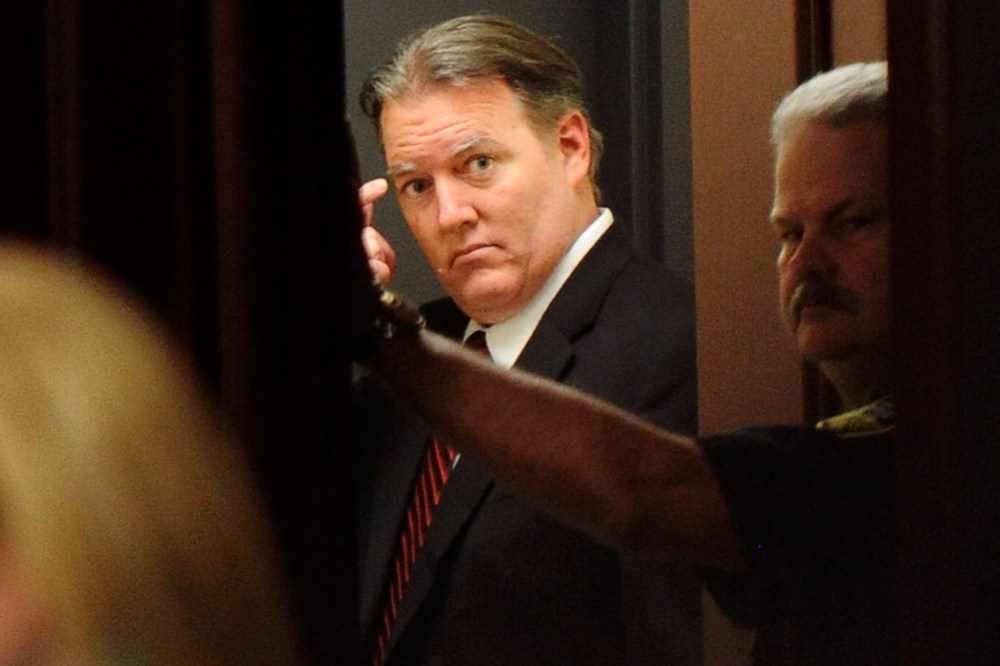
One of the jurors in the so-called “loud music” trial said the jury deadlocked on the charge of first-degree murder because three other jurors believed Michael Dunn had acted in self-defense.
Juror #4, who was only identified by her first name, Valerie, told ABC News in an interview this week she believes that Dunn got away with murder, and the majority of other jurors wanted to convict Dunn on the murder charge in the shooting death of Jordan Davis.
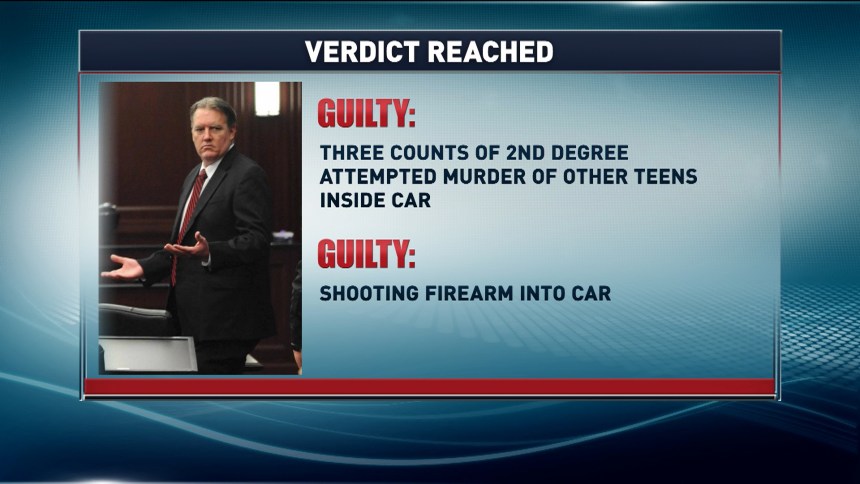
Dunn admits he shot and killed the 17-year-old Davis in the parking lot of a convenience store in Jacksonville, Fla., in November 2012 after a dispute over loud music coming from the SUV Davis was in . Valerie and her fellow jurors found Dunn guilty on three charges of attempted second-degree murder Saturday for shots fired at the vehicle but could not escape deadlock on the primary charge of murder.
Dunn’s defense attorney, Cory Strolla, told jurors in his closing arguments to go directly to page 25 of the jury instructions and assess the question “do you believe that Michael Dunn was justified or unjustified” in killing Davis.
“To me it was unnecessary,” Valerie said, but when the jury first gauged how they all felt about that key question, two jurors said justified, eight said unjustified, and another two were unsure.
“Folks don’t know the law. It’s not that we didn’t value Mr. Davis life. We had to make a choice,” Valerie said.
“A life was taken. There is no longer a Jordan Davis, and there is only one reason why that is. The boy was shot and killed for reasons that should not have happened,” she said.
Valerie explained why her fellow jurors could unanimously agree on a guilty verdict in the charges of attempted murder but not on the murder charge.
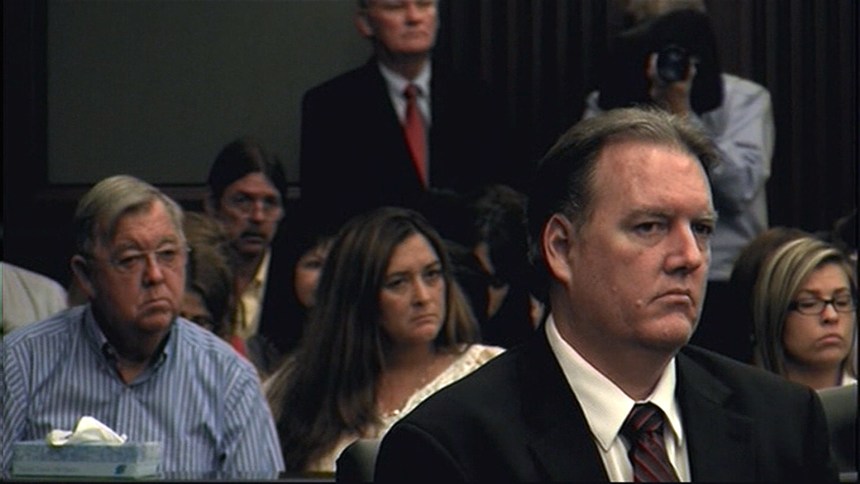
“We had a lot of discussion on him getting out of the car, and the threat is now gone, and your intent is yet to still go ahead and pursue this vehicle,” she said. She was referring to Dunn’s decision to continue shooting at the SUV as it drove away, when he had already fired the shots that took Davis’ life.
Valerie said she and the other jurors never looked at the case as racially motivated.
“Sitting in that room, it was never presented that way,” she said. “We looked at it as a bad situation where teenagers were together, and words were spoken, and lines were crossed.”
Valerie said she hopes Davis’s parents will believe that she and the rest of the jury did all they could to find justice.
“I am sorry, of course, nothing will bring back their son,” she said. “I hope that they feel that we didn’t do them a disservice.” The teen’s parents responded Wednedsay morning in an interview on Good Morning America. “We believe absolutely with all of our hearts that they did everything they could to come to what they believe was the most just decision,” mother Lucia McBath said. “They’ve done the best that they can with the tools that they had at the time.” McBath said that she and her husband remain committed to fighting back against gun violence. “Justice for Jordan will be ultimately really when we change the laws, because that will be not just justice for Jordan and justice for Trayvon (Martin) and justice for all the children at Sandy Hook and justice for Aurora and justice for Virginia Tech and the Navy Yard, it will be justice for everyone who has suffered because of these laws, and will continue to suffer,” she said. “Once the laws are changed that’s the ultimate justice for all.” Davis’s father, Ron Davis, still wants to find justice in the court room, not just for himself, but for Trayvon Martin’s family as well. “Every time I get justice for Jordan it’s going to be justice for Trayvon,” he said. “I want Michael Dunn to be tried and found guilty of killing my son, of letting him know that it was wrong to kill my unarmed 17-year-old, and all the other 17-year-olds out there, they shouldn’t have to fear the adults with the guns,” he added. Trayvon Martin was 17 years old when he was shot and killed in Florida, and some have compared his case to that of Davis. George Zimmerman, was found not-guilty of second-degree murder in that shooting last summer, in a trial prosecuted by State Attorney Angela Corey, who also prosecuted the Dunn trial. Recommended



Morgan Whitaker