The Michigan State House passed a controversial right-to-work bill Tuesday, which exempts employees in union workplaces from joining or paying dues to unions. Governor Rick Snyder has vowed to sign it into law, and is expected to do so as early as Wednesday.
Passage of the bill is a devastating blow to some Democrats and supporters of labor unions, who argue the bill weakens union rights and will hurt workers. Several economic reports show that right-to-work laws lead to declining wages for workers. A study by the Economic Policy Institute last year found that wages in right-to-work states are 3.2% lower than in states without right-to-work–translating to $1,500 a year less on average.
The Detroit Free Press reports that of the top ten states with highest per-capita income, just one is a state with a right-to-work law. Among the top ten states with lowest per-capita income, seven are states with a right-to-work law.
Studies do show that right-to-work laws attract more businesses–which is a large part of the Republican argument to support them–but they do so at the cost of the little guy. A 2007 study out of Hofstra University determined that “the number of businesses and self-employed are greater in right-to-work states, but employment, wages and per-capita income are all lower.” Essentially, right-to-work states become more attractive to those in the corner office because they are less attractive to those on the factory floor.
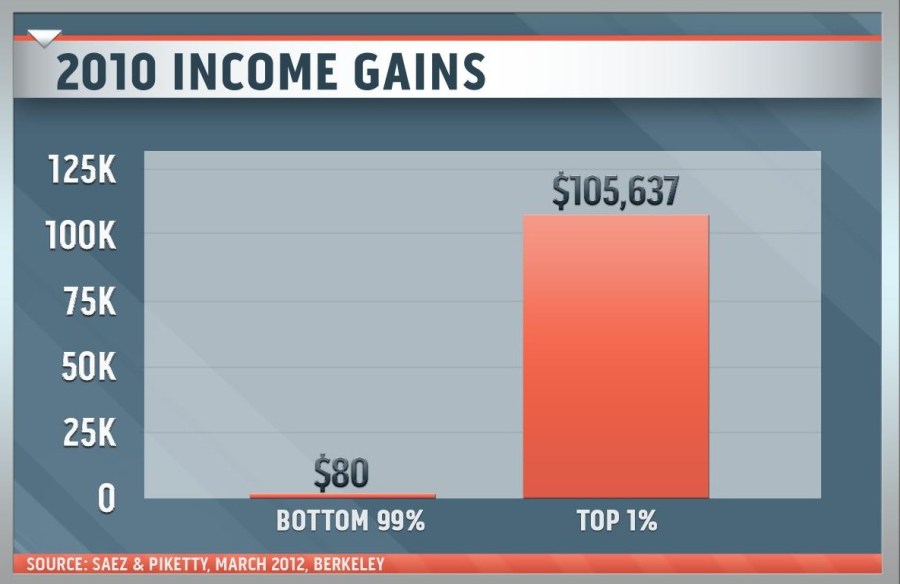
This is a theme President Obama spoke about yesterday in Redford, Michigan, calling right-to-work laws a “race to the bottom” and saying, “What they’re really talking about is giving you the right to work for less money.” Lower income workers, still reeling from the recession, are in no shape to deal with policies that drive down their wages. Earlier this year, the Federal Reserve reported that American families had lost 38% of their median net worth in the three years following the start of the recession. But those losses weren’t felt equally. While the middle 60% took the hardest hit, the top 10% actually saw their net worth rise. With this backdrop of inequality, Michigan employees in union workplaces may need to brace for another hit to their paycheck. Check out the video above for Alex Wagner’s full discussion with her panel on the impact of the right-to-work law in Michigan.
Joshua Chaffee Recommended