Governor Chris Christie will likely survive bridgegate. He apologized; he’s holding his staff accountable. If no other damaging information surfaces, he may be able to move past the story eventually. (And the recall rules in New Jersey make it almost impossible for him to lose his job, anyway.)
But that’s the case for Christie as governor. For Presidential Candidate Christie, this is a much more damaging event. That’s because it enables Republican and Democratic opponents to tie together a wealth of existing stories that, cumulatively, portray Christie as an above-the-rules bully.
Christie’s hard-charging, sometimes belligerent, approach to governing is a huge part of his appeal. So anything that puts a darker edge on it, suggesting those same tendencies can lead to abuse, is dangerous.
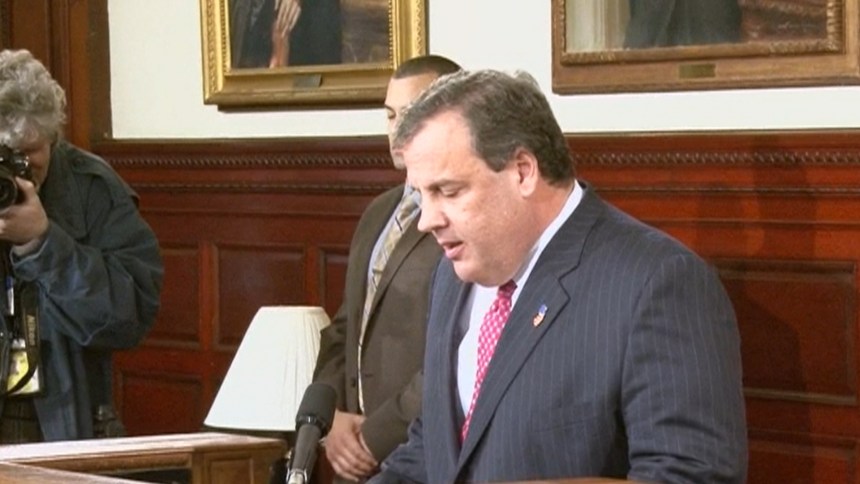
“I am who I am, but I am not a bully,” Christie said in his press conference Thursday, recognizing the connection.
It doesn’t help that Christie has a lot of enemies within the party who would be happy to see him stumble. Many conservative activists believe, as former Rudy Giuliani strategist Rick Wilson put it in National Journal, that Christie “goes out of his way to be a d–k to other Republicans.” He’s gotten into feuds with GOPers across the ideological spectrum, from disgruntled Mitt Romney supporters who blamed him for undercutting their candidate after Hurricane Sandy to tea party Republicans upset with his attacks on the GOP’s right wing.
Republican Senator Lindsey Graham, a relative moderate who is apparently not a Christie fan, twisted the knife on Thursday.
“You know, being candid and forthright and speaking truth to power is one narrative but the other narrative is, you know, he’s a transactional politican, he rewards his friends and punishes his enemies,” Graham told reporters.
For Christie, the cautionary example is Romney’s business experience, which was both the core of his Mr. Fix It presidential image and his top liability as Republicans and Democrats used his Bain Capital record, his foreign holdings, and some verbal slips to tar him as an unfeeling rich guy. There’s also a regional factor for both candidates: just as Romney’s Republican opponents used Massachussets’ liberal leanings to portray him as a secret lefty, you can expect Christie’s future foes to use New Jersey’s reputation for corruption to amplify any bridge-based attacks.
Democrats are trying to keep things rolling with an eye to the future. DNC chairwoman Debbie Wasserman Schultz, who helped lead the party’s earliest efforts to define Romney’s tenure at Bain Capital, said Thursday that the bridge e-mails “indicate what we’ve come to expect from Governor Christie – when people oppose him, he exacts retribution.” Correct The Record, an independent group set up to defend Hillary Clinton ahead of her likely presidential run, has been blasting out memos for weeks on the bridge scandal. Just as they did with Romney’s business dealings, partisan operatives want to make sure they plant the seeds for presidential campaign ads well ahead of time.
They have good reason to want to define the governor this far out. A late December CNN/ORC survey found Christie polled better — way better — than any other Republican they tested against Clinton. He’s one of the few figures in the GOP who’s managed to cultivate a national profile that’s distinct from the broader party’s struggles.
“My sense is it’s not an easy attack in a primary because it’s not ideological, it doesn’t play into the usual disgreements between conservatives and Christie,” GOP strategist Matt Mackowiack told msnbc, “but the media honeymoon for Christie is now over and that is a problem for him.” The ongoing danger for Christie is that the bridge provides a foundation to build on using various older controversies. “The fact this played into an existing narrative about Christie is why it was as explosive as it was,” Mackowiak said. Former Governor John Corzine, whom Christie defeated in 2009, tried to use ethics issues as his main line of attack. He ran ads refererring to the time Christie, then a U.S. Attorney, got into an accident that sent a motorcyclist to the hospital but avoided a ticket after he — flouting federal guidleines — mentioned his rank to the officer on scene. There was another traffic incident where Christie dropped his U.S. Attorney title in front of an an officer who pulled him over for speeding in an unregistered car. In the unpopular Corzine’s hands, the ads came off as desperate and drew far more attention for their seeming allusions to Christie’s weight than their substance. The bridge scandal means that Christie not only faces renewed scrutiny today, but that future campaigns can weave his past controversies into a more comprehensive and plausible charge. Old material–and there’s plenty of it–is freshly relevant. Last month, The New York Times moved the ball forward with a story detailing a long trail of complaints, all denied by Christie, that the governor’s administration had engaged in punitive behavior against political foes. And Romney aides who vetted Christie for a possible veep spot told John Heilemann and Mark Halperin for their book Double Down: Game Change 2012 that they were concerned about potential blowups including overspending on government travel and his record as a former lobbyist. So the once-invincible Christie is now–and will remain–vulnerable. He might handle the traffic scandal well over the next few days and bounce back quickly. But from here on, any new stories or stray quotes that give off the slightest whiff of wrongdoing will be seized on as just the latest example of Christie the Trenton bully.
Benjy Sarlin Recommended