








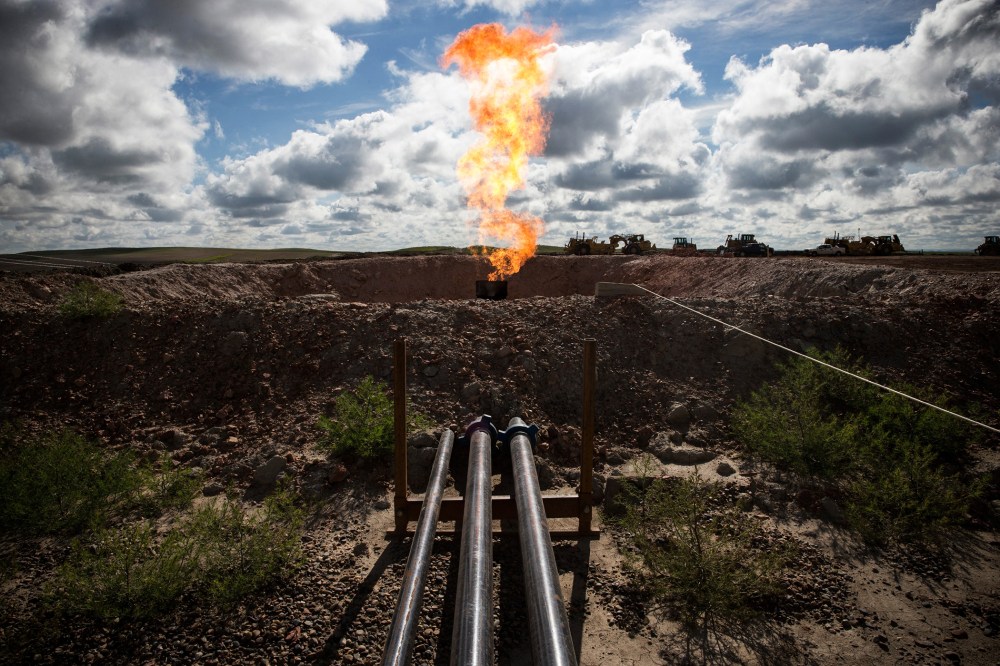
It’s still possible to keep the global temperature at a manageable level, a new U.N. report on climate change concludes. But only if the world embarks quickly on an intense effort over the next 15 years.
The report, released Sunday by the Intergovernmental Panel on Climate Change (IPCC), the leading world organization monitoring the issue, also found that climate change can be addressed without affecting living standards, and with only a tiny reduction in economic growth.
“We’ve already had wake-up call after wake-up call about climate science,” Secretary of State John Kerry said in a statement Sunday. “This report is a wake-up call about global economic opportunity we can seize today as we lead on climate change.”
It’s the third and final installment in a series of IPCC studies on climate change. The first two concluded that warming is “unequivocally” caused by humans, and that if left unaddressed, it poses an enormous threat to mankind, with the potential to cause wars and mass migrations.
In order to keep the global temperature below the 2-degree Celsius cap previously set through U.N. talks, greenhouse gas emissions will have to drop by 40-70% by 2050, the report found. In the first decade of the 21st century, emissions rose by 2.2 peryear—largely thanks to population and economic growth in China and other parts of the developing world.
The U.N. is working toward a far-reaching new global climate pact, to be completed in late 2015 and to take effect in 2020. But the major challenge has been getting rich and poor nations to agree on a plan.
That issue was on display in the preparation of the new study released Sunday. According to reports, governments of many developing countries objected to a draft that included a graphic dividing the world into four categories based on average income, fearing that doing so would leave them with too much blame for rising emissions. Many developing nations see industrialized countries like the U.S. and those of western Europe as primarily responsible for warming, and therefore argue that those countries should bear the lion’s share of the burden of tackling it.
“This is the first step for developed countries of avoiding responsibilities and saying all countries have to assume the responsibility for climate change,” Diego Pacheco, who heads the Bolivian delegation to the IPCC, told the AP.
The graphic was ultimately deleted from the final version of the report. U.N. climate talks use a different categorization, dividing the world into developed and developing countries. But developed countries object to that scheme, saying it’s wrong to lump fast-growing economies like those of China and India in with the least developed countries, allowing them all to face relatively lenient emissions standards. As for costs, the report said transitioning to low-carbon energy sources would only reduce economic growth by about 0.06 percentage points per year—and that’s without accounting for the economic benefits of reducing climate change. “So many of the technologies that will help us fight climate change are far cheaper, more readily available, and better performing than they were when the last IPCC assessment was released less than a decade ago,” Kerry said.
Zachary Roth Recommended


