








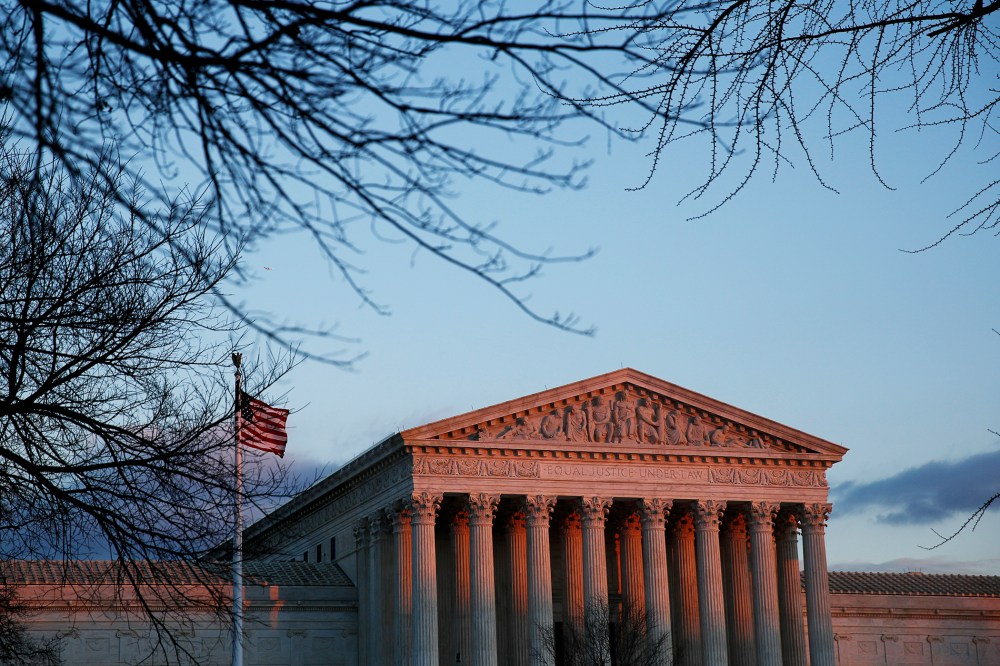
On Friday, the U.S. Supreme Court will decide which cases it wants to add to its agenda — and whether, in a term already poised to be politically controversial, with a major challenge to the Affordable Care Act and a potential gutting of the Fair Housing Act, it wants to add abortion to the list.
The case, Humble v. Planned Parenthood of Arizona, concerns a law that has been copied throughout the country. It requires doctors to use outdated protocols for pills that induce abortion. The effect is to narrow the window doctors can administer the drugs, raise the dosage, and make a safe procedure slightly riskier, which is why pro-choice advocates say such laws amount to banning the option altogether.

The 9th Circuit Court of Appeals, known as one of the most liberal courts, struck down the Arizona law on appeal, so if the court punts, Arizona won’t be able to enforce it. “If allowed to take effect, the restriction would deny most Arizona women access to an alternative to surgical abortion that has been widely recognized as safe and effective by medical experts and organizations worldwide for over a decade,” said the Center for Reproductive Rights, which represents clinics in the case.
Along with Planned Parenthood, they have urged the court not to take the case, saying it is only a preliminary injunction and that the court should wait for fact-finding in a trial. “There is a significant, unresolved dispute about the meaning and scope of the challenged law and because the case may be mooted by the outcome of a pending state court adjudication,” the clinics argued in their brief. In asking the court to take the case, state officials in Arizona claim there is a circuit split because the 5th and 6th circuits have upheld similar laws.
RELATED: Watch this pregnant woman’s fierce takedown of anti-abortion protesters
In June, the 9th Circuit ruled that “Arizona introduced no evidence that the law advanced in any way Arizona’s interest in women’s health,” and that the law violated the Supreme Court’s “undue burden” standard for how far a state can restrict abortion. The Supreme Court has seemed reluctant to revisit the politically divisive issue of abortion. In January, it declined to hear a separate abortion law appeal from Arizona, on a ban of abortion after 20 weeks also struck down by the 9th Circuit. In November 2013, it also refused to take up a medication abortion law, similar to Arizona’s, that came from Oklahoma’s Supreme Court. The Supreme Court has, however, acted on emergency petitions from abortion providers in Texas without fully ruling on their merits. In November, it allowed an admitting privileges requirement for abortion providers to go into effect there, closing many clinics, then in October blocked an even more sweeping requirement that the clinics convert to mini-hospitals. One of those restrictions, which Texas claims protect women but medical experts and pro-choice advocates point out simply close down safe clinics, seems likelier to be taken up by the court in full. With such clinic regulations being passed in states across the country and challenges wending their way through the courts, the Supreme Court may well overcome its reticence.
Irin Carmon Recommended


