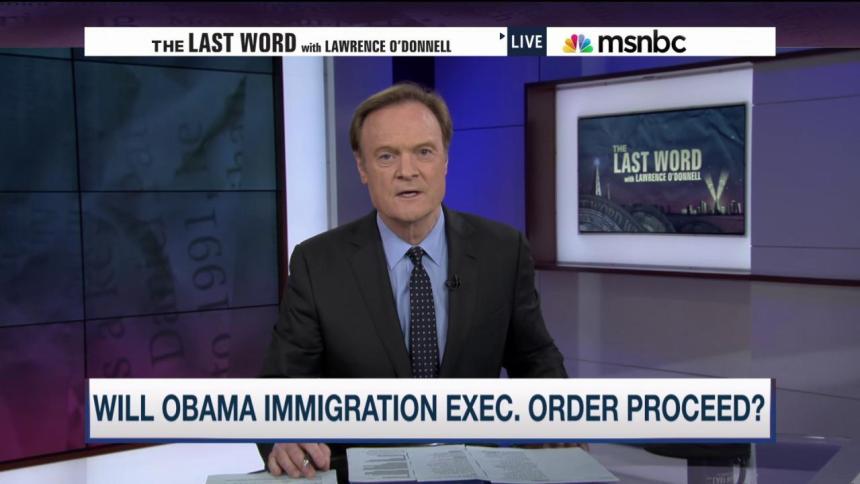
The 26 states suing over President Obama’s executive actions are urging a federal judge in Texas to reject the administration’s request that he reverse his previous ruling and allow the immigration measures to move forward.
In a joint-brief filed late Tuesday, Texas leads the other 25 states in arguing that the judge has no reason to grant a stay to his preliminary injunction and that the federal government would not be burdened by maintaining the status quo. The executive actions, which would grant temporary legal status and deportation protection to another 4 million undocumented immigrants, were supposed to kick in on Feb. 18, but were pushed back because of the judge’s initial ruling.
“In short, there is no emergency need to institute this sweeping new program and the stay can be denied for that reason alone,” the states argue in the brief.
RELATED: Appeal date set on Sheriff Joe Arpaio’s immigration lawsuit
It is the latest step in the legal challenge stacking up against the Obama administration after U.S. District Court Judge Andrew Hanen, a George W. Bush appointee, issued a preliminary injunction that put a freeze on the implementation of the measures. The temporary block came just days before the enrollment process was scheduled to role out, spurring what will likely be months of delays while the issue is wrangled through the court.
The Department of Justice had asked Hanen to rule by last Wednesday before it would take the matter directly to the 5th Circuit Court of Appeals. In response, Hanen said he would not meet that deadline and would instead allow the states that filed the lawsuit to offer input on his decision.
The joint-brief filed Tuesday is the states’ response to Hanen’s request. In it, the states drew on many of the same arguments Hanen provided in his 123-page opinion filed when he issued the preliminary injunction last month. In agreeing with Hanen, the states assert that local economies will face “concrete injuries” and substantial costs in issuing driver’s licenses to the undocumented immigrants, and that public interest in the case doesn’t warrant a stay.
RELATED: House passes clean bill to fund Department of Homeland Security “Further, as the court has already pointed out, once President Obama initiates this action, it will be practically impossible to undo,” Texas Attorney General Paxton said in a statement. “The court properly halted the Obama administration’s unlawful action, and the defendants’ request for a stay should be denied.” White House Press Secretary Josh Earnest said that the Department of Justice will be holding off before requesting an emergency stay from the 5th Circuit, a conservative-leaning three-judge panel in New Orleans. “At this point, we’re going to continue to see it through at the district court level,” Earnest said at a press briefing last week.
Amanda Sakuma Recommended