








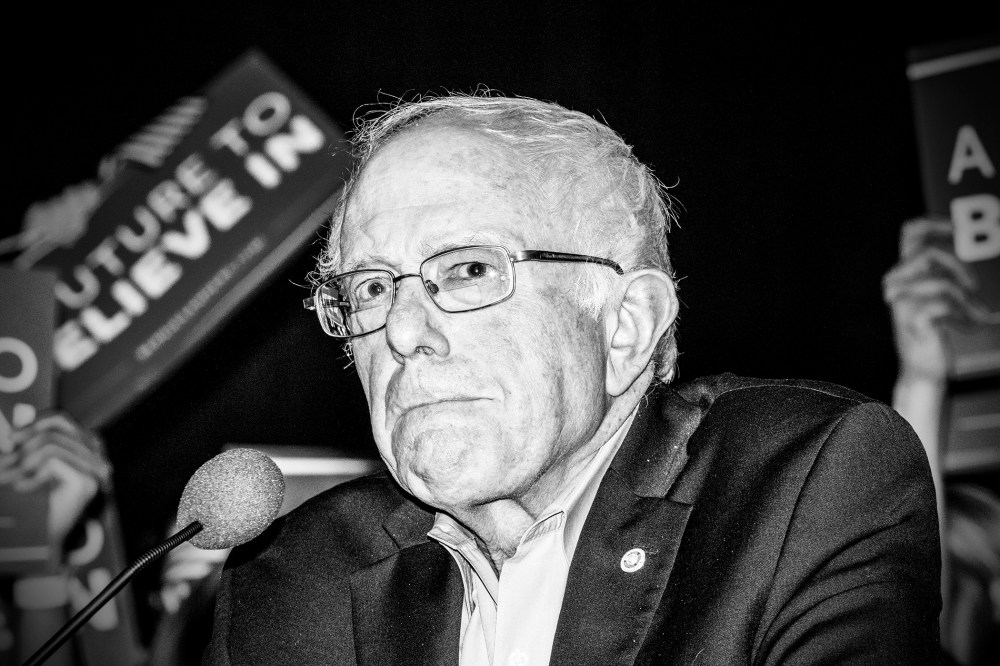
New York is the first in a series of upcoming “closed primaries,” which allow only registered Democrats to participate — and that could create a major problem for Bernie Sanders.
The Vermont senator is the longest serving independent member of Congress in American history, and independent voters have fueled his success across the country.
In Wisconsin last week, for instance, Sanders won independents 72 percent to 28 percent, a margin that helped him rout Hillary Clinton in the state. But Sanders and Clinton split registered Democrats exactly evenly, according to NBC News exit polls.
Sanders lost all three primaries held so far this year that barred independent voters, and closed primaries dominate the final eight weeks of the primary calendar. Nine of the remaining 17 contests are closed primaries, including four out of the five biggest (New York, Pennsylvania, Maryland and New Jersey).
In New York, tight laws and early deadlines will compound the challenge for Sanders.
There is no same-day registration in the state. Independents or members of third parties who want to vote as Democrats had to change their party registration by October 9.
And new voters – another key Sanders voting bloc – had to register by March 25, just days after the Sanders campaign deployed their first paid staffers in New York and the day before they opened their first field office there.
In Arizona, there were widespread reports of independent Sanders supporters showing up at the polls, only to be turned away because they had missed the deadline to switch parties.
The rules are sure to keep at least some Sanders supporters from turning out in New York, but the question is how many and whether the Sanders campaign can make up for losses among other groups.
“We get tons of emails from people who are just discovering that they can’t vote for Bernie because they realize it’s a closed primary,” said Tascha Van Auken, an Obama campaign veteran who co-founded the volunteer group Team Bernie NY, which has worked to register voters ahead of the deadlines.
“It really is a large segment of New York that gets shut out of the primary. Unless you’re very plugged into the political process, you likely don’t even realize it,” Auken said.
John Hughes, who created the website VoteforBernie.org to help Sanders fans learn how to vote in their states, said he’s still regularly getting a trickle of emails from people who missed the deadline to switch party registration.
“It’s really unfortunate. The deadline was really early, before many people were even following the campaign, before even the first debate,” he said of the October date.
Sanders’ strength with independents has been a pattern that’s held true across the country.
In Michigan, for instance, where Sanders pulled out a surprise victory, Clinton comfortably carried registered Democrats 58 percent to 40 percent. In Massachusetts, Clinton edged out a narrow win by beating Sanders among registered Democrats 60 percent to 40 percent, even though he won two-thirds of independents. In New Hampshire, where Sanders blew out Clinton with independents and overall, she nearly tied him with Democrats.
A national NBC News/Wall Street Journal poll from March found that Clinton leads Sanders nationally 60 percent to 38 percent among Democrats, while Sanders dominates 59 percent to 35 percent among Democratic-leaning independents. In New York, about 20 percent of the state’s 11.7 million voters are unaffiliated with any party, according to Board of Elections data. Also barred from the April 19 primary are voters registered with third parties, including the 48,000 people registered with the Working Families Party. The party endorsed Sanders and its volunteers have been working hard for the insurgent, but those registered on its line won’t be able to vote for him. Neither will the 26,000 Green Party members in the state. Recognizing the danger last summer, pro-Sanders volunteers did an impressive job of organizing registration drives ahead of the October and March deadlines. Team Bernie NY alone says they collected information for 13,000 registrations. Hughes said over 4,600 people used his website to submit registrations. But while state officials reported an unprecedented surge in new voter filings just ahead of last month’s deadline, overall voter growth was disappointing. As of April 1, Democrats had added about 14,000 people to their rolls (out of close to 6 million registered voters) since the same day last year, according to Board of Elections data. Republicans added only 12,000 (out of close to 3 million). Barbara Bartoletti of the League of Women Voters told the New York Post the numbers were “very depressing, but not surprising,” given the Empire State’s strict ballot access laws. Sanders allies acknowledge the issue but say they think they can overcome it by super-charging turnout among young people and other key Sanders groups. “In every one of those primaries and caucuses, a coalition of enthusiastic young people, working families and voters hit hardest by today’s rigged economy have come together to defy expectations and build a political revolution.” said Karthik Ganapathy, a spokesperson for the Sanders campaign. Indeed, Democrats are by far the largest group of voters in New York, which has a relatively small number of independents compared to states like Arizona. The challenge for Sanders will be making sure he gets enough of them to the polls to not only beat Clinton, but also overcome the independent deficit.
Alex Seitz-Wald Recommended


