








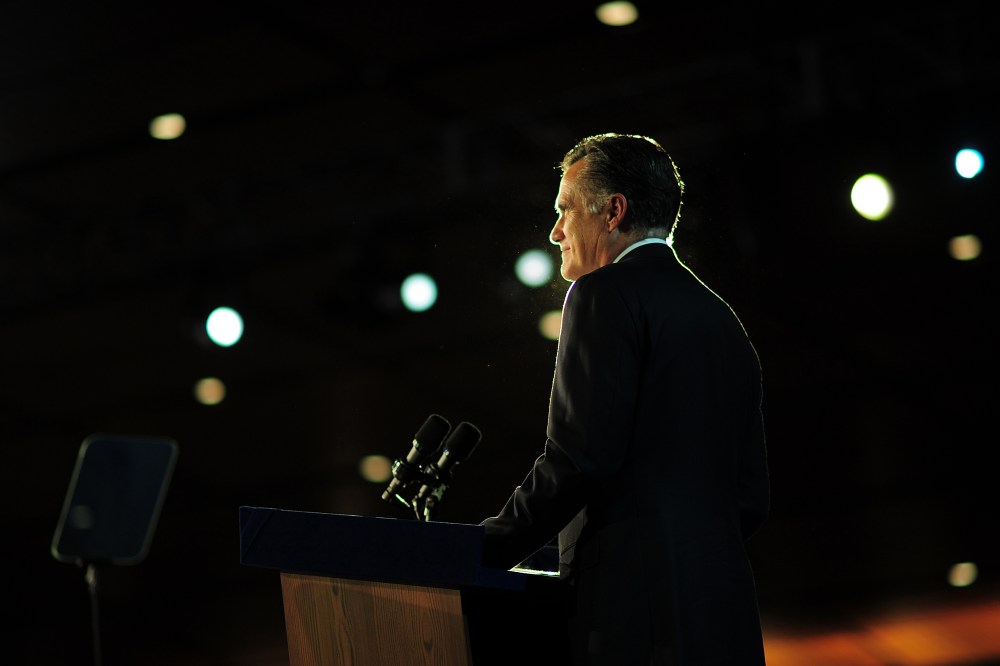
Was Mitt Romney’s 2012 presidential campaign strategy undone by too much red tape? A new study finds that while the former executive boasted of his managerial competence, Romney’s digital team was hamstrung by an approval process that required 22 people to sign off on all tweets prior to posting.
“So whether it was a tweet, Facebook post, blog post, photo — anything you could imagine — it had to be sent around to everyone for approval,” Caitlin Checkett, a Romney digital staffer, told Daniel Kreiss, a University of North Carolina-Chapel Hill professor who interviewed former Obama and Romney staffers to determine the role Twitter played in each campaign’s digital efforts. “Towards the end of the campaign that was 22 individuals who had to approve it.”
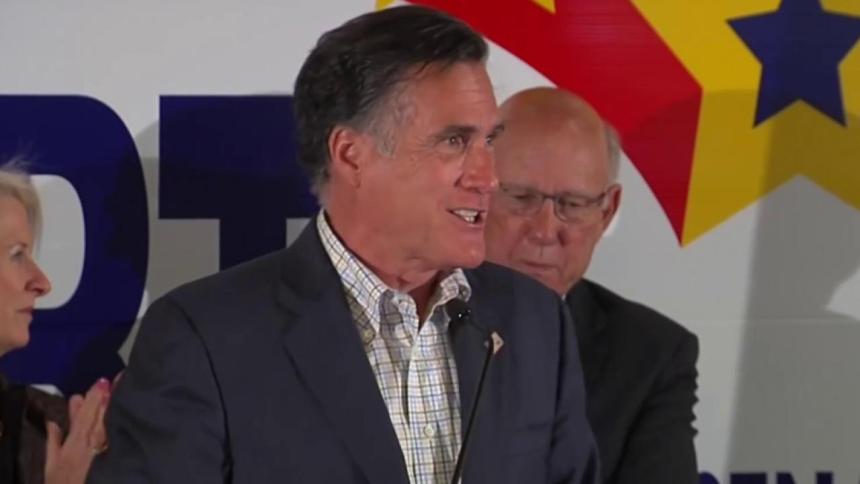
“The digital team unfortunately did not have the opportunity to think of things on their own and post them,” Checkett says in the study. “The downfall of that of course is as fast as we are moving it can take a little bit of time to get that approval to happen.”
While the Obama campaign used Twitter quickly and creatively, building on a digital strategy based around constant experimentation, the Romney campaign was bottlenecked by having to wait for so many approvals, forcing the social media team to rely on reusing already-approved press releases.
The complicated approval system severely limited the Romney team’s creativity and ability to respond swiftly on social media. “I felt like that was a huge problem because of course people don’t want to go to your website and read press releases and we knew that,” Checkett said. Romney digital director Zac Moffatt described it to Kreiss as “the best tweets ever written by 17 people.”
The Obama campaign’s digital team, Kreiss finds, had far greater autonomy to operate independently, allowing them to respond to news events swiftly and creatively on Twitter — a key factor in their online success. Obama digital director Teddy Goff told Kreiss that campaign manager Jim Messina “believed that you’ve got to go let the digital guys do what the digital guys want to do and not have the digital guys servicing a communications team who don’t get digital and aren’t going to get what is going to work.”
Another striking finding is that both campaigns saw Twitter less as a way of influencing voters or driving fundraising donations, but rather largely as a tool for influencing journalists. Both Goff and Moffatt told the study’s author that they saw Twitter as dominated by political elites and journalists, resulting in a Twitter campaign strategy aimed more at influencing those people than at trying to drive votes or donations.
“Most likely not one thing we did on Twitter persuaded any voter or even necessarily reached any undecided voter, but what it did do was, you know, reached the somewhat elite core of supporters and then very importantly reached reporters as well,” Goff says. “So for Twitter we spent a lot of time thinking about how we could sort of manipulate the sort of national dialogue, the dialogue around politics.”
In reality, Twitter is not an accurate or scientific barometer of public opinion. A Pew study in January 2014 found that only 19% of online adults in America use Twitter — less than one in five people. But much of the Obama campaign’s online strategy was “performative,” Kreiss says, designed to create buzz that journalists and political elites would interpret as a barometer for public sentiment, thereby shaping coverage of the election. Kreiss points to the example of the Obama campaign’s viral “This seat’s taken” tweet, which featured a photo of President Obama in his chair, posted in response to Clint Eastwood’s infamous “empty chair” speech at the RNC.
The study also highlights the emphasis both digital teams placed on preparing for the presidential debates. Kreiss writes that the Romney team began preparing for the first debate a month in advance, and had a debate strategy that included dozens of pre-written tweets and infographics to use across all their Twitter accounts throughout the first debate. The Obama team was initially caught off-guard. Public and media perception of the first debate generally held that Obama had performed poorly, and Romney had done well. “Goff argues that while the president had an (admittedly) poor performance during the first debate, the reaction to it was compounded by reporters using Twitter as an unproblematic measure of public opinion,” Kreiss writes. “[He] cites journalists using the platform to gauge the performance of the candidates and ultimately proclaim victors, such as Ben Smith of BuzzFeed interpreting public sentiment on Twitter to declare Romney the winner 40 minutes into the first debate.” Moffatt acknowledges their social media strategy played a role in shaping perception of the debate: “We practiced it and, first of all, we were also very fortunate — that you look up on social media during the debate, how we are crushing this guy. But if social media hadn’t existed I believe that Obama folks would have come out afterwards and they would have been like ‘that is not true.’ But the social got so overwhelming they didn’t even turn up for 30 minutes to the room afterwards to figure out how to talk about it.” After the first debate, Kreiss says, the Obama campaign quickly learned the importance of using social media to influence public perception, and prepared a similar strategy to the Romney campaign for the second debate, using pre-scripted tweets, rebuttals, and infographics. While Kreiss’ study focuses solely on Twitter, other social media platforms surely played a critical role. Facebook has far more users than Twitter, and was central to both campaigns’ digital strategies. According to the same 2014 Pew study, 71% of online adults in America use Facebook whereas only 19% use Twitter.
Nisha Chittal Recommended


