








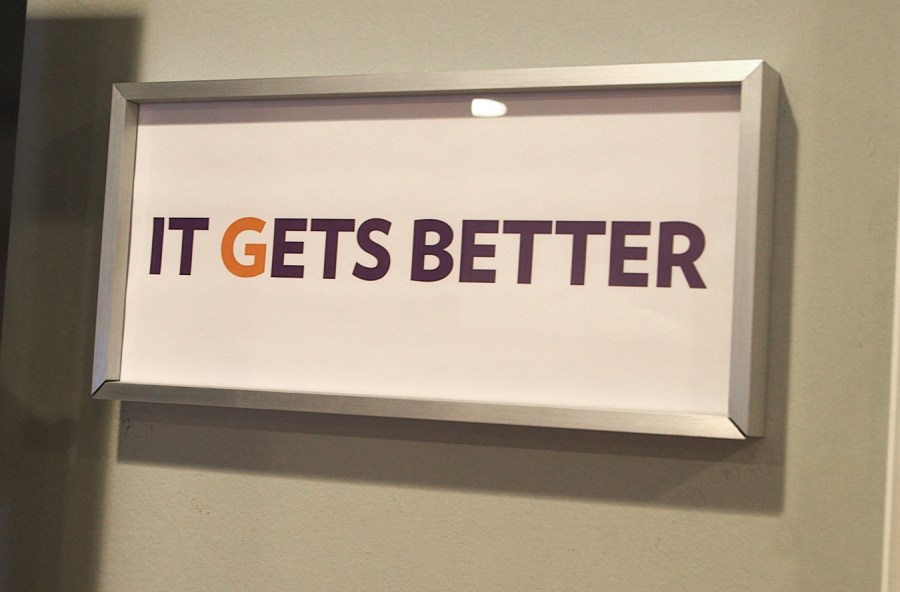
LGBT teens experience bullying three times more than their straight peers, and more than one third of LGBT teens attempt suicide. For LGBT youth, feelings of depression are alarmingly high. We know that these feelings can be caused by anti-LGBT bullying in school and fear and anxiety about familial acceptance. Many LGBT teens have the misconception that they are isolated in their problems.
Giving LGBT youth tools to learn and explore our community’s history validates LGBT identity and emboldens youth to live life as their authentic selves.
Most students who use homophobic slurs don’t understand their historical context. They may think these words are meaningless because they don’t know any LGBT-identifying people. But the truth is—LGBT people have existed in all facets of history.
When LGBT youth learn that this identity is shared with innovators and leaders, they are given a sense of legacy and community. And when all students, regardless of sexual orientation or gender identity, learn that important historical figures—from Frida Kahlo to Oscar Wilde—were LGBT, it humanizes the LGBT experience. Students learn that orientation or gender can be just a small part of what makes a person’s identity.
Many LGBT stories are unknown to youth because of historical oppression, discrimination, and erasure. Even LGBT youth who are familiar with pioneers like Harvey Milk don’t have easy access to the diversity of stories available. Stories like Mia Yamamoto’s—a Vietnam veteran who transitioned publicly and became the first out-trans public defender in Los Angeles. Or Troy Perry, founder of the Metropolitan Community Church!
We hope that highlighting the unsung heroes of the LGBT rights movement will educate a diverse group of young people about the injustice that the LGBT population has faced throughout history.
This exposure to fearless activists and brave leaders will foster support for LGBT youth today and demonstrate the need to continue working towards a more inclusive society. At the It Gets Better Project, we strive to help LGBT youth empower themselves by finding community. LGBT pioneers who have spent generations making it better for us offer a unique and powerful gift, true to the spirit of It Gets Better—their personal stories of perseverance and love. We thank these fearless leaders for sharing their lives and work, and inspiring the next generation of trailblazers. -Sara DavidMay 2015It Gets Better Project Founded in 2010 by Dan Savage and Terry Miller, the It Gets Better Project is a 501(c)(3) nonprofit organization that uses all forms of media and engagement to reach LGBT youth worldwide in order to provide critical support and hope that life indeed gets better. Through the organization’s messages of hope, international resources and guidance, collaboration and mouthpiece in the media, the It Gets Better Project strives to continuously make life better for LGBT youth. To date, more than 50,000 inspirational videos have been uploaded in support of It Gets Better and the LGBT community, including support from President Obama and 500,000 others who have actively taken the pledge to spread It Gets Better’s messages of hope and speak up against intolerance. The Project has expanded its support of LGBT youth on both a national and global scale, serving as a resource on policy and legal matters. The It Gets Better Project is resolute in its mission to make the lives of LGBT youth, simply put, better. Connect with the It Gets Better Project: @ItGetsBetter, Facebook.com/ItGetsBetterProject, YouTube.com/ItGetsBetterProject.
The place for in-depth analysis, commentary and informed perspectives. Recommended


