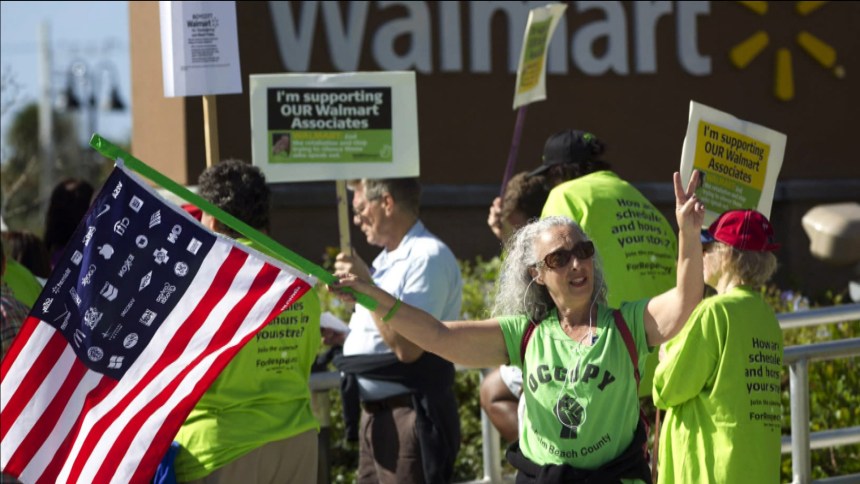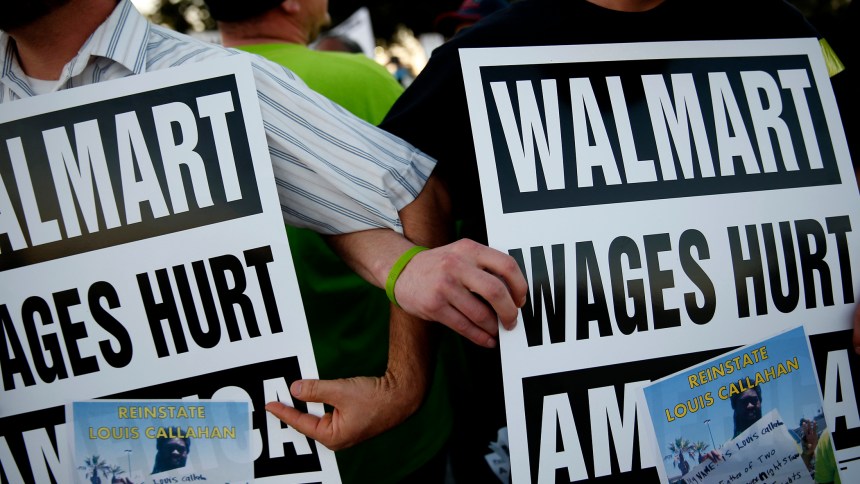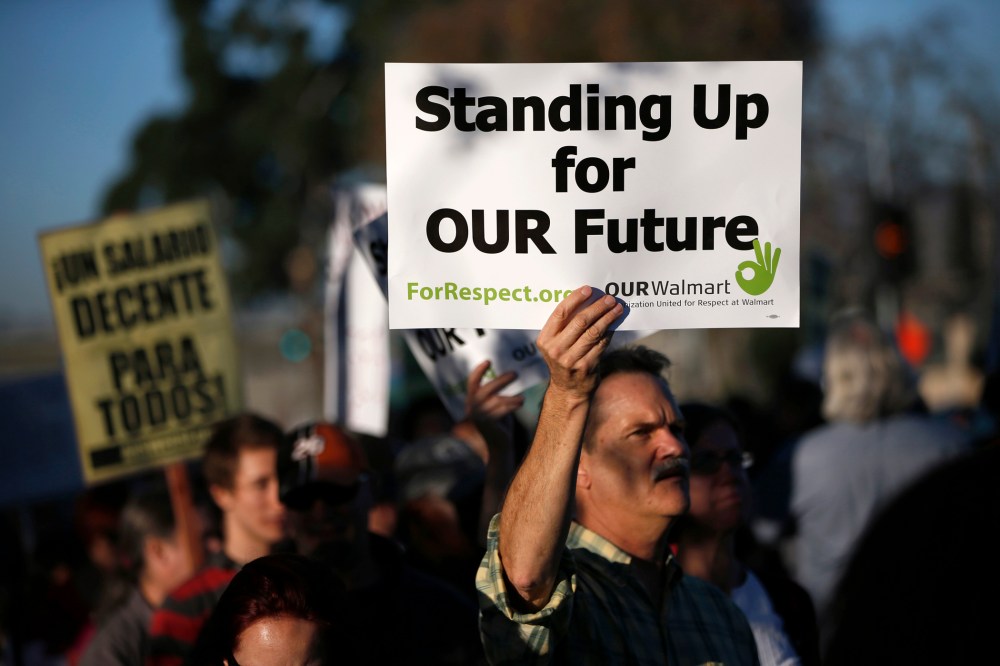
Wal-Mart employees and supporters participated in an estimated 1,500 protests on Black Friday, demanding a living wage and better working conditions at the company where lowest-paid workers make an average salary of $18,720 before taxes. Due to their low wages, many Wal-Mart employees rely on SNAP benefits to make ends meet, amounting to what panelists on Saturday’s “Melissa Harris-Perry” described as a corporate subsidy financed by taxpayers.
A report by congressional Democrats found that in Wisconsin subsidizing Wal-Mart employees’ low wages at a single 300-employee store cost taxpayers at least $904,542 per year. Meanwhile, the Walton family who owns Wal-Mart is worth more than $100 billion. “Their whole strategy for making profit is predicated on taxpayers subsidizing low wage workers,” said Ed Ott, Distinguished Lecturer at CUNY. “When they hire people they coach them on how to access public social welfare plans, including food stamps. Right there is the boldest admission they don’t pay enough.”
Michael Saltsman, Research Director at the Employment Policies Institute, said that consumers are to blame for the low wages of Wal-Mart workers. “Not everyone is going to be able to make $25,000 or $30,000 a year when you have customer demand for low prices,” Saltsman said on Saturday. American Public Media’s Marketplace Money host Carmen Wong Ulrich disagreed with the premise that there is a one-to-one relationship between wages and prices. “You don’t get your money to pay people strictly from sales,” she explained. A 2012 report by Demos found that increasing the wages of lowest-paid full-time retail workers to $25,000 per year would increase prices by just 1% – and only if companies passed the entire cost of the wage raises to consumers.
Saltsman disputed that the Black Friday protests were evidence of a lack of support for Wal-Mart’s employment practices, describing them as “entirely union organized” and made visible by “union-backed PR flacks.” Host Melissa Harris-Perry compared that argument to those who opposed the Civil Rights Movement calling civil rights demonstrators in their communities “outside agitators.”
Former Wal-Mart worker Colby Harris disputed Saltsman’s characterization of the protests, stating that thousands of Wal-Mart employees came out to protest, and many more would likely protest but feared retaliation. He called Saltsman’s comments “highly offensive” for insinuating that workers were being manipulated rather advocating for their own needs. “They’re organizing because they need to survive, not because the SEIU and the UFCW came and told them to do it,” said Alison Kilkenny, Co-Host of Citizen Radio, who was at the Black Friday protests.
Columbia University professor Dorian Warren said the Wal-Mart protests are reminiscent of strikes by General Motors employees in the 1930s and 1940s which resulted in better working conditions and created ladders of opportunity into the middle class. Today, he stated, “we are at the lowest point in social mobility that we have been in decades, and this is a direct result of the creation of these low wage jobs.” Colby Harris, who was fired this year along with other Wal-Mart workers following their engagement in protests against the company, announced that last week the general counsel ruled in their favor finding Wal-Mart was wrong in firing them. “To have good benefits, affordable health care, and a living wage is not too much to ask for in America,” said Harris. “Especially when [Walmart] is the largest private employer in the world.” You can read Walmart’s statement in response to the Black Friday protests here.
Sara Kugler Recommended