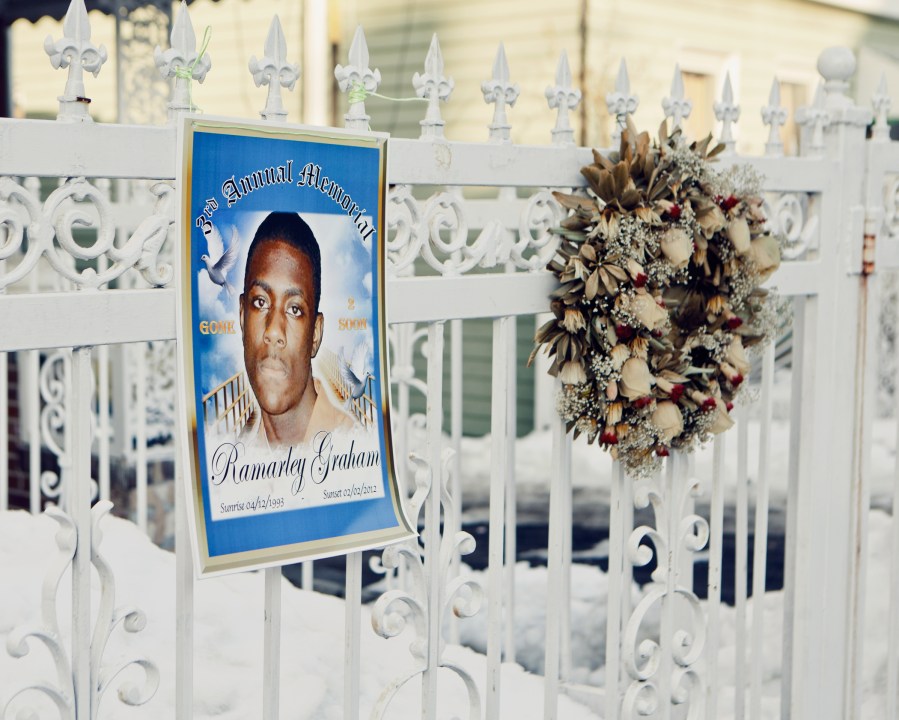
Sometimes, when the ache of her son’s death cuts deeper than usual, Constance Malcolm says she can feel his spirit wash over her like a warm whisper. But in the three years since 18-year-old Ramarley Graham was shot and killed by police in their Bronx apartment, his mother’s fight for justice has been cold and elusive.
“I will never be at peace until they are held accountable for Ramarley’s death,” Malcolm said on a recent afternoon, nestled on a well-worn couch that sits about 20 feet from where a cop fired a bullet into her son’s heart.
Richard Haste, the New York police officer who pulled the trigger on that day in February 2012, was eventually indicted on a charge of manslaughter. But a judge later threw out the indictment because of a technicality. After a second grand jury declined to indict Haste, Malcolm’s last best chance at justice would have come from the federal government.
So she turned to the Justice Department, hopeful authorities there would see what her family and thousands of supporters contend is a clear cut case of police brutality and a violation of her son’s civil rights.
The list of young unarmed African-Americans killed by police or other white authorities has continued to expand as the killers have escaped prosecution or conviction in state courts. And more and more, the victim’s families have turned to the Justice Department seeking relief, but to little avail.
Slow justice
Ramarley Graham was killed after police officers stormed his family’s apartment without a warrant and kicked in several doors before cornering him in the bathroom, shooting him dead. The officers said Graham was trying to flush a bag of marijuana down the toilet, and that he feared he was reaching for a gun in his waistband. No gun was ever recovered.
%22I%20will%20never%20be%20at%20peace%20until%20they%20are%20held%20accountable%20for%20Ramarley%27s%20death.%22′
Supporters of Graham’s family held vigils and protests as the case against Haste withered in the courts. For months, Malcolm and a small army lobbied U.S. Attorney Preet Bharara of the Southern District of New York to take on the case and pressured federal authorities to take a deeper look into the killing. With the help of a national advocacy group, Malcolm launched a petition drive calling for a Justice Department investigation that garnered more than 32,000 signatures.
Finally, last September, the DOJ announced that it would indeed open a civil rights investigation into Graham’s killing.
That was nearly six months ago.
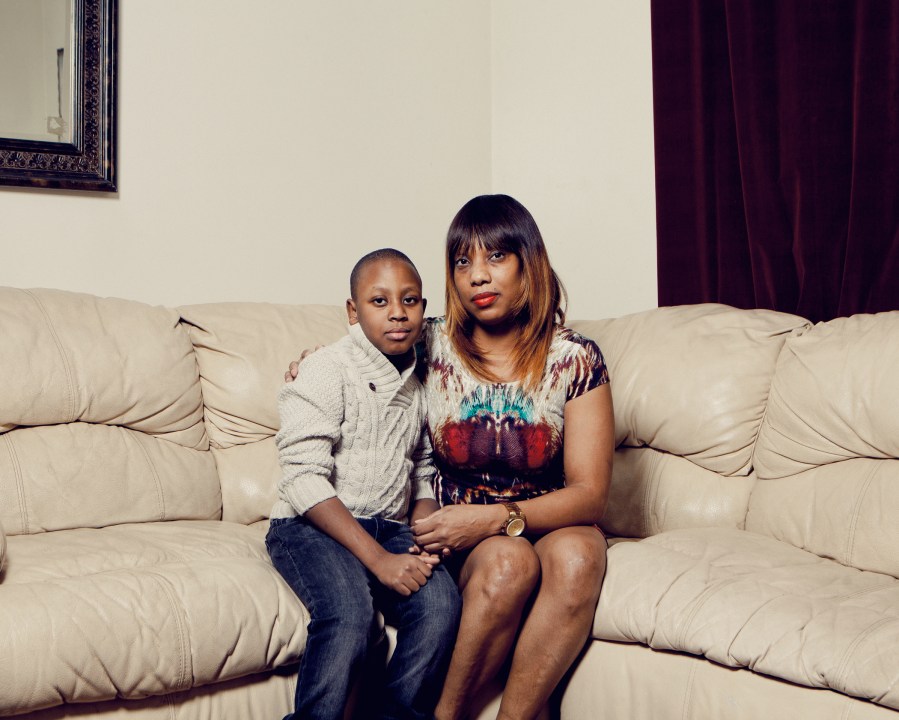
Since then Malcolm said they haven’t heard a word from federal authorities, not even a simple update on the investigation. Most surprisingly, Malcom said investigators have yet to interview Graham’s grandmother or his 9-year-old brother, both of whom witnessed the shooting. “I guess we just gotta sit around and wait, and that’s hard because you know, this local system already failed us,” Malcolm said. “And for me to sit around for the Department of Justice three years or five years later … It’s just more agony prolonged for me.”
In the meantime, as the family awaits the outcome of the Justice Department’s investigation, the city of New York last month agreed to settle a federal wrongful-death lawsuit filed by Graham’s family for $3.9 million.
“This was a tragic case,” New York Law Department spokesman Nicholas Paolucci said at the time. “After evaluating all the facts, and consulting with key stakeholders such as the NYPD, it was determined that settling the matter was in the best interest of the city.”
Malcolm called the award “blood money” and vowed to keep pushing for federal charges against her son’s killer and further, that all of the officers that were involved in his death be held accountable. “It would never compensate for my son’s life. My son’s life doesn’t have a price,” she said. “People have been murdered and they throw money at you and think it’s ok. Accountability would be the right thing — fire these officers and prosecute them.”
Justice in limbo
The bar for an indictment on federal civil rights charges is extremely high in such killings and generally, prosecutors on all levels of the criminal justice system are reluctant to prosecute police. The civil rights investigation into Graham’s killing is just one in a string of recent killings of unarmed black men whose cases were picked-up by the Justice Department in recent years.
Among the more high-profile cases are the killings of Florida teen Trayvon Martin, who was gunned down by former neighborhood watch volunteer George Zimmerman in 2012; Michael Brown, shot last August by a cop in Ferguson, Missouri; John Crawford III, also shot to death in August by police in an Ohio Wal-Mart after picking up a toy gun off a store shelf; Eric Garner of New York killed in July in a police chokehold after being accosted by NYPD officers who suspected him of selling loose, untaxed cigarettes.
Sybrina Fulton, Trayvon Martin’s mother, recently spoke with MSNBC host Melissa Harris Perry about the yearning for closure in her son’s case. “Well, we’ve been waiting over a year to hear something,” Fulton said. “We’ve been in contact with the Department of Justice. But we haven’t heard either way.”
Attorney General Eric Holder, whose departure could come soon as the Senate works through the confirmation of Loretta Lynch, President Obama’s nominee to replace Holder, has said that he hopes to have the Martin and Brown cases closed by the time he leaves office. But meanwhile, without such promises, some of the families involved in other cases are in a state of justice-in-limbo, with little information from the feds and not even a vague timetable as to when final reports could be issued. The slow crawl towards justice, or any resolution for that matter, can be excruciating for these families.
“It is the last step for us because we can’t go back to the local system,” Malcolm said. “I believe the system was never built for us in the first place. It was never built for us, it was always built to keep us down. It’s been like this for years, so I don’t know what’s gonna change it.”
Betsy Feuerstein, a spokesperson for the U.S. Attorney for the Southern District of New York, told msnbc that “we don’t have any further updates” on the Graham case, adding that the office doesn’t comment on ongoing investigations.
“Federal investigations into officer misconduct are among the most challenging and difficult cases to prosecute because the applicable federal statute requires the highest standard of proof in criminal law,” said Dena Iverson, a spokesman for the Justice Department. “These are complex investigations that can take considerable time and effort because they require a thorough review of the relevant evidence to determine whether there is sufficient evidence to bring a prosecution.”
Color of law
The Department of Justice uses its so-called “Color of Law” statutes to prosecute local, state or federal law enforcement officers who willfully deprive a person of their constitutional rights, including various forms of police misconduct such as unlawful homicide, physical abuse and brutality, etc.
Since 2009 the DOJ has charged 415 defendants in 275 such cases.

Over the years, even as a number of police officers involved in controversial killings who have not been indicted or prosecuted has sparked massive protest, the agency has effectively used the color of law statutes to win convictions of other police officers who’ve perpetrated a range of violent crimes against citizens.
Just last month, Joseph Arigo, 47, a former sergeant with the Fulton Police Department in Fulton, NY, was sentenced in federal court to 15 months in prison and three years of probation for beating a handcuffed man inside a police station. According to court documents, before the beating, Arigo ripped a video camera out of the wall to stop it from recording.
Perhaps one of the more noteworthy cases involved the shooting death of a 92-year-old woman in Atlanta during the execution of an illegally obtained “no-knock” search warrant at the woman’s home. The officer was sentenced to five years in prison.
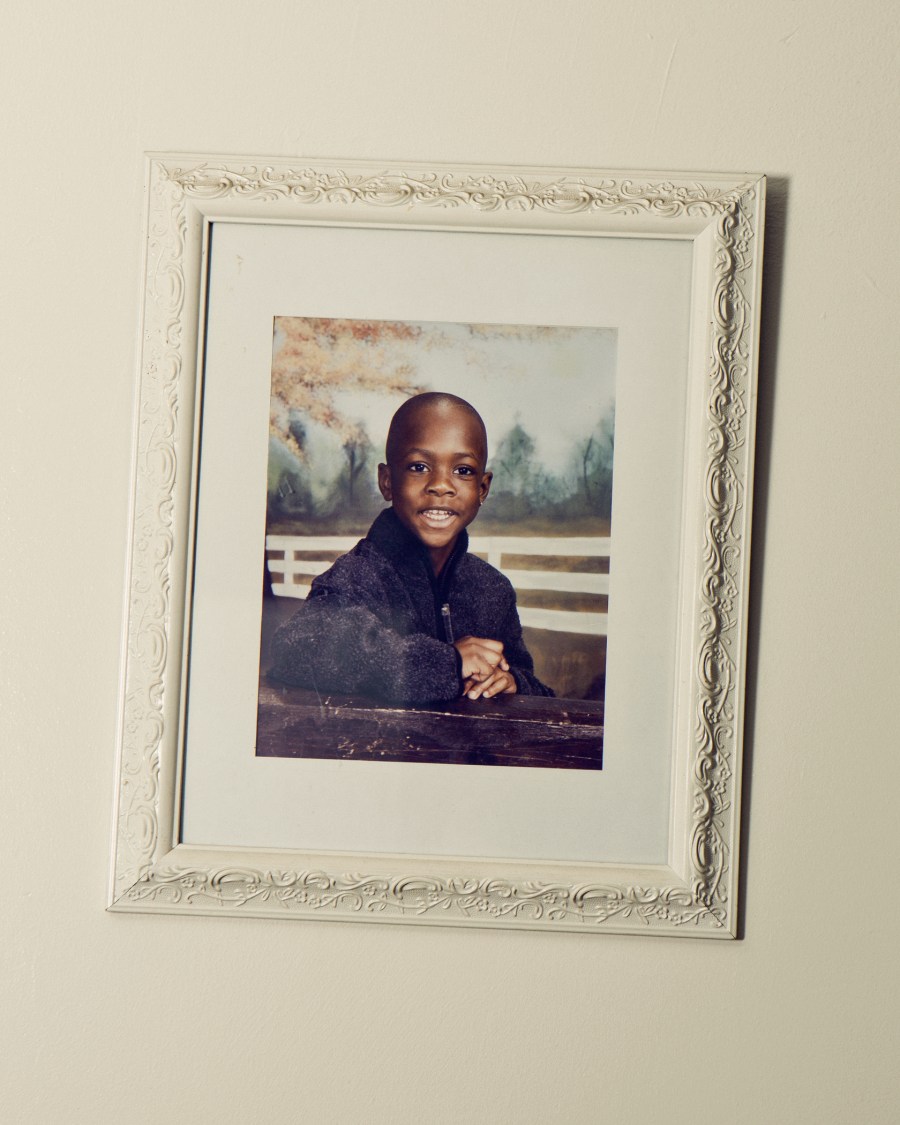
%22There%20is%20no%20timeline%20in%20terms%20of%20how%20long%20it%E2%80%99s%20going%20to%20take%20but%20we%E2%80%99re%20hopeful.%22′ “The bar is high, everybody is anxious for a resolution but more importantly we’re anxious for the right resolution,” Jeffry Emdin, a lawyer for Graham’s family and a former assistant district attorney for the Bronx. “There is no timeline in terms of how long it’s going to take but we’re hopeful.” Emdin said of the many key issues at play in Graham’s killing, one is that the officers never had the right to enter the family’s apartment in the first place, let alone the shooting that followed. “We believe that they should never have entered his house,” Emdin said. “The officers violated all police protocol by potentially putting themselves in harm’s way if there was a threat of a person with a gun.” Broken heart, broken home Three years have passed since Graham’s death. Holidays and birthdays have gone uncelebrated. His belongings and clothing remain much as he’d left them that fateful day, stacked neatly in the corner of the bedroom he occasionally shared with his grandmother. Throughout the family’s three-bedroom apartment, reminders of the teen’s life bring both pain and solace to his loved ones. On the living room wall hangs photographs taken during earlier, more hopeful times. There’s one of Graham as a kindergartner, his eyes wide and his deep brown skin radiant. In another he’s seen as a young teen, posing with his baby brother and older sister, the baby now a 9-year-old whose memories are now clouded by the unshakable trauma of watching his brother lay dying on the bathroom floor. The remnants of when the officers broke into their home— the cracked door frames and busted hinges— haunt the corridors. “It’s never gonna be home again because one person’s missing from our family,” Malcolm said. “And the person that’s missing died right in this home. So it’s never gonna be the same, no matter how we try, you know. But I stayed here because I have a connection here. He– you know, this is where he died, this is where we live. And the energy that’s here is good.” “It seems like it’s not going to get better,” she added. “And every time you turn around another black boy is being killed. I don’t understand why they fear our young men so much just to kill them.” On the morning of February 2, 2012, Malcolm said she headed off to work and left Graham sleeping on the living room sofa. That afternoon he went around the block to a bodega and apparently stopped to talk to a group of people outside the store. At the same time, members of a special police narcotics unit were staking out the place. There’d been reports of drug-dealing going on out front. At least two officers said they thought Graham was armed. Minutes later officers were trailing him back to his family’s apartment. Video captured from security cameras positioned outside the family’s home show Graham calmly unlocking and entering the building and shortly thereafter two groups of plainclothes officers rushing up. Some officers ran up to the front door and attempted to kick it in. Others, with their guns drawn, ran to the back door and pushed past a downstairs neighbor boy who’d opened the door to see what the racket was about. Those officers, in turn, let in their colleagues at the front door, and the cadre ran up the steps to Graham’s apartment. After kicking in the door, they went room to room before finding Graham in the bathroom where police said he was attempting to flush a small bag of marijuana. One of the officers, Haste, claimed that he saw Graham reaching for his waistband. Then he fired on Graham, striking him in the chest. During Haste’s arraignment in June 2012, his lawyer, Stuart London, quoted a statement given by the officer saying his client had had “no choice” but to shoot Graham. “’I thought he was going to kill me,’” London read from Haste’s statement. “So I shot him.” Malcolm saidher mother, Patricia Hartley, Graham’s maternal grandmother, was so close to Haste that when he shot Grahamshe felt the power of the bang in her own chest. According to a federal lawsuit filed by the family, Haste threatened to shoot Hartley as she broke down in tears in the moments after the killing. “My mom, she’s never going to be the same because she and Ramarley was very, very close,” Malcolm said. “She says, ‘How could this happen in a country, you supposed to be free?’” Malcolm said she also worries about her surviving son, the 9-year-old. After the shooting his behavior changed. She began getting calls from the boy’s school about disruptive behavior, about him lashing out. She said he used to talk about the shooting a lot, but now, they try to steer clear of the conversation. There are too many questions, too much hurt, and not enough answers for any of it. How do you teach a young black man in America to trust the police when they spill so much black blood? How do you teach them about good apples and bad apples? “I fear for him every day because my son is damaged. He’s always gonna be damaged from what he saw,” Malcolm said. “No matter how I explain anything to him, like I said, he saw what he saw, and there’s nothing I can tell him that’s gonna change him. I tell him, “There’s good officers, you know. You got bad officers.”
Trymaine Lee
Trymaine Lee is an NBC News correspondent. Recommended