








Call it the “redistribution election.”
A long running divide between the two major parties has become a giant chasm in 2016. Republican candidates are tripping over themselves to propose multi-trillion dollar tax cuts that blow up the deficit to dramatically lower the bill for ultra-wealthy filers and big business, with less generous benefits for lower income households thrown in as a sweetener. Democrats appear poised to run on taxing the rich at higher rates in order to finance spending and new tax credits to subsidize education, health and childcare.
%E2%80%9CEveryone%20is%20finding%20out%20what%20they%20want%20to%20do%20is%20impossible%20if%20they%20care%20about%20the%20deficit.%E2%80%9D’
While there’s nothing new about Republicans arguing lower taxes at the top will boost the economy and Democrats pushing for more investments at the bottom to do the same, the sheer scope of their differences heading into next year’s election is becoming impossible to ignore. Exacerbating the issue is a renewed willingness on the GOP side to rack up debt in order to finance sweeping tax cuts.
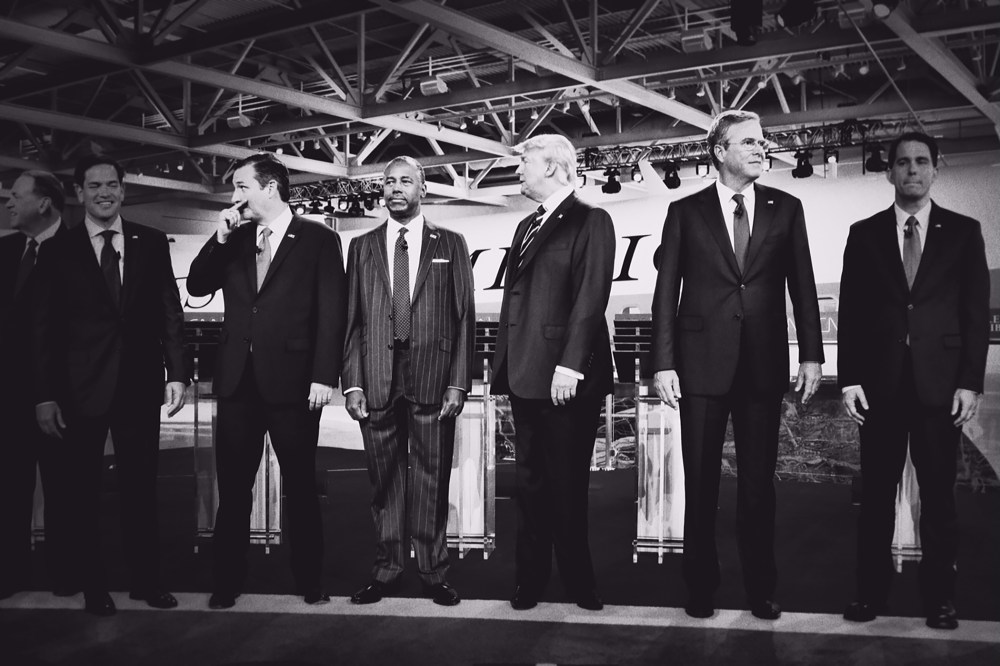
Consider the Republican plans out so far, as scored using traditional congressional methods by the conservative Tax Foundation. Former Gov. Jeb Bush is out with an estimated $3.6 trillion proposal to slash the top tax rate from 39.5% to 28% and the corporate tax rate to 20% while also expanding credits for low income childless workers. Sen. Marco Rubio has a $4 trillion tax overhaul that lowers the top rate to 35% and the corporate rate to 25%, eliminates capital gains taxes entirely, and adds new credits for families with children. Donald Trump caused a stir by briefly threatening to raise taxes on the rich, then put out a $12 trillion plan that would cut tax rates on his own income and business interests even further than his rivals. Sen. Rand Paul has a $3 trillion flat tax proposal while Gov. Bobby Jindal is floating (by his campaign’s own estimate) a $9 trillion tax plan that eliminates corporate taxes, period.
RELATED: Jeb’s tax plan makes George W. Bush’s policies look good
While experts say they still need more details to fully evaluate most of the plans, every static estimate so far finds that gains in income would lean toward the top. In Bush’s case, for example, the Tax Foundation estimated that the highest 1% of earners would see an 11.6% boost in take-home pay versus just 1% to 3% gains for everyone in the bottom 80%. And those gains at the top don’t come cheap: Citizens for Tax Justice, which favors higher rates on the rich, estimated that 53% of the cost of Bush’s plan would go toward the top 1%. Rubio’s more progressive plan would boost incomes for the top 1% by 11.5% and boost earnings among the poorest 10% by an impressive 44%, while delivering much smaller single digit gains than either group for the middle class. Each plan would eliminate the estate tax, which applies only to inheritances worth over $5.4 million.
The field’s tax plans represent a major shift from the last election, in which Republican nominee Mitt Romney, afraid of muddling his anti-debt message and being tagged as a plutocrat, promised not to add to the deficit or lower his own tax bill with his reforms.
Democrats have been less specific about their tax plans, but the emphasis so far has been on raising taxes on the wealthy to combat inequality, setting up a stark debate in the general election.
“I’ve looked at the plans produced on the other side by Donald Trump, by Jeb Bush and others, they would explode the deficit, and once again, they are so tilted toward the rich, it’s embarrassing,” Hillary Clinton said in a PBS interview on Wednesday. “We know that doesn’t work. So when I roll out my tax plan, it is very much focused and targeted on the middle class.
The former secretary of state has proposed raising revenue by increasing the top capital gains tax rates on short-term investments. She’s rolled out a $350 billion plan for debt-free college, paid for by capping tax deductions for the wealthy, and Former Gov. Martin O’Malley has made debt-free tuition part of his platform as well. Clinton’s also suggested a refundable tax credit for patients with high medical costs, a new tax credit to help pay for child care, and tax credits for business that share profits with their employees. While the deficit hasn’t been a big part of her speeches to the public, she’s pledged to pay for her plans by curbing unspecified tax benefits that go toward the rich and big business.
“We have talked about the fact of paying for our proposals — as opposed to [Republicans] like Bush and Rubio who now openly admit their tax plans would not be deficit neutral,” Clinton spokesman Brian Fallon told msnbc.
Sen. Bernie Sanders has been a lot more aggressive in proposing sweeping tax increases and new spending. A self-styled “deficit hawk,” he’s rolled out lists of plans to curb the debt that boil down to major tax hikes or curbs on profits for wealthier Americans and corporations. But he’s also thrown out an array of big ticket spending items headlined by single payer health care — a Wall Street Journal count put the cost of his ideas at $18 trillion versus $6.5 trillion in proposed revenues.
Regardless of who wins the nomination on either side, the gulf between the party’s plans so far suggests the inequality issue will loom large when they finally meet. If Bush is the winner, Democrats will make sure every last voter knows that his tax plan cuts his own bill by $800,000 per one estimate. If Rubio wins, Democrats will make sure that every last voter knows Romney would pay almost no taxes under his plan. And whether or not Donald Trump wins, you can guarantee Democrats will pillory any Republican nominee for trying to reduce the billionaire’s tax bill.
A change in direction
A number of factors have encouraged the GOP’s return to the George W. Bush playbook of prioritizing tax cuts over deficits.
At this point in the 2012 cycle, credit rating agencies were demanding lower deficits and Occupy Wall Street was driving a national conversation on inequality. Even Romney’s pledge not to add to the debt represented a rejection of a high-profile movement among policy elites in Washington to get Democrats and Republicans behind a “grand bargain” in which the GOP would concede higher tax revenues and Democrats would concede cuts to entitlements to fix the long-term debt.
After setting aside a bipartisan debt plan from former Sens. Alan Simpson and Erskine Bowles, President Obama and Speaker John Boehner huddled in negotiations but retreated to a more modest plan that cut spending alone. Obama later worked out another deal after his re-election to let some of the Bush tax cuts for top earners expire, closing the deficit further. Neither party was happy with the agreements and both sides have pushed further toward their respective corners since then.
Since the “grand bargain” movement peaked in 2011, the economy’s improved, tax revenue is higher, and various setbacks in Europe and Asia have sent investors scrambling to buy up U.S. debt at low interest rates. The deficit is expected to be $426 billion this year versus $1.1 trillion in 2012, according to the Congressional Budget Office, making it easier for candidates to ignore it in their tax plans. Lower-than-expected health care costs have also extended Medicare’s solvency by a few more years, which is the biggest sword hanging over the nation’s fiscal health. Part of the change might just be emotional — Americans historically have used the debt as a broad placeholder for economic frustration even if its relevance isn’t always clear.
RELATED: Rubio’s tax cuts won’t pay for themselves
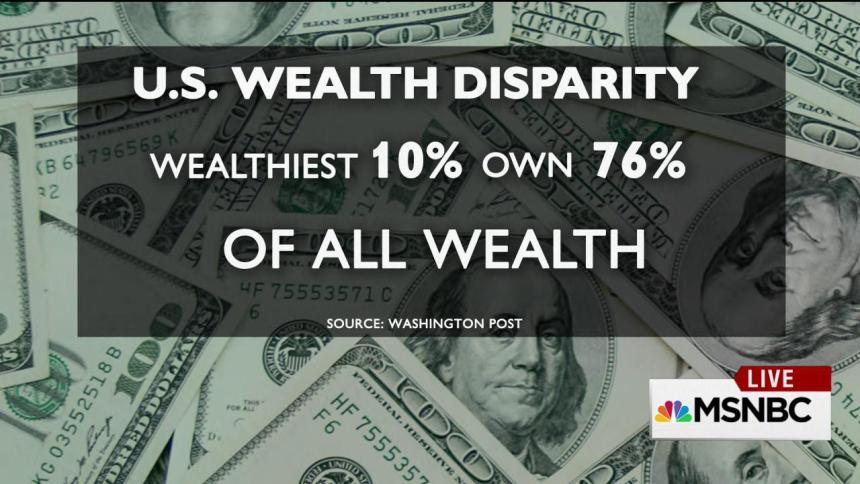
Republicans also couldn’t help but notice that Romney’s 2012 plan failed. When outside groups looked at his tax proposal, the numbers didn’t add up without hiking taxes on the middle class or adding more debt. This gap prompted Bill Clinton’s famous riff mocking Romney’s “arithmetic” at the Democratic National Convention. Whether due to Romney’s privileged background, his thoughts on the “47%” of Americans who he considered irreparably dependent on government, or his policy platform, voters in exit polls identified Romney as more concerned about the upper crust than the middle class. After Romney’s loss, a movement of “reform conservatives” gained momentum with a plan to focus on tax credits that directly benefited the middle class in order to appeal to the working voter. Candidates like Bush and Rubio took the advice, but paired these targeted breaks with big tax cuts elsewhere favored by supply side Republicans in the party’s donor class. “Everyone is finding out what they want to do is impossible if they care about the deficit,” Stan Collender, a former Democratic budget aide, told MSNBC. “What they’re essentially admitting is that the deficit is not as big a problem as they said a few years ago.” The hope on the right is that — like George W. Bush — promising something for everyone will offset the inevitable cries of inequality from the Democrats while firing up the GOP’s business wing. Bush and Trump have also made a show of closing a loophole criticized by Democrats that lets hedge fund managers pay a lower tax rate, but doing so only generates $1.7 billion a year in revenue. Some conservative commentators, however, are worried that they might have gone overboard. “Republicans would probably be better off in the general election next year if their plans weren’t quite so favorable to the rich,” Bloomberg columnist Ramesh Ponnuru wrote last month. Who pays the cost In keeping with previous Republican tax cuts, the candidates claim that lower rates for investors and businesses will unlock higher growth that will help make up the cost of their plans and distribute the benefits more evenly among income groups. Rubio even boasted to CNBC’s John Harwood this week that his plan would “create a surplus” after 10 years. Only Trump has outright pledged not to increase the deficit in his tax plan. Critics of these rosy supply side claims note that the economy boomed under Clinton after he raised top tax rates while deficits shrank, trudged along and then collapsed under Bush after he lowered them, and that the economy has grown steadily after Obama raised rates again. But even assuming that spectacular growth is on the way, there’s the question of who benefits from it. The economy’s grown plenty over the last several decades, but the gains have overwhelmingly gone to the top 1% and especially the top 0.1%, a trend that’s only become more pronounced in the current recovery. One study by economists Emmanuel Saez and Gabriel Zucman found that the wealth of the bottom 90% of Americans grew at an average rate of just 0.1% from 1986 to 2012 even as the total economy almost doubled in size. RELATED: Trump’s tax plan costs $12 trillion, according to analysis Republican candidates all say balancing the budget is still a priority, but going into the red to fund tax plans means they’ll need even deeper spending cuts to achieve that goal, which likely would have to come from programs that disproportionately aid lower income families or from entitlements like Medicare and Medicaid, which candidates like Bush and Rubio have pledged to overhaul in some form or another. Making their task even tougher, both candidates have pledged to increase defense spending. “It’s a discouraging trend to see so many plans coming out in the Republican race that would cut taxes so significantly with no plan to offset those costs,” Maya MacGuineas, president of the Committee for a Responsible Federal Budget and a longtime evangelist for a more revenue/less spending compromise, told MSNBC. “You hear gauzy talk about cutting spending but we’re already going to have to cut spending to get the fiscal situation under control.” MacGuineas said she was holding out hope that candidates would pair their tax cuts with credible proposals to cut entitlement spending over time — she pointed to New Jersey Gov. Chris Christie’s plan to raise the retirement age for Social Security as one example. But the political incentives will be strong to keep things vague. Already, Clinton has attacked Bush for saying he would “phase out” Medicare with a replacement plan and bashed various GOP candidates for backing House Ways and Means Chairman Paul Ryan’s plan to turn the program into a voucher system with declining subsidies to purchase private insurance. Americans say they want smaller government in the abstract, but Democrats are well aware that the same voters strongly oppose cuts to their benefits in polls and strongly support tax hikes on the rich. The combination is tinder for what should be an explosive confrontation come this time next year.
Benjy Sarlin Recommended


