The Rachel Maddow Show WEEKNIGHTS 9PM ETMorning Joe WEEKDAYS 6AM ETDeadline: White House with Nicolle Wallace Weekdays 4PM ETThe Beat with Ari Melber Weeknights 6PM ETThe Weeknight Weeknights 7PM ETAll in with Chris Hayes TUESDAY-FRIDAY 8PM ETThe Briefing with Jen Psaki TUESDAYS – FRIDAYS 9PM ETThe Last Word with Lawrence O’Donnel Weeknights 10PM ETThe 11th Hour with Stephanie Ruhle Weeknights 11PM ET
On Facebook and Twitter, voters and candidates alike made their voices heard on Election Day. Here's a look at the numbers.
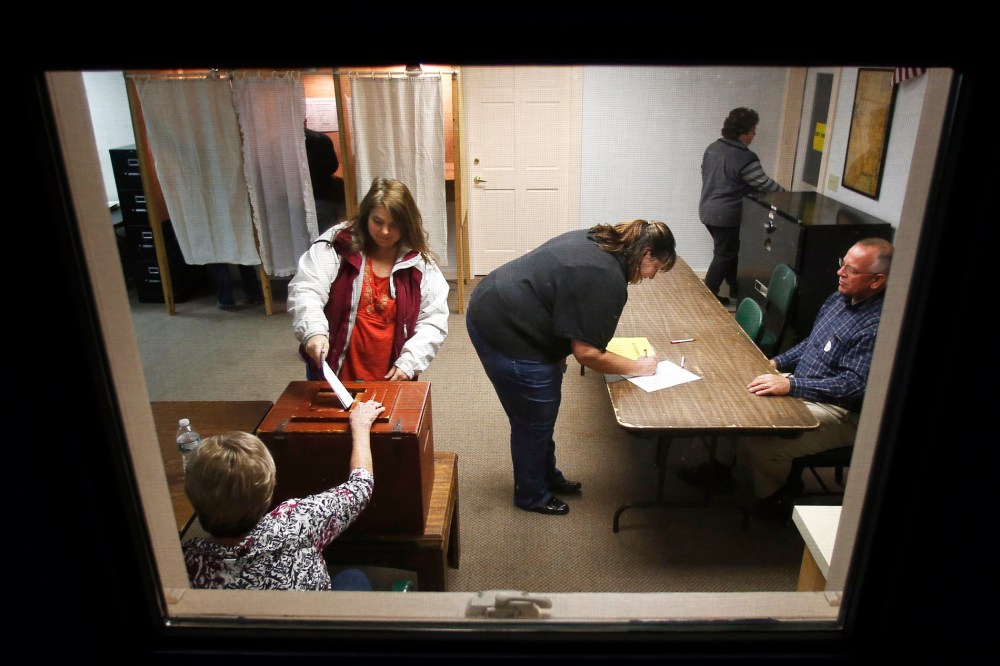
Voters cast their ballots and sign petitions at the polling place in town hall in Knox, Maine on Nov. 4, 2014.AP
By
Nisha Chittal
Facebook and Twitter have begun to play a key role in politics. On Election Day, voters and candidates alike took to social networks to make their voices heard. As part of a media partnership, Facebook’s media team and Twitter’s government and politics team provided msnbc with data analyzing the conversations that took place Tuesday on their respective social media platforms. Here’s a look at the numbers, as supplied by two of the world’s leading social media platforms:
On Facebook, which is still the world’s most popular social network, 27 million unique U.S. users made 85 million posts, comments, and likes related to the midterm elections and the candidates who were running. And on Twitter, there were 3,366,881 tweets about the midterm races on Election Day, and over 1 million of those came in between the hours of 9 p.m. and midnight ET, as results for many of the most closely watched races began to pour in.
What issues were people most concerned with? On Facebook, the top issues Americans discussed were marijuana, taxes, Obamacare, education, and voter fraud. On Twitter, the most talked-about issue nationally was President Obama. This is perhaps not surprising, as many media pundits have discussed whether Democrats should have associated more closely with Obama in the race, and whether his low approval ratings would hurt Democrats’ chances. Other top-tweeted issues were terrorism (including ISIS), wages, abortion, and law enforcement.
But issues were split along demographic lines, too. Twitter’s data shows that men talked more than the average users about privacy, taxes, and terrorism, while women talked more heavily about gay rights, wages, and education. Twitter users over the age of 55 talked most about taxes and Ebola, while the top issues for young people aged 25-34 were gay rights and law enforcement.
The gender of those talking about the races differed across social platforms. On Twitter, men were the most vocal users talking about the elections – 60% of election-related tweets on Election Day were by men, while 39% were from women. On Facebook, the gender ratio was almost flipped; it seemed more women were comfortable sharing their political opinions on Facebook, with 68% of election-related interactions coming from women and 32% from men.
Politicians spent the day making a final push and urging voters to get to the polls, and used their social media channels to push that effort as well. As results began to come in on Tuesday night, they turned to Facebook and Twitter to post their first reactions to the night’s news. Winners and losers alike took to Twitter to make their first statements.
Here are some of the candidate reactions that generated the most retweets on Twitter:
Incredibly grateful. Thank you for electing me as your United States Senator. Time to make Washington squeal! #IASEN
Facebook and Twitter both got in on the Election Day get-out-the-vote action. Facebook launched an “I Voted” megaphone that prompted Facebook users upon login to share with their friends if they had voted. Almost 7 million people used Facebook’s “I voted” megaphone, and those users skewed female. Twitter, meanwhile, encouraged users to tweet with the hashtag #Ivoted. Both social networks were awash in messages on Tuesday from users sharing that they voted — and encouraging their friends to get out and vote, too.
Twitter’s government and politics team also generated an animated map showing where users were tweeting with #Ivoted throughout the course of the day:










 — Thom Tillis (@ThomTillis) November 5, 2014

