








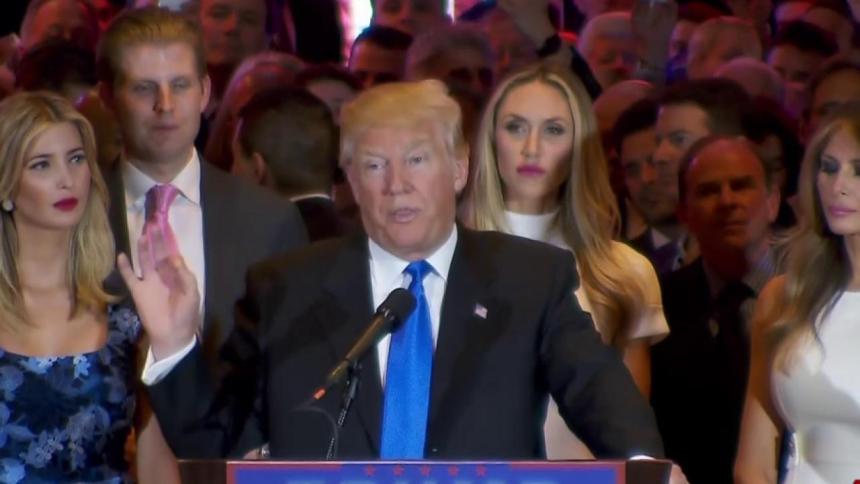
Now comes the hard part for Donald Trump.
The country woke up on Wednesday morning to find that, yes, Trump is still the all-but-undisputed nominee of the Republican Party. Now Trump’s supporters and party stalwarts on both sides have to figure out how to spend the long six months before Election Day.
Trump faces two daunting challenges right out the gate. One, unite a fractured GOP in which many longtime activists, intellectuals, and voters regard his campaign with open disgust. Two, figure out how to raise enough money and win enough votes to beat Hillary Clinton in a general election environment that’s different than anything he’s experienced before.
A new CNN poll on Wednesday highlighted both problems. Clinton led Trump 54 percent to 41 percent among registered voters, thanks in part to defections from Cruz and Kasich supporters. Twelve percent of Republicans said they would back Clinton, versus 5 percent of Democrats who said they would support Trump.
RELATED: It’s Donald Trump’s GOP after Ted Cruz drops out
Unlike the older, overwhelmingly white GOP race, when it comes to the general election, Trump also has to worry about a backlash from black, Latino, and Asian voters as well as intense opposition from young voters who polls show have been turned off by his inflammatory rhetoric. An NBC/Wall Street Journal poll last month also found an astounding 69 percent of women had an unfavorable view of Trump, who last week attributed Clinton’s support solely to her use of the “woman card.”
On the party unity front, Trump didn’t sound too interested in healing wounds left over by Wednesday’s Republican race.
“I am confident that I can unite much of it,” he said on the “TODAY” show. “Some of it, I don’t want.”
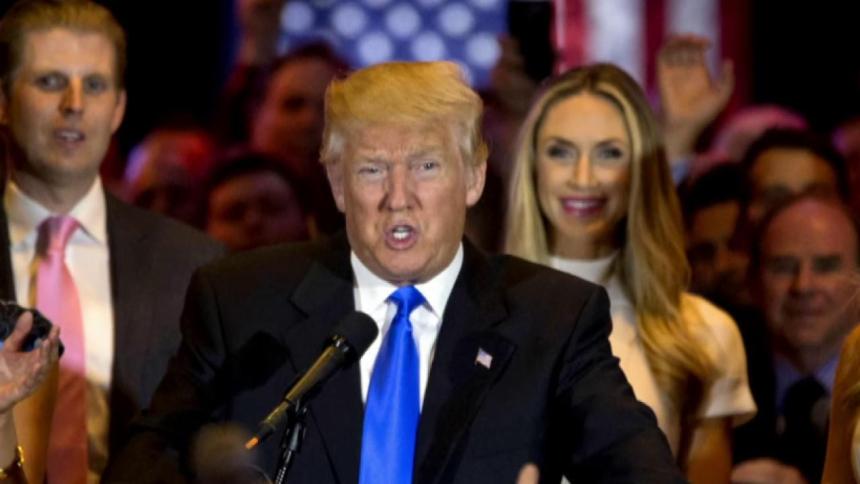
That quote certainly would explain his recent actions. On Tuesday, just as polls showed him on track to end the race in Indiana and move on to the general, he decide to pick a needless fight with Cruz by linking his rival’s father to the John F. Kennedy assassination.
The attack was classic Trump: Outrageous, false, and 100 percent gratuitous. Cruz had already wavered on whether he could support Trump in a general election after the billionaire mocked his wife’s appearance and threatened to “spill the beans” about her. Now Trump has backed him and his devoted band of supporters even further into a corner.
Cruz left the race quietly Tuesday night, but not before he delivered a screed against the “utterly amoral” Trump hours earlier — it’s a clip that will go into Democratic ad makers’ bulging file of Republicans denouncing their own nominee in the harshest terms. Incredibly, Trump repeated the attack on Rafael Cruz on the “TODAY” Show Wednesday, saying it was a justified in response to “terrible remarks made by the father about me.”
In a Wednesday appearance on MSNBC’s “Morning Joe,” Trump also repeated his call for a ban on Muslim entry into the United States, one of the once-unthinkable proposals that’s resonated with the base but generated widespread condemnation among party officials.
“We have to be extremely careful, vigilant,” he said. “We have to find out what the hell is going on.”
Moves likes that make it that much easier for the conservatives who joined the #NeverTrump movement earlier this year to reaffirm that they would never, ever pull the lever for their party’s nominee.
RELATED: Time of death for the Grand Ole Party?
Erick Erickson, editor of The Resurgent, penned an essay likening Trump’s nomination to white supremacist David Duke’s GOP runs in Louisiana. The prominent conservative radio host said he would oppose him rather than “help the voters in this country commit national suicide.”
At The Washington Post, longtime conservative columnist George Will called on Republicans this week to actively sabotage Trump’s campaign with the goal to “help him lose 50 states.” At Red State, editor Leon Wolf urged Republicans to confirm President Obama’s Supreme Court nominee Merrick Garland on the assumption that Trump will lose and Clinton will appoint alternative who, by their measure, is worse.
It still is an open question how much the #NeverTrump movement translates to actual Republican voters who, if anything, united around Trump even more as the movement geared up. Some in the party dismiss it as an elite phenomenon on social media that will fade as the general election nears. There will be many opportunities for Republicans who railed against Trump during the primary to announce “I was #NeverTrump, but that was before Hillary Clinton’s shocking comments on X, Y, and Z today.”
But Trump has more pressing problems to worry about in the short term. The first of which is raising money for his campaign, an issue that has been at the forefront of his presidential bid.
Trump, as he brings up in every speech, has (mostly) relied on self-funding to power his campaign. It’s hard to overstate how important this is to his supporters, who almost universally cite his ability to ignore super PAC donors and special interest donations as central to his appeal. He achieved his primary victory with an impressively tight budget: Just $47 million, per fundraising reports.
That’s a fraction of what he likely needs in a general election, however, especially against a well-funded and much larger Clinton machine that’s already deploying staff in swing states across the country and can count on tens of millions of dollars in super PAC support. It is not clear Trump has the liquid assets or the will to spend what would be needed to compete with Clinton. He could take public financing after the convention, which would preserve his commitment to forgoing donations while leaving him badly outspent. Or he could start fundraising, in which case he’ll need to build an operation out of nowhere and hope that the donor class he’s vilified in speeches is willing to help him. In addition to his own cash, downballot candidates will be counting on him to raise money for the party that will flow to their races and not drag them down at the top of the ticket politically. None of the senators in competitive races sound very happy about the prospect of running alongside him. An aide to New Hampshire Sen. Kelly Ayotte, who already plans to skip the convention, issued an odd statement on Wednesday saying the senator would “support the nominee” but not endorse him. “You have to have a completely hand-in-glove operation between the presidential and state committees for turnout,” former Mitt Romney strategist Stu Stevens said in an interview. “It’s incredibly hard to do.” RELATED: Trump wrapped up the GOP nomination on the cheap On “Morning Joe,” Trump sounded somewhat ready to soften his opposition to raising campaign cash. “I will make a decision fairly soon as to that,” he said Wednesday. “I mean, do I want to sell a couple of buildings and self-fund? I don’t know that I want to do that necessarily, but I really won’t be asking for money for myself, I’ll be asking money for the party.” When it came to super PAC support, Trump praised veteran GOP strategist Ed Rollins — who recently joined a group designed to aid Trump — as “tremendous,” a signal that Trump is likely to drop his opposition to outside help soon as well. Brad Blakeman, a former senior adviser to President George W. Bush, predicted to MSNBC that Clinton would scare donors into uniting behind Trump, but added that Trump needed to shift into fundraising mode as soon as possible. “He will not take public funding so he needs to hit the ground running by using this time to raise funds personally, virtually, and by direct mail,” Blakeman said in an e-mail. The Clinton team is raising cash too, though, and said it generated $2.4 million in donations last week in response to Trump’s comment that Clinton relied on the “woman card” for support. No such emails are coming from Trump yet. Trump’s campaign manager Corey Lewandoski told The Boston Globe last week that they had still not formed a finance committee to contact potential donors. Trump indicated that they would approach the issue more urgently now that the general election is beginning. “It’s something that we’re going to start on right away,” he said on “Morning Joe.”
Benjy Sarlin Recommended


