








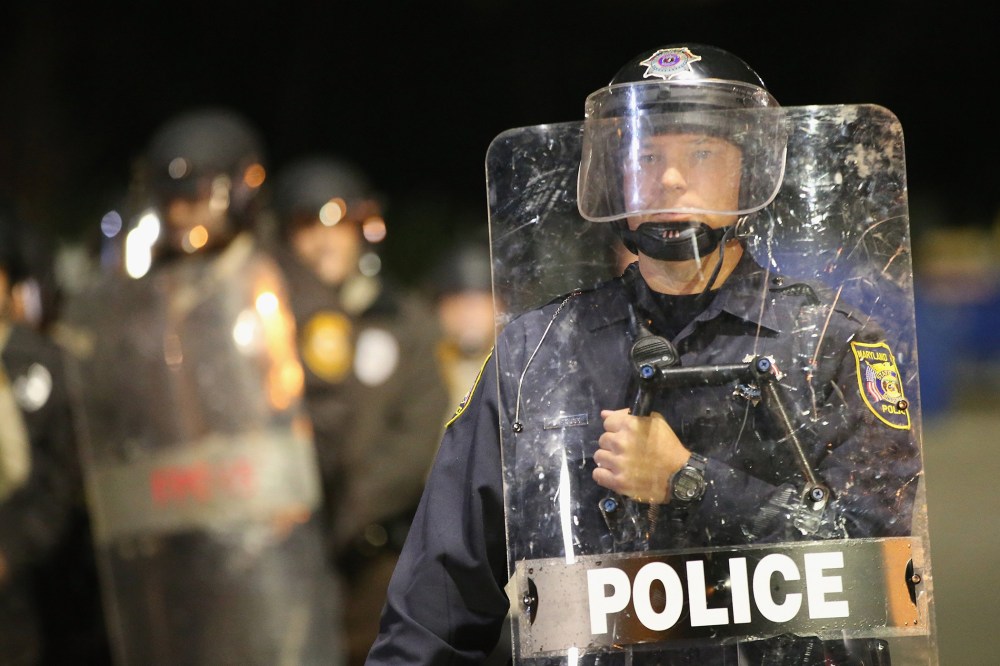
The Justice Department this week held a two-day training with St. Louis area police on implicit racial bias and fair and impartial policing as it continues its civil rights probe into the killing of unarmed black teen Michael Brown Jr. by a white Ferguson, Missouri police officer and the department’s broader investigation of the Ferguson police department.
Meanwhile, President Obama spoke with Missouri Gov. Jay Nixon Friday evening to discuss Ferguson, according to a White House pool report.
“The governor discussed his work with the Ferguson community over the past three months and the president emphasized the administration’s commitment to continue to provide assistance as needed,” the White House said. Earlier in the day, the president also received a briefing from the Department of Justice on their ongoing efforts to assist state and local government.”
The training was held by the Justice Department’s office of Community Oriented Policing Services, which invited top-level commanders from the St. Louis County and Ferguson police departments, the Missouri State Highway Patrol and leaders from local community and civil rights groups to attend.
RELATED: Just 20% say race relations have improved
The training, which concluded on Friday afternoon, included lessons on how police can acknowledge, identify and filter implicit racial bias.
“The ultimate goal is to get people to see that the issue of implicit racial bias is real and a part of human behavior,” said Ron Davis, director of COPS. “If it becomes too cut and dry you talk about people being racist, people get really defensive because nobody wants to be called a racist.”
Davis said the aim is to get police leaders to recognize how racial bias can affect the way officers interact with various communities; that racism is real; and to understand that the deep mistrust many people have of the police, particularly African Americans, is built on generations of ill treatment and disparities.
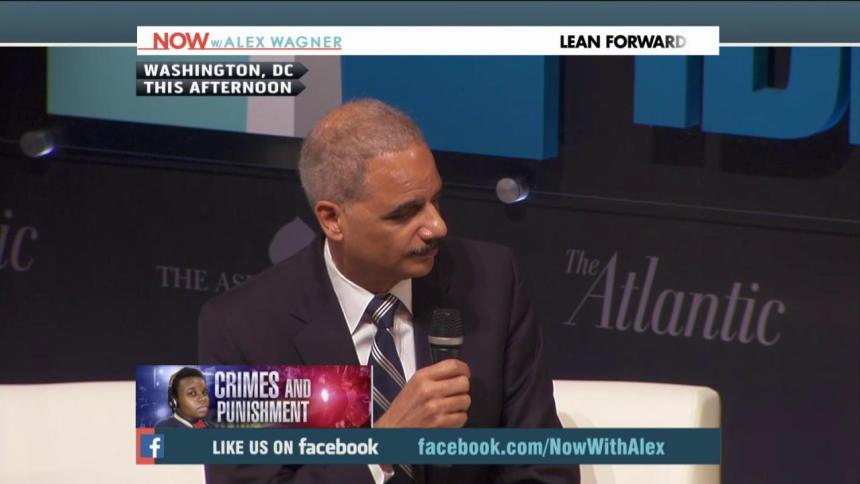
The training comes just weeks after Attorney General Eric Holder called for “wholesale change” in the Ferguson police department.
“I think it’s pretty clear that the need for wholesale change in that department is appropriate. Exactly what the form of that change will be, I think, we’ll wait until we complete our inquiry,” Holder said during an interview in Washington in October.
Davis said the trainings are typically offered to departments that fall under a consent decree but are also offered to departments that request them as part of reform efforts.
MSNBC has reported that a shake-up of the Ferguson police department may be on the horizon, where Chief Thomas Jackson would resign and the department could be disbanded and taken over by the St. Louis County police. That plan would be complicated because of the DOJ’s current inquiry into the department.
Davis said the county police asked for assistance as part of collaborative reform efforts and that COPS will assist local law enforcement agencies, including the Ferguson department, for the next few years.
The first steps include assessing the department’s data on use of force, vehicle stops and racial profiling and then release a public report, its findings and offer recommendations. The next step includes technical assistance and training to help achieve those recommendations.
In mid-September, Attorney General Eric Holder announced the launch of a multi-million dollar initiative to help bridge the gap between cops and communities. As part of the National Initiative for Building Community Trust and Justice, Holder has convened a consortium of law enforcement experts, social scientists and evidence-based researches to help “combat distrust and hostility between law enforcement and the communities they serve.”
RELATED: St. Louis police to recruit more minorities The initiative is a 3-year, $4.75 million partnership between the Justice Department and the consortium and will include departments in five pilot cities across the country. Researchers say the initiative is helping to fuel the nation’s most expansive look at police behavior, bias and the factors that impact building trust with community members. Researchers say the initiative is helping to drive the nation’s most expansive look at police behavior, bias and the factors that impact building trust with community members. “The events in Ferguson reminded us that we cannot allow tensions, which are present in so many neighborhoods across America, to go unresolved,” Holder said in announcing the initiative. “As law enforcement leaders, each of us has an essential obligation and a unique opportunity to ensure fairness, eliminate bias, and build community engagement.” Meanwhile, high-level commanders in the Ferguson area talked with instructors about how unconscious bias can affect what people perceive and do — even well-intentioned people who don’t consciously hold prejudiced attitudes. “The implication of this science is that even the best law enforcement officers may manifest bias because they are human, and even the best agencies will have biased policing because they hire humans to do the work,” according to a COPS training brochure. Brown’s killing in August highlighted what many St. Louis County residents said was a system of unfair treatment of blacks by law enforcement that spread far beyond Ferguson and into neighboring municipalities and local courts. Weeks after Brown’s death, the Ferguson City Council began to introduce ordinances aimed at dismantling a system of arrest warrants, fines and fees that disproportionately impacted black residents and filled the city coffers. Income related to court fines and fees were the second highest revenue stream for the city last year. Davis, who has been director of the COPS office for about a year, said part of the training the agency offers tools to law enforcement officers who want to do the right thing. “I don’t think this one training in itself will do it. But it has to be part of a larger effort,” Davis said. “You bring awareness to the table and officers that want to the right thing, then he or she has the ability, the information, the education and knowledge to do the right things and not have negate outcomes.”
Trymaine Lee
Trymaine Lee is an NBC News correspondent. Recommended


