








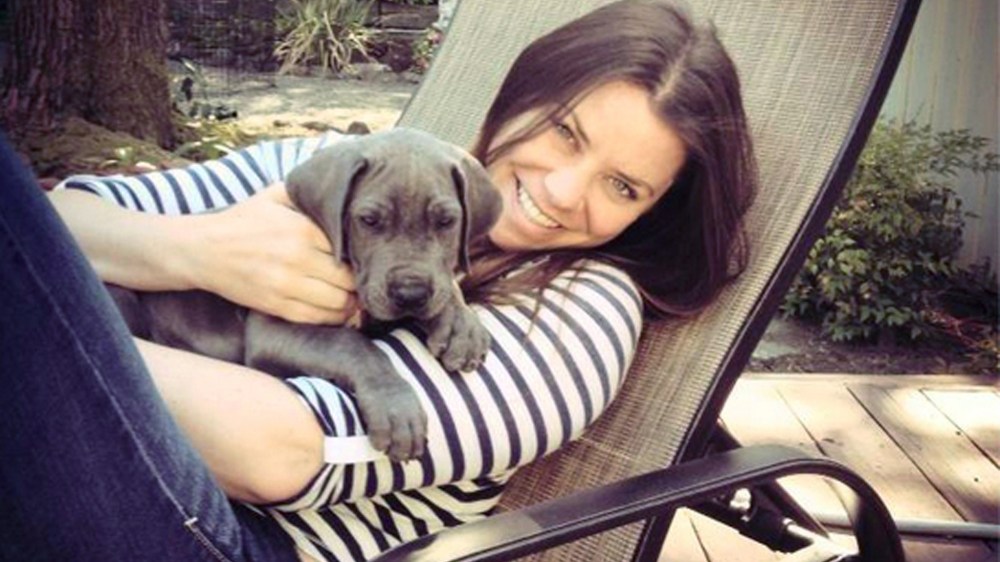
Brittany Maynard has died, according to an obituary posted to her website Sunday night.
She was 29. She was diagnosed in April with a fatal brain tumor — told the cancer likely would kill her in six months. But she had no intention, she said, of allowing the disease to control how she lived, or how she died.
Maynard had planned since spring — a bittersweet stretch packed with“bucket list” moments, seizures and excruciating headaches — to escape the final stages of her cancer on Saturday, a day she had long cited, by drinking a lethal mixture of water, sedatives and respiratory-depressing drugs.
Her obituary did not reveal how Maynard died, or exactly when, but her friends began posting Facebook farewells to her on Saturday night.
“Brittany chose to make a well thought out and informed choice to Die With Dignity in the face of such a terrible, painful, and incurable illness. She moved to Oregon to pass away in a little yellow house she picked out in the beautiful city of Portland. Oregon is a place that strives to protect patient rights and autonomy; she wished that her home State of California had also been able to provide terminally ill patients with the same choice,” the obituary reads.
“In this final message, she wanted to express a note of deep thanks to all her beautiful, smart, wonderful, supportive friends whom she ‘sought out like water” during her life and illness for insight, support, and the shared experience of a beautiful life.
She told her family before passing: “It is people who pause to appreciate life and give thanks who are happiest. If we change our thoughts, we change our world! Love and peace to you all.”
On Facebook, friends and family began openly mourning Maynard’s passing Saturday evening and continued to do so throughout Sunday. Summer Holmes-Phillips and her sister, Erica Holmes-Kremitzki, posted that their “aunt, uncle, and Dan” are saying goodbye to Brittany, and bid their own farewells.
Holmes-Kremitzki also explained in a subsequent post on Sunday: “She was not ‘set’ on this date but as her condition worsened and the tumor took over control, it became increasingly more difficult for her to function. One comfort, is that she was able to make the choice to end her suffering before she was unable to function at all. That’s what SHE wanted. Cancer took her but in the end, she got to decide when enough was enough. She was done and so, I’m comforted that it was her way.”
Until Sunday evening, Compassion & Choices spokesman Crowley declined to confirm the death: “We are respecting the privacy of Brittany’s family this weekend.”
Some of Maynard’s friends did confide privately on Sunday that Maynard felt “devastated” in recent days because, they said, several media outlets and social-media commentators had fully misinterpreted her latest video – released Wednesday, recorded on Oct. 13 and 14 – as a sign that she had changed her views on death with dignity, and that she had decided to ditch her plan to end her life before the cancer claimed her.
She had not.
After exhausting all medical options to cure her cancer, Maynard said she sought to access Oregon’s “Death with Dignity” law, which allows doctors there to write lethal drug prescriptions for terminally ill people. Oregon is one of five states with aid-in-dying laws.
Maynard set Nov. 1 as the tentative date for her death and then devoted her last days to her most precious joys, family and nature – hiking, bicycling, dog walking, kayaking, and traveling with her husband, mother and other loved ones to Alaska, Las Vegas and the Grand Canyon. She preferred to focus, she said, on living. She penned an essay forTODAY.com about hard wisdom she had forged: “Pay attention to the relationships you cultivate in life, and do not miss the chance to tell those you love how very much you love them.”
Along the way, Maynard — and her choice — became the talk of the nation as she campaigned for a newfound passion, “death with dignity.” She made a video that revealed her thinking. She debated physicians who questioned her logic. And she conducted media interviews to explain her choice.
“I’m not killing myself. Cancer is killing me. I am choosing to go in a way that is less suffering and less pain,” Maynard told NBC News during a phone interview on Oct. 9.
“Not everybody has to agree that it’s the right thing, because, they don’t have to do it. And it’s an option that for me has provided a lot of relief, because, the way that my brain cancer would take me organically is very terrible. It’s a horrible way to die. The thought that I can spare myself the physical and emotional lengthy pain of that as well as my family is a huge relief.”
She disliked the word “suicide,” calling it “highly inflammatory and just incorrect, because, I am already dying from cancer. I don’t want to die. People who commit suicide are typically people who want to die.”
And she was heartened, she said, by the global dialogue her decision ignited. A YouTube video detailing her disease and final path has been viewed more than 8 million times. On her website, The Brittany Maynard Fund, she wrote: “The response from you all has surpassed our wildest expectations.”
“What does seem necessarily,” she added in an interview with NBC News, “is to get people educated about this topic, to have discussions be based on facts not fear, and really have it be a health-care choice, which is what makes it a freedom.”
Throughout October, across Twitter and Facebook, on digital news platforms, TV and radio, strangers and commentators alike both chided and hailed Maynard and her exit strategy. Some critics, like palliative care physician Dr. Ira Byock, asserted she was being “exploited” by Compassion & Choices, a nonprofit dedicated to expanding end of life options. (Maynard told NBC News that she approached that advocacy group, asking its leaders to help publicize her choice.) And a 30-year-old Catholic seminarian in North Carolina, who has inoperable brain cancer, said Maynard’s decision was “anything but brave,”urging her to reconsider, and insisting, “suffering is not worthless, and our lives are not our own to take.” Maynard’s admirers, meanwhile, included some famous names. Rosie O’Donnell told TV viewers: “To get to have control over your death when you’ve had no control for so long over your illness, I think is the humane thing to do.” Also on air, Rosie Perez agreed: “I think people should have the right.” And New York-based bioethicist Arthur Caplan, a frequent NBC News contributor, wrote that the photogenic, articulate newlywed pulled “a whole new crowd of concerned younger people into the discussion.” Indeed, Maynard’s story often induced tears in people who stand on both sides of the debate. But during an interview with NBC News, Maynard’s inner peace and resolve seemed palpable. She spoke in even tones about gruesome aspects of her illness — frequent seizures, loss of balance, and terrifying moments of forgetting her husband’s name. She spoke pragmatically about her choice of Nov. 1 — a Saturday that followed her husband’s birthday, a moment she ached to share with him, and a firm date “to plan around” for family and friends. She spoke with utter calmness about the ticking clock — the steady approach of November. “For me, there is an end date, and it’s relatively soon in sight, and that’s the nature of my terminal illness. I have a very large brain tumor, and it’s killing me.” And in every public conversation, she pushed what she viewed to be the cause of her life, “death with dignity,” or “DwD.” In one of her final web posts, Maynard wrote about the momentum she felt building around her — and perhaps, she hoped, inside state legislatures around the nation. “I want to thank you all, for resonating powerfully with my story. Because of the incredible reaction, something monumental has started to happen. Last week alone, lawmakers in Connecticut and New Jersey came forward in support of DwD bills, and promised to put them back in the spotlight,” she posted Oct. 22. “I won’t live to see the DwD movement reach critical mass, but I call on you to carry it forward …. I have to believe that the pain we’ve endured has a greater purpose in the change we can create as a nation. I leave it in your hands.”
Bill Briggs Recommended


