








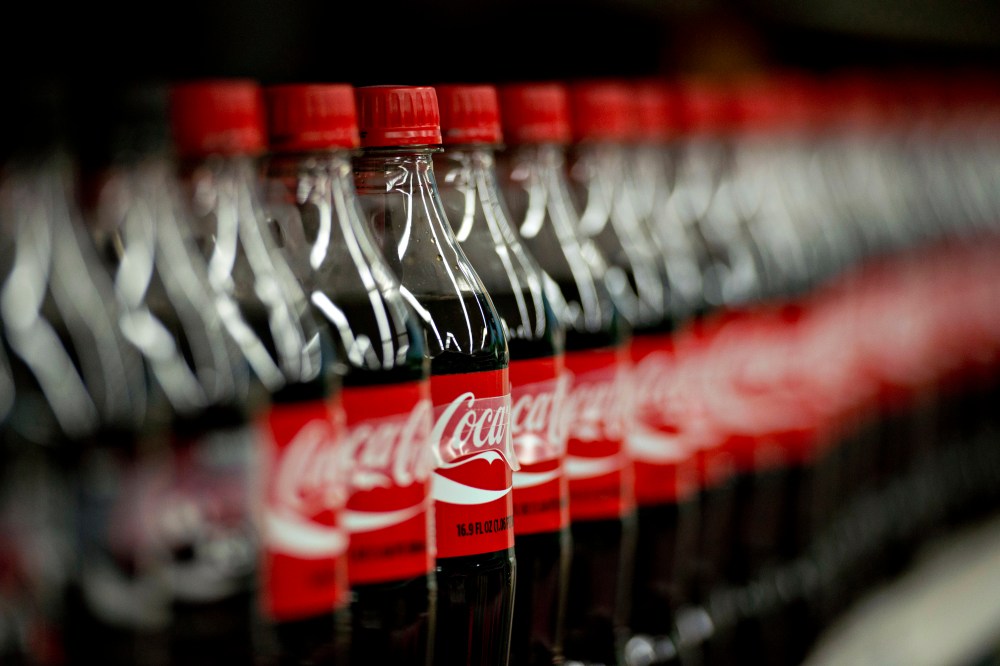
Coca-Cola faced a firestorm of criticism Monday after The New York Times reported that the world’s largest producer of sugary beverages was secretly misleading people about obesity, promoting the idea that the health crisis is driven by a lack of exercise, not diet — and certainly not too many calorific sodas.
Coca-Cola is now distancing itself from that claim, after public health experts accused the company of trying to confuse people with bad science. But the source of that science — the Global Energy Balance Network, which is funded by Coca-Cola — is not the company’s only new effort to sell Americans on the questionable pursuit of “energy balance.”
%22They%20have%20funded%20an%20extraordinary%20amount%20of%20research%20to%20counter%20the%20idea%20that%20sodas%20aren%E2%80%99t%20healthy.%22′
Rather than fixate on calories, the idea of energy balance invites weight-conscious Americans to focus more on exercise and eat what they want. Earlier this year, in partnership with Pepsi, Dr. Pepper, and the American Beverage Association, Coke launched “Mixify”—a lavish multi-platform campaign that pitches kids on this very same idea.
“Coke, Dr Pepper and Pepsi understand that balancing your mix of foods, drinks and physical activities can get a little tricky,” the website says, next to the hashtag “Realtalk,” the first of dozens of youthful details. “That’s where Mixify comes in.”
The site bills itself as “a balance wingman,” with Mixify “bringing you new combinations to keep your mix fresh and your body right.” It suggests that kids mix “lazy days with something light,” and follow “sweaty workouts with whatever you’re craving.” And if you follow that advice, it concludes, you’ll be “feeling snazzier than the emoji of the dancing lady in red.”
That’s misleading at best, according to numerous public health experts. Many take moral and scientific issue with Coca-Cola’s approach, comparing it to the old Big Tobacco technique of muddying the science to keep the customer in the dark about what their habit is likely to do to them.
“Providing Coca-Cola with direct access to our children, and allowing them to seductively teach children that they can balance bad diets and sugar sweetened soda with exercise, is both horrifying and inane,” Dr. Yoni Freedhoff told msnbc. He also accused the company of “predatory kid targeting.”
RELATED: Why Congress is having a food fight over GMO labeling
Coca-Cola’s GEBN funding wasn’t disclosed on the website until Freedhoff, an Ottawa-based obesity expert, started asking questions. Coca-Cola’s role in Mixify is disclosed on the MyMixify website, but it’s not on the lush social media sites associated with the campaign, nor on the primary branding material Mixify uses to promote its summer concert tour.
Heads up, Des Moines: “Mixify is truckin’ your way with a FREE event to balance your summer,” the site reads. The Facebook page, meanwhile, is plastered with video from the Dallas event last weekend. The events feature “fitness gurus, DJs, color runs and more to keep your balance game strong.”
But again, health experts contest the Coca-Cola vision of fitness and the role of sugary sodas in a healthy lifestyle. Under “ask the experts,” the Mixify website records this exchange with an unidentified questioner and registered dietician named Rebecca Walker.
“I love soda but know I shouldn’t have it all the time. How can I cut down and still enjoy it?” the writer asks. “I love soda too!” Walker responds. “The most important thing is to keep up with how many calories you’re taking in and try to balance them with the calories that you’re burning.”
%E2%80%9CProviding%20Coca-Cola%20with%20direct%20access%20to%20our%20children%2C%20and%20allowing%20them%20to%20seductively%20teach%20children%20that%20they%20can%20balance%20bad%20diets%20and%20sugar%20sweetened%20soda%20with%20exercise%2C%20is%20both%20horrifying%20and%20inane.%E2%80%9D’
But can exercise really offset a full-sugar soda? Not consistently, according to the best available research. Mixify suggests that kids “chase a wild animal” to stay active, but the chase would have to be hard and fast and last at least 30 minutes just to burn off a single 8-ounce soda.*
In fact, a raft of recent research suggests that dietary changes—like skipping that soda—will do more to help a person lose weight than increased wild animal chasing, or any other physical activity. That’s because exercise increases appetite, studies show. It’s also because even “sweaty workouts” burn fewer calories than you might guess by the feel of your gym clothes.
Since the late 1990s, soda consumption has fallen 25% in America, according to the Center for Science in the Public Interest. That has yet to affect the vast profitability of Coca-Cola and its competitors, but public health experts argue that the “energy balance” idea reflects the sugar beverage industry’s fears of a coming collapse. “They have funded an extraordinary amount of research to counter the idea that sodas aren’t healthy,” said Marion Nestle, a professor of nutrition at NYU, and the author of “Soda Politics,” a book about what Nestle sees as a battle between “big soda” and sound public health policy. “The critics are being critics,” said Tracey Halliday, a spokesperson for the American Beverage Association, which handles media for the Mixify campaign. “Moms wanted this initiative and are highly supportive of it.” Coca-Cola referred msnbc to a statement posted yesterday, which called The New York Times report on GBEN “inaccurate” and claimed that it supports both diet and exercise as “key ingredients for a healthy lifestyle.” It’s too soon to know whether the company’s efforts will help sales. Many experts, however, are certain that drinking soda will not help anyone’s health. An editorial published earlier this year in the British Journal of Sport Medicine was unusually blunt about the stakes in this global fight, and soda’s clear role in obesity. Calling the industry’s tactics “chillingly similar to those of big tobacco,” the authors point to the $3.3 billion that Coca-Cola spent on advertising in 2013, much of it aimed at pushing the message that “all calories count.” “They associate their products with sport, suggesting it is ok to consume their drinks as long as you exercise,” the authors write. “However, science tells us this is misleading and wrong. It is where the calories comes from that is crucial. Sugar calories promote fat storage and hunger. Fat calories induce fullness or ‘satiation.’” * Correction: This article previously misstated the size of soda that could be burned off with 30 minutes of exercise. It is 8 ounces and not 32 ounces.
Tony Dokoupil Recommended


