








A Philippines official has declared his intention to fast for the climate and called on the world to take “drastic action” to prevent future natural disasters similar to the super typhoon that recently devastated his country.
“I will voluntarily refrain from eating food…until a meaningful outcome is in sight, until concrete pledges have been made to ensure mobilization of resources for the Green Climate Fund,” Naderev Sano, commissioner of the Climate Change Committee for the Office of the President of the Philippines, said Monday during a conference focused on climate change.
Watch: Tearful speech by Philippines man after super Typhoon Haiyan
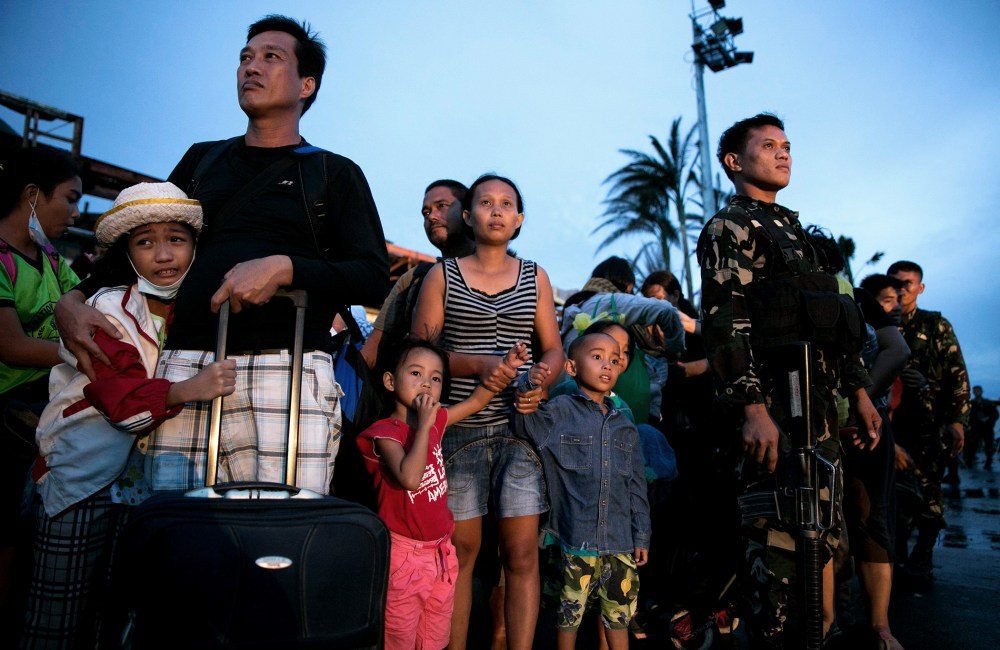
He linked climate change to super Typhoon Haiyan, which swept through the Southeast Asian island beginning on Nov. 7. Thousands are feared dead in the wake of the storm. People have struggled for days to find food after the tropical cyclone — the worst recorded storm to reach landfall — uprooted their lives.
“I speak for my delegation, but I speak for the country’s people who will no longer be able to speak for themselves after perishing from the storm. I speak also for those who have been orphaned by the storm. I speak for the people now racing against time to save survivors and alleviate the suffering of the people affected,” he said.
Sano made his declaration on the first day of the 12-day Warsaw Climate Change Conference in Poland, which began Monday and will end on Nov. 22. He serves as part of the NGO delegation to the UN Framework Convention on Climate Change.
“We can take drastic action now to ensure that we prevent the future where super typhoons become a way of life,” he said. “Loss and damage is a reality today across the world.”
Olai Ngedikes, lead negotiator of the Alliance of Small Island States, called the typhoon a “stark reminder of the cost of inaction on climate change.”
“It has become clear that there are now impacts from climate change that can no longer be avoided,” he said in a statement.
Scientists expect to see the frequency of high intensity storms increase during the next century. But the strength of Typhoon Haiyan was an “accident” because the storm reached its peak simultaneously to making landfall, which is more likely to be a once-in-a-century event, said Kerry Emanuel, a professor of atmospheric kinds at the Massachusetts Institute of Technology.
“This one was the worst possible collusion of circumstances,” Emanuel told msnbc. “[Typhoons] are unusual, but they’re not that unusual.”
But scientists cannot attribute climate change to a single event without looking at statistics. High expenses prevent experts from recording and maintaining consistent tropical cyclone measurements, he added. “[But] I think there are plenty of reasons to do what [Sano] is doing even without the typhoon,” Emanuel said. Outside support has only started trickling into the Philippines. Aid relief workers began reaching the country on Tuesday. Almost 250 American military officials are in the Pacific assisting with relief efforts, and the United States plans to send $20 million in relief efforts. Last year temperatures and greenhouse gas levels reached unprecedented levels worldwide. “We cannot solve climate change when we seek to spew more emissions,” Sano said. The cyclone has caused “unprecedented, unthinkable, and horiffic” devastation. “We can fix this,” he said to a cheering crowd. “We can stop this madness.”
Michele Richinick Recommended


