








“Cynthia! They’re taking your mom!” The sound of my dad’s shout woke me up at seven in the morning.
I ran to the front door of our Arizona home that morning, where 10 agents in black uniforms surrounded my mom. Already handcuffed in her pajamas and slippers, she was being pushed into a van. Our eyes met and I recognized her sadness and fear. When my dad asked one officer what happened, he actually chuckled. “You know what happened. Did you help her cross?” All we could do was look out at my front yard as one by one, the officers started to disappear into the van with my mother. They took off, and my dad and I went back inside.

This is how I learned, at age 15, that my mother was an undocumented immigrant. And it took Immigration and Customs Enforcement all of 15 minutes to break up my family. It was like some numerological joke.
My younger brother was still in his room, but he’d heard it all. Still, I knocked on his door and told him what happened. Together, sitting around the table, we all cried. It was the first time I’d ever seen my dad shed tears.
That afternoon, she called. She was already back in Mexico. ICE, it seems, had tricked her into signing her voluntary deportation form. Suddenly, I had to take on the role of mother to my 13-year-old brother. Ironically, our own lawyer told us that there was nothing we could do because her “children were too old to need their mother.”
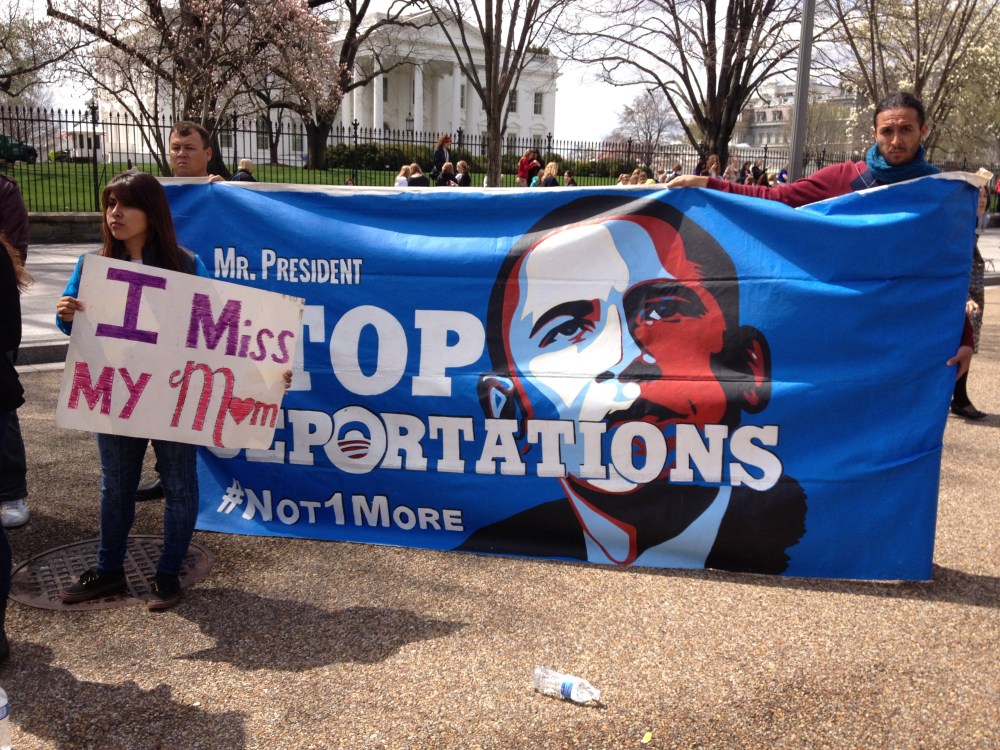
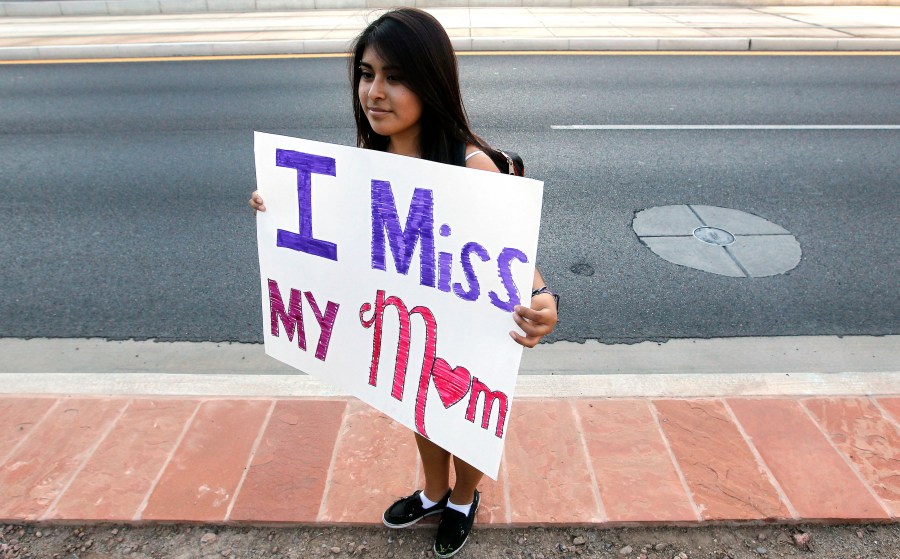
It was very difficult for me, but I stayed focused because I wasn’t going to let this interfere with being first in my family to go to college. But at some point during my senior year of high school, I decided I couldn’t let my family be away from my mom any longer and I wanted her home for my graduation. I reached out and found organizations where I could start first as a volunteer, then become a cause they took on. My second time at a rally, I decided to make a personal poster reading, “I miss my mom.”
As I got more involved, I started to see people like Erika Andiola, whose mom was taken from her house like mine was, stop their parents’ deportations and keep their families together. So I began to start fighting for her return. It wasn’t able to happen before I finished high school. She did watch me walk across the graduation stage, but via Skype instead of in person. What was supposed to be the proudest day of my life was instead one of the saddest.
I enrolled at the University of Arizona and decided to use my spring break this year working with groups of people organized by the National Immigrant Youth Alliance to help bring my mom home. I stood next to my mother in Mexico as we presented ourselves to Border Patrol asking to be allowed to pass through and reunite with the rest of my family. They took my mom into custody and left me, a U.S. citizen born in Phoenix, on the other side without her.
My family recently decided to take a huge risk and let my mom put herself in detention with hopes to be with us again. The truth is we miss her too much not to risk everything. That’s why I came to Washington, DC with other families whose loved ones are in detention and seek their freedom, here in the United States. We began a hunger strike in front of the White House on April 5, sitting virtually on President Obama’s front steps to call for the president to take executive action, and to make our private suffering public. It’s sad to think that immigrant lives might matter so little that we have to endanger our health for people to recognize the problem. Each night that I went to sleep here in front of the White House, I heard those same words we were told when we met a lawyer for the first time: you’re too old to need your mother. I wonder, as the president and First Lady Michelle Obama look in on their own kids–who are nearly the same age as my brother and I were when ICE raided our home–if they could ever imagine someone telling them they, as parents, aren’t needed any more. If it wasn’t clear enough to the courts, to Homeland Security Secretary Jeh Johnson, or to the White House. I’m like any other daughter. I need my mom. She’s a brave woman, and she deserves to be released to reunite with our family. Ed. note: Shortly after Diaz’s interview on Saturday’s “MHP,” the hunger strike ended for her and the two other strikers, Naira Zapata and Jose Valdez, that accompanied her. They’d gone without food for five days, subsisting only on water. You can find more information here and at the Twitter hashtag #Not1More. Update, April 20: Below, find host Melissa Harris-Perry’s segment from April 20.
Cynthia Diaz Recommended


