








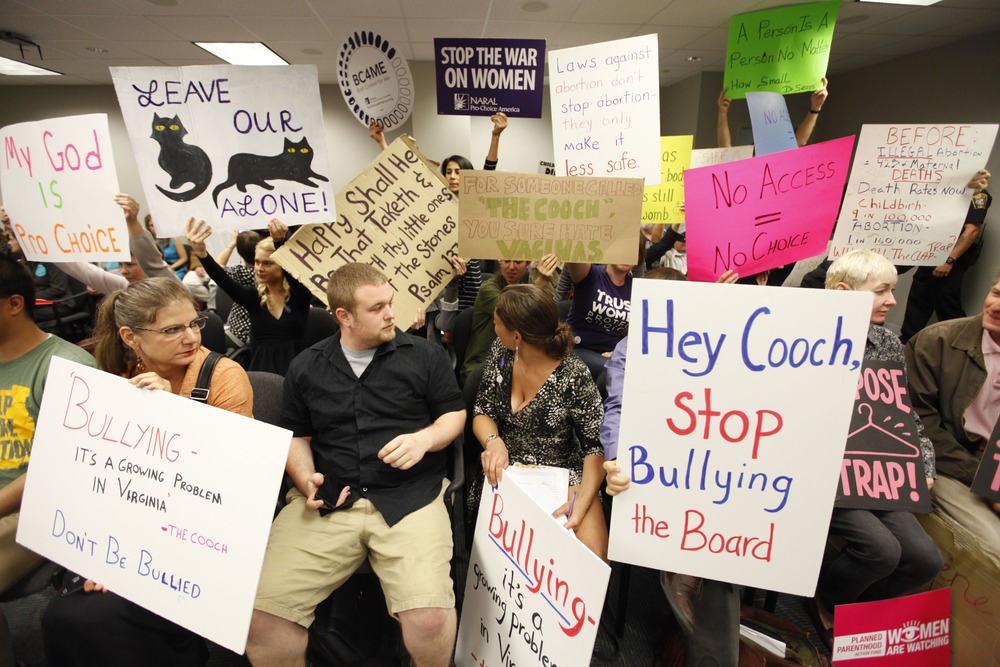
Anti-abortion activists looking to set a nationwide precedence in pro-life causes must now continue to chipping away at a woman’s access to abortion services through technicalities at the Republican-led state level. But perhaps as a hallmark theme of the 2012 local elections, the state level strategy may work.
The nation’s first criminal prosecution against Planned Parenthood came to a close last Friday when Kansas Attorney General Derek Schmidt dismissed the last of the charges against the abortion provider.
The initial investigation was a crusade led by former Attorney General Phill Kline, who filed a 107-count criminal complaint against the Planned Parenthood clinic in 2007. Kline, who is also known for investigating late abortion doctor George Tiller of Wichita, was not able to see through his complaints against Planned Parenthood after failing to win re-election.
A national anti-abortion groups responded to Schmidt’s decision by slapping the Republican with an ethics complaint on Tuesday for dropping the criminal charges against the clinic under alleged “false pretenses.” The group that filed the complaint, Operation Rescue, had already singled out similar grievances two weeks ago against the Johnson County District Attorney, Steve Howe.
And though the Planned Parenthood clinic is safe for now, other abortion clinics in Virginia are now under threat of being forced to shut down thanks to targeted and stringent regulations on building codes.
The Virginia Board of Health last Friday succumbed to political pressure and voted to reverse abortion regulations they had already approved just months ago, now mandating all existing abortion clinics to adhere to strict building standards required of new hospitals.
The requirements—based on the state’s guidelines for outpatient surgical facilities—set architectural standards mandating everything from the width of hallways; the placement of bathrooms, phones in waiting rooms, and drinking fountains; and even the number of parking spaces outside the clinic.
Opponents to the regulations see the red tape as a backdoor ban on legal abortion services that could cost clinics thousands of dollars. Abortion rights groups estimate that as many as 15 of the 20 existing abortion clinics would be forced to go under due to the costs involved in making dramatic structural changes to buildings.
Back in June, the board’s 7-4 ruling adopted an amendment allowing existing abortion clinics to be grandfathered in under the new regulations. Only newly licensed clinics were subject to the strict building codes.
Republican Attorney General Ken Cuccinelli however rejected the provision, saying the board “exceeded its authority” in changing the rules. He followed up by issuing a memo to the board threatening to deny state legal representation should members ignore his advice and get sued.
Gov. Bob McDonnell added to the pressure shortly after the board’s amendment by appointing an outspoken pro-life advocate, who serves as vice chair of the group “OBGYNS for Life,” a seat on the board.
And with that, just months after ruling on the amendment, Virginia’s Board of Health completely reversed course in a 13-2 decision. As our own Rachel Maddow explained on her show Friday night, the regulations—called “trap laws” for having targeted outcomes —apply only to abortion clinics. “These are regulations that do not apply to any other form of medical facility at all. The law would not apply for dental surgeons or outpatient plastic surgery clinics—it’s just abortion clinics and it’s very obviously designed to shut them down,” Maddow said. Maddow went on the emphasize that the strict regulations appeared in direct conflict of the Republican party’s oft-championed ideals of liberty and small government (or as Melissa called it on the Maddow Show in August, “government small enough to put on the end of a vaginal probe“). And as you may recall, Virginia is the state that launched the word “transvaginal” into political discourse earlier this year when lawmakers passed a bill requiring women to undergo an invasive ultrasound prior to being able to obtain an abortion. McDonnell, who initially voiced support of the bill, was inevitably forced to back away from it in the midst of national criticism. When speaking before the Values Voters convention this Saturday morning, Cuccinelli vowed to “continue the fight for liberty.” But for many women in Virginia, that liberty—the ability to control one’s own actions—is not extended to their ability to decide on what they can or can’t do with their own bodies. And perhaps Virginia women are starting to take notice. In the latest NBC/WSJ/Marist poll out this week, Obama inched ahead of his presidential opponent Mitt Romney in key swing states—including Virginia. And there, 14% more women who are likely to vote said they would rather re-elect the president than choose the Republican nominee.
Amanda Sakuma Recommended


