








Thousands of people are expected in Washington D.C. on August 24 to celebrate the 50th anniversary of the March on Washington for Jobs and Freedom. Host Melissa Harris-Perry and her Saturday panel explored not only how media covered the civil rights movement and the original March, but also how reporting on the movement helped to galvanize it.
Ida B. Wells was run out of town after publishing a piece in the Memphis Free Speech about the myths that lynchings were a response to black sexual male violence. Wells continued to report on Southern racial violence for publications such as the New York Age, the Chicago Defender, and the Chicago Conservator. African-American investigator Walter White’s fair complexion enabled him to infiltrate the Ku Klux Klan and report about the crimes the KKK was perpetrating against African-Americans for the NAACP magazine.
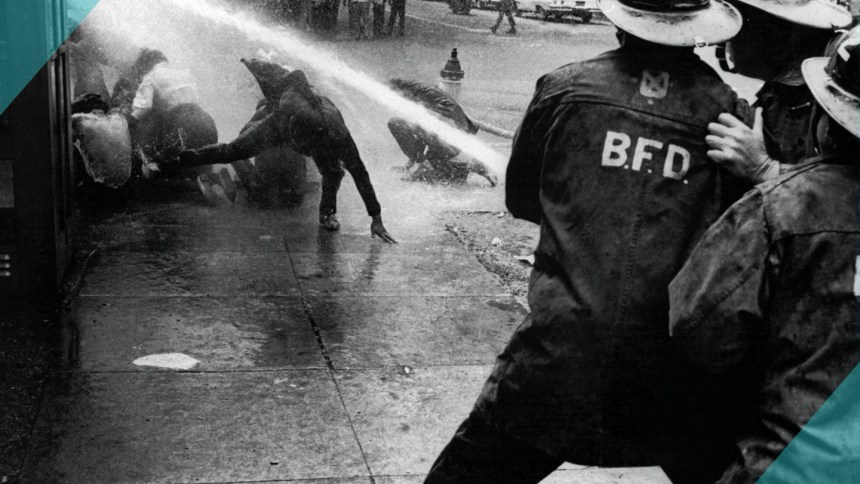
“Covering movements is covering mainstream America,” said Amy Goodman, host and executive producer of Democracy Now! on Saturday’s panel. Goodman noted the role that images played in informing people during the civil rights era. “I think the lesson is show the images, show the pictures,” she said. “You look at what happened during the civil rights movement. It was the remarkable bravery of the kids in Birmingham but it was the pictures of what happened to them, with the water cannons, with the billy clubs that galvanized America.”
The images from the civil rights movement not only helped to galvanize a multiracial coalition but helped to tell the story as it was happening on the ground.
One publication that took the lead in reporting on the civil rights movement was The Saturday Evening Post. The magazine covered the issue of civil rights almost exclusively in the 1950’s and 1960’s.
In celebration of the 50th anniversary of the March on Washington, the magazine re-ran a pre-World War II column, “It’s Our Country Too.” The piece focused on why there should have been a March on Washington in 1941 and described the discrimination that African-American men faced enlisting in the military and getting jobs at defense plants before the outbreak of World War II. Jeff Nilsson, director of archives at The Saturday Evening Post, told Harris-Perry that the mere threat of a march on Washington as the U.S. was leading up to entering World War II was enough for then-President Franklin D. Roosevelt to issue an executive order “with the agreement by A. Philip Randolph that he wouldn’t stage that march on Washington.” While images played a pivotal role in the civil rights movement, there was doubt from the panel about the role they now play in demonstrations such as the “Moral Mondays” protests in North Carolina. “The image culture was at an apex at the time of the civil rights movement in ways that it is different today,” said Farai Chideya, professor of journalism at New York University. “Image culture today is more associated with celebrity. I don’t know that we have a sustained attention span as we used to.” See the second half of Saturday’s discussion below.
Shanta Covington Recommended


