








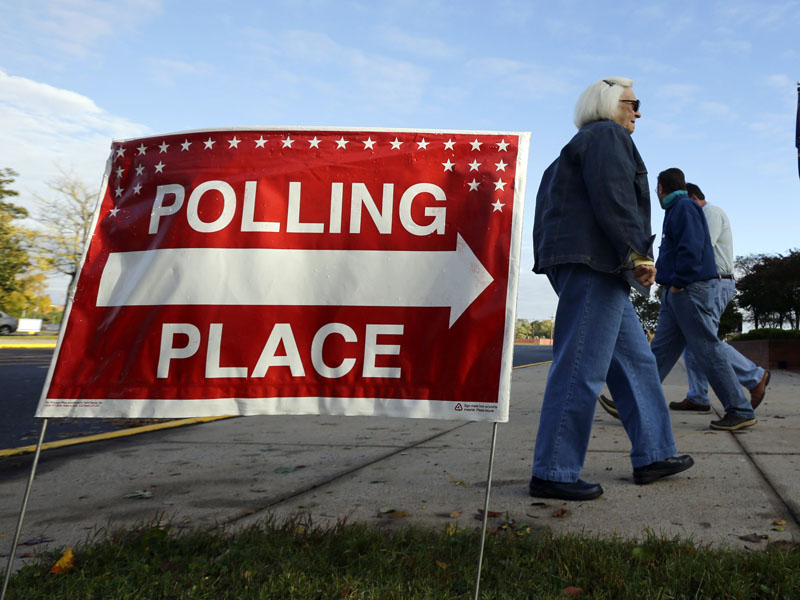
For families who lost homes or loved ones in the havoc of Hurricane Sandy, and communities still struggling to get along without power, politics may be the last thing on the mind. Yet, despite the disaster, the country will hold a presidential election next Tuesday. This nationwide coordinating effort will go on as planned, one week after Sandy, even in those districts that won’t be fully “back to normal” for months.
Federal legislation requires Election Day to be held on the first Tuesday after the first Monday every four years. Nothing in the Constitution grants federal institutions the power to postpone that date, according to the Congressional Research Service. However, it’s the states’ authority, not Washington’s, to administer federal elections, and a handful have passed into state law the power to postpone in emergency circumstances.
That said, the possibility of postponement is unlikely. “Even states with an emergency plan might find themselves facing litigation over specific ways in which they’ve implemented their emergency plan,” said Steven Huefner, professor at Ohio State’s Moritz College of Law. Simply put, it’s safest to stay the course; whether you live in Alaska, the Midwest, or hurricane-affected New Jersey, Nov. 6 will most likely be your Election Day.
For those officials in districts still reeling from Sandy, attention has turned to moving resources around to make sure everyone who wants to vote can do so. If schools, churches, or other polling places have been damaged by the storm, new venues will have to be found and voting machines transferred. Of course, the voting machines themselves may pose a problem in areas where electricity is still out. The Voting Technology Project reports that two out of every five counties nationwide use electronic voting machines. Some can work off batteries while others need consistent external power.
But a change in polling place may not be enough for some Sandy-affected voters, many of whom will have to navigate a complicated schedule in the coming weeks of recovery and repair. To make it easier for them, Maryland Gov. Martin O’Malley has extended early voting hours to 9pm and extended the deadline to request absentee ballots until Wednesday night. Others, like New Jersey Gov. Chris Christie, have shelved these problems to deal with greater ones.“I don’t give a damn about Election Day,” Christie said on Tuesday. “It doesn’t matter a lick to me. I’ve got much bigger fish to fry.” Indeed, New Jersey has an estimated 2 million still without power. Coastal towns like Seaside Heights and Atlantic City have been devastated. Even now, a gas fire is tearing through homes in Brick Township, and lines are growing at gas stations across the state as fuel becomes scarce. With all this to occupy the minds of New Jersey residents, next week’s presidential election may feel trivial and far away, but it will be held on Nov. 6 nonetheless.
Evan Puschak Recommended


