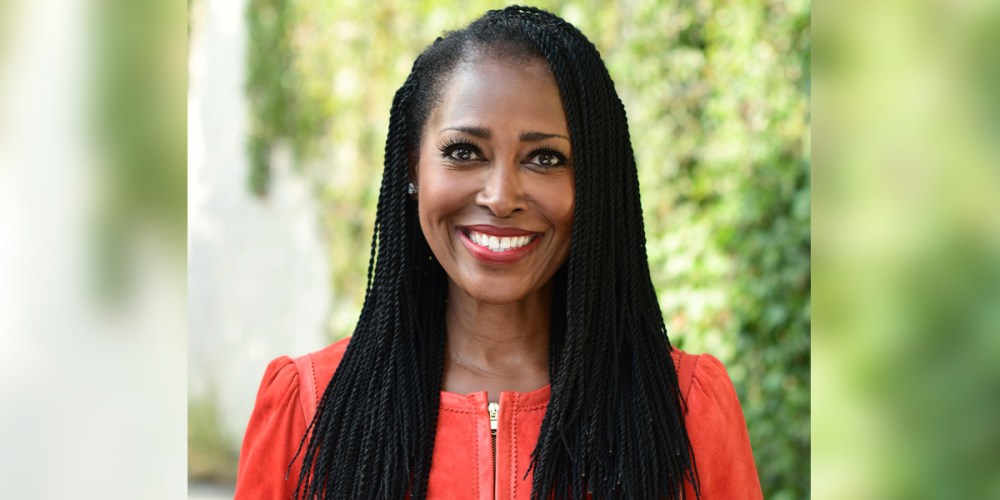
Laysha Ward is used to being the first, the only, or one of the few.
When she was growing up in rural Indiana, she was the only Black student in her class from first grade through her senior year. And today, as executive vice president and chief external affairs officer at Target, she is one of just a handful of Black women in the C-suite. In corporate America, only 1.6 percent of vice presidents and 1.4 percent of C-suite executives are Black women, according to a recent report from Lean In and McKinsey & Company.
“In many ways, it was a part of what helped develop my superpower of being able to operate in multiple environments where I was the first one… one of the few,” Ward recently told Mika Brzezinski as part of Know Your Value’s “Women In Charge” series.
She continued, “I’m certainly not the only person who has been the first one, or the only one or one of the few … But I can tell you having been in that position since I was a little girl in first grade, it can be incredibly lonely and exhausting. But it can also make you stronger and empower you to provide an important perspective that otherwise wouldn’t be heard … I learned the importance of growing relationships and being open to different cultures and points of views.”
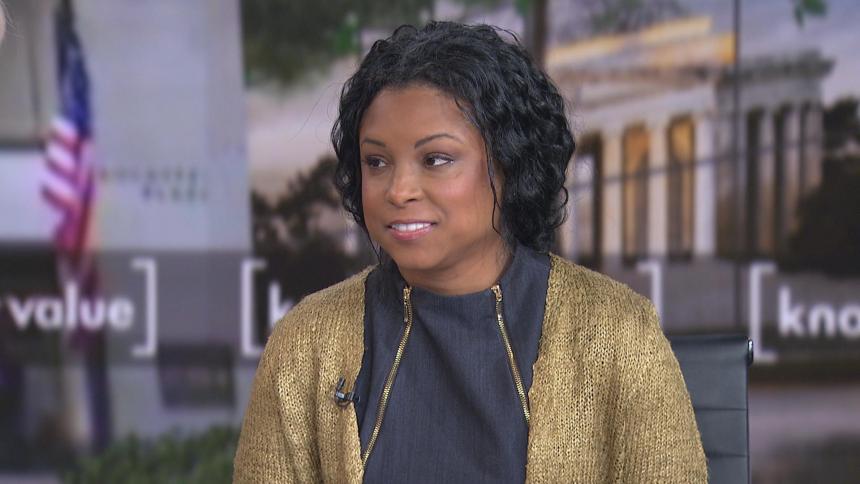
Ward, who has over 30 years of leadership experience at Target, currently oversees the company’s approach to engage and deepen relationships with cross-sector stakeholders.
Ward and Brzezinski chatted about the importance of “connection currency,” why everyone needs a personal board of directors, what it was like to have Coretta Scott King as a mentor and more.
Below is their conversation, which has been edited for brevity and clarity:
Mika Brzezinski: You have spoken about the importance of “connection currency,” the social capital you accrue by developing authentic relationships. Can you tell us a little bit more about that
Laysha Ward: Connection currency is really all about there being authentic human connections, real relationships, a network with people…
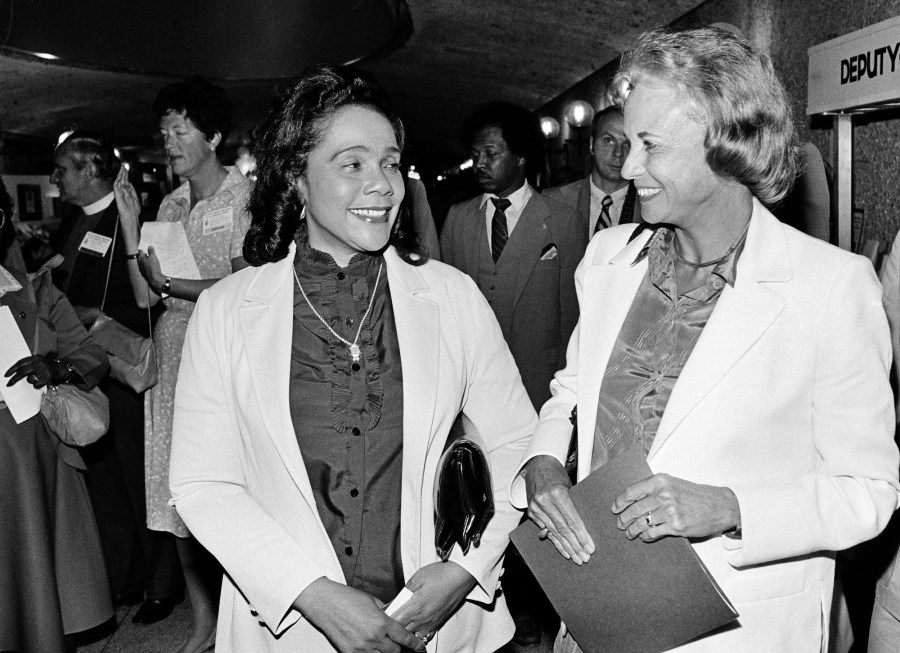
I actually had a mentor, Coretta Scott King, the wife of the late Dr. Martin Luther King. And she taught me a lesson very early on: Don’t just surround yourself with people who look like you, act like you, talk like you, or think like you. If I wanted to be a real leader, I had to be open to learning from and working with people with divergent points of view. And so, this currency connection is really all about developing authentic human connections with deep, meaningful relationships with people from all walks of life…
Brzezinski: You believe that people need a personal board of directors. Is that similar to what you’re talking about? And who should be on your board?
Ward: …Currency connection is absolutely about the … web of relationships [with] mentors, sponsors, allies. And it is a personal board of directors. It is a network of people who you can surround yourself with, who can provide a variety of perspective, both in your life and career journey …
The thing that I’ve learned over the years as well, is that it’s my mentors and sponsors serving as the allies in my life, the personal board of directors, whether I am the person who is being mentored or the person mentoring. It’s about what do you need at this stage in your life? … What transitions am I going through?
… I believe that the true measure of my success, of our success, it won’t be the awards and the honors that we receive … I think the real measure of our success is going to be how we use both our individual and collective influence of power to create more equitable opportunity, especially for women and girls. And that means we are opening doors, adding more seats at the table … We need to be breaking down glass ceilings, getting to the top and then sending the elevator back down for our sisters who don’t have the same platform that we do …
Brzezinski: You mentioned Coretta Scott King was a mentor to you. That’s incredible. What was that like?
Ward: Surreal, a blessing that is difficult for me to fully describe.
…She has been a voice of strength for me since the moment we met. We met back in 2001, and I was quite fortunate to be able to work on a project for her, as a result of my position at Target. We were doing some work with the King Center and helping them redesign the education center in the book store there ….
I had the courage to ask her when working on that project if she would mentor me. I was incredibly nervous knowing her stature and [her having] probably an already full plate. And much to my surprise, she said yes.
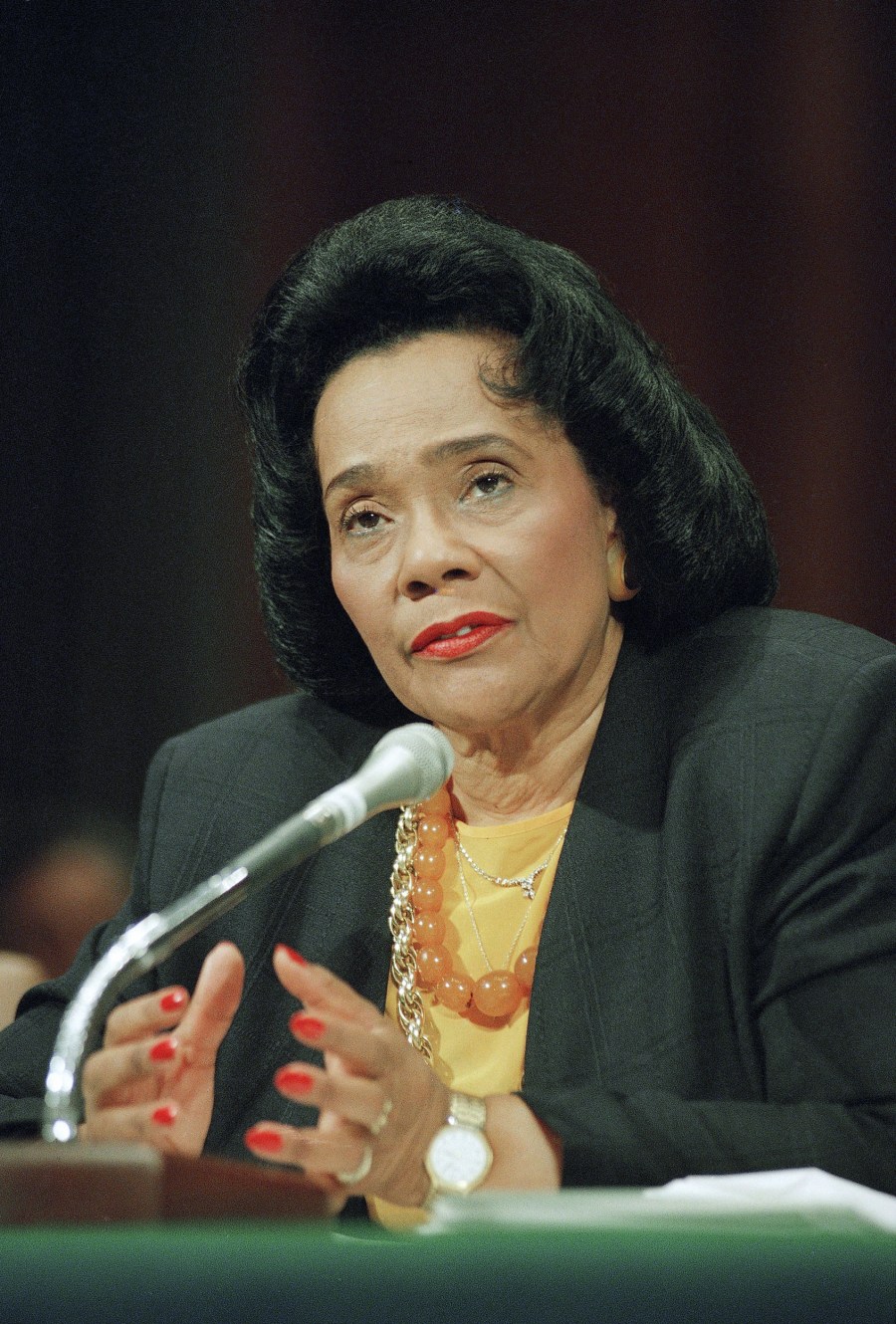
I would also encourage all of us to not sit back and wonder if this person might be willing to invest in me … All they can do is say no. And so, I’m really grateful that day I had the courage to ask her, and we’ve built a friendship ever since.
Fast forward to the following year at one of Target’s large national sales meetings, where I was a last minute add to the speaking agenda … I was speaking for the first time, the most junior speaker at this Target event in front of probably 10,000 to 15,000 people. And I was so scared, and I had very little time to prepare for it. And I remember our CEO at the time said, “You’re up, you’re going to do it.” I was afraid. And yet I remember thinking leadership isn’t the absence of fear, it’s your ability to move through it. And I thought one of the ways I’m going to move through it is phoning a friend. And so I asked my CEO if I could bring in a leader who had done work with the company, but who also mentored me: Coretta Scott King … She agreed much to my surprise on short notice. [Back stage, I told Coretta Scott King], “I’m afraid … I’m afraid not only because I just want to do the best and represent this message to our team, but I’m also doing it alongside you. And I want to make you proud as well.” And she said, “you know what? You have been given this opportunity for a reason … Do what you’ve been called upon to do.” And I thought [about her] calming words of someone who had been through so much. And you think about the role that she played in the civil rights movement … It calmed me and gave me the courage I needed to step onto that stage and to claim the opportunity she said that I was ready for. I think so often as women, we don’t think we’re as ready sometimes as our male counterparts … We feel like we have to have 100 percent, 150 percent of what might be articulated prior to our being ready. And so, I think she just reminded me that I was ready, that I was worthy, and that I should step into that opportunity … Brzezinski. Wow. That is an amazing story. I’ve been working on 50 over 50 with Know Your Value and Forbes. It’s a list that honors 50 women who have achieved significant success after 50 and are paying it forward. I’m blown away by the women that we heard from. I ask everybody this question: When you were young growing up, imagining your life, did you ever imagine your career after 50? Ward: Oh gosh, no. And you know, it’s interesting, I am over 50 now — 50 and fabulous and fierce … But I wish I’d known that earlier. But I couldn’t imagine it. And I do try to share how rich and full my life is and is still becoming … You realize that at each stage, it can just get better and better, right? Like you continue to learn, you continue to grow, you continue to contribute, and not only make your life better, but in a position to help others to be the best versions of themselves as well. … I mentor so many folks, not just at Target. And they call me “auntie.” And in Black culture, that’s a sign that I have reached a more senior age. It’s a compliment and a blanket of love and culture that I wear proudly wrapped around me because it means that I am showing up in the right way and providing support. Brzezinski: I think the message to young women, which we should send loud and strong, is that they have a long runway. Ward: … And that we are less concerned about a job or a title as much as we are making sure [to] kick it back to purpose, that we were being a service … to our family and our community. For me, my personal purpose really focused on helping women and people of color and other underrepresented communities. … I do remind, particularly young women, to be thinking about their personal purpose, as well as the organization’s progress … And so for me, the ability for Target’s purpose, which is to help all families discover the joy of everyday life, having the … alignment with my personal focus, so that I’m able to, through our culture, the company’s culture [which includes, most recently, Target’s REACH initiative to advance racial equity], my personal culture and values, make those real every day, that’s really important. And I think it made a tremendous difference in the impact that I’ve been able to make at work, at home with my family and friends, my community and in the world more broadly.
Know Your Value staff Recommended