









As moms, we need to raise our girls with confidence and independence. And at the same time, we need to prioritize teaching our sons about women so they become better men. The boys we are raising today will no doubt have women in their lives – whether it’s as friends, girlfriends, spouses or co-workers.
From talking about the division of housework, to body image, to consent, to work-life balance – we can all do better.
I’ve been spending a lot of time thinking about what I’m teaching my three sons – a 15 year old and 20-year-old twins – about women and what behaviors I’m modeling myself. From the beginning, my husband and I tried to avoid gender stereotyping, giving them baby dolls (complete with strollers) and toy kitchens, while trying to minimize the number of toy guns and swords in the house. We taught them not all girls wear dresses, and not all boys live in dirt. As they grew up, we demonstrated a fairly equal distribution of care, meal prep and household chores.
As they got older, we taught them to cook (“You will always have companionship if you can cook”). We sent them to cotillion to learn manners beyond the household. We emphasized that young women have agency in their appearance and behavior. They dress for themselves, not for you. And perhaps, most importantly, a “no” always means “no.”
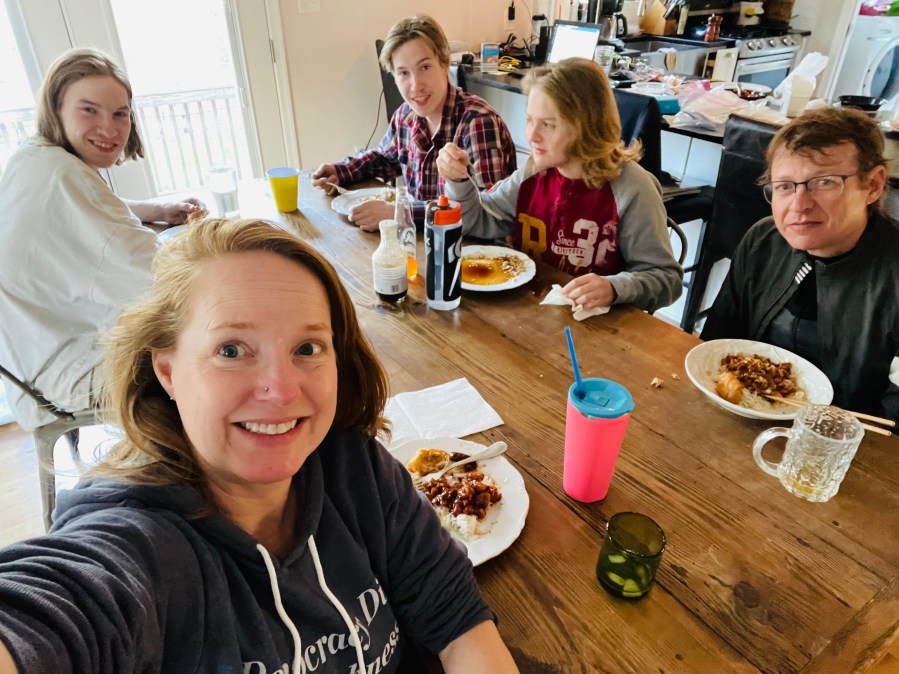
Given my best attempts, I still hear my sons occasionally make tropes about the females in their lives that make my feminist skin crawl. Like when I hear anything that starts with “all women.” Or, when I hear about “typical” girl behavior. And don’t even get me started on the words “she’s just being crazy.”
The Covid-prompted increase in screen time has been an influence, particularly on TikTok and the many memes supposedly “explaining” women. But the truth of the matter is our entire society sends signals that women are too emotional, the weaker sex, difficult, and yes, even “crazy.”
Instead of losing my cool every time I hear something like this, I’m making a concerted effort to talk to my boys about what I want them to know about the opposite sex. And of course, as young people are exploring their own gender identities, this is the perfect opportunity to have these discussions without the baggage of our own experiences and societal norms. I don’t always get it right, but I’m trying. Here’s the messaging I’m focusing on:
There is no “all girls.”
If you find yourself saying that, stop right there and check yourself. Broad strokes don’t paint a specific picture.

All bodies are beautiful.
Never make a comment about weight. Ever. Don’t make specific body remarks about ears that stick out or a weird mole on a cheek, or any body part for that matter. “You look great!” or “you’re beautiful” is all you need to say. I have to check myself on this, too. Am I perfectly happy with how I look? No, but I don’t voice that. Instead, I say things like “I’m glad these 47-year-old legs can bike 67 miles!”
Don’t make assumptions.
No, you can’t read her mind. You might think you know what she’s feeling or doing, but all you have to do is ask. Her feelings are her feelings. They are just as valid as yours.
Periods aren’t gross, they’re normal.
Despite how many times I hear “gross, mom,” I talk openly about my cycles, how it doesn’t mean we are the weaker sex, but rather the creators of life. But I also keep it real about symptoms, discomfort, and the very real, monthly impact. I made an effort to keep hygiene products in open, obvious spaces, until Anderson, then 7, shot his brothers with the Tampax Pearls from the top of the stairs.
Women’s intimate friendships with other women are very, very important. Respect that time and those relationships. Understand that they are, as they should be, a priority. Make space for those friendships in your own relationship. As the lone lady in the Folsom Frat House, I’ve had to make some serious concessions on cleanliness and order. We continue to have daily discussions on responsibility, what’s needed and what’s acceptable in the household. My husband likes a tidy kitchen, so he cleans it every night. I keep my stress low by eliminating clutter and keeping things organized. I can only hope my sons are watching us and can follow our example when they leave the nest. Our family’s chores rules have evolved from star charts of rotating assignments to expectations that you’re a good, young adult roommate. If a dishwasher is full, you empty it. You don’t just walk by a full trash can and recycling bin, sticky counters or dirty socks on the floor. Our boys have been doing their own laundry (with varying degrees of success) since middle school. Whether it’s planning and preparing meals or assembling and closing big deals, all hard work should be respected. In the home, out of the home, for pay or not, these descriptors have no gender assignment. Work loads in and out of the home shift over time. Have a discussion, divide it up, and get it done. Saying “thank you” or “well done” doesn’t hurt, either. Trust me, guys, women are stronger than you think. When you see an emotional reaction, think of it as strength to really feel, process, and act on a situation. Emotions are not weaknesses, and in many cases, are superpowers. Watch them, hear them, learn from them. Jennifer Folsom is vice president of growth at ICF Next. She lives in Alexandria, Virginia, with her husband Ben and sons. Her practical guide to modern working motherhood,” The Ringmaster,” is out now.
Jennifer Folsom Recommended


Female friends are often their tribe.
Chores don’t have gender assignments.

All work is work, and should be respected.
Women are way, way stronger than you think.
