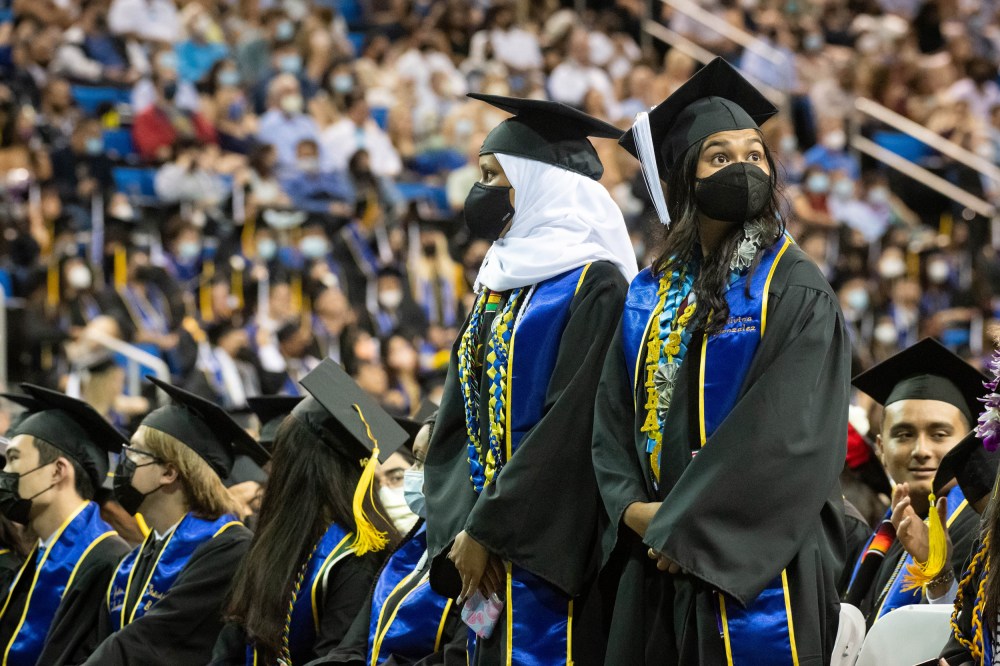
When Cache Roberts graduated from Miami University in May of 2021 with a bachelor’s degree in media, culture, and English professional writing, she never expected to be out of a full-time role just 16 months later. She has since applied to dozens of content creation jobs and tried freelancing with the hopes of landing something more permanent.
“I’m applying to roles pretty often, like every day. But I always get to writing assessments or third interviews and then get nothing back. It’s really discouraging,” said Roberts, 23. “…It’s just difficult to land something full time with benefits and a salary.”
Roberts, like many other young, recent graduates, are having a hard time getting hired. While job gains across the country remain strong — over 500,000 jobs were added in July — the numbers for recent grads tells a different story. According to the Federal Reserve Bank of New York, unemployment rates for recent graduates are higher than the national average of all workers. In June of this year, unemployment rate for this demographic was 4.1 percent, compared to 3.5 percent of all workers in the U.S.
While a 0.6 percent gap may seem small on paper, it’s quite significant, according to experts, including gender economist and CEO of Pipeline Equity, Katica Roy. “Closing that 0.6 is important, specifically to tame inflation and economic growth. We all benefit with more people in the workforce, especially now where there are two job openings for every one person.”
The data also showed that in the last few months, while the national average unemployment rate has improved, that of recent college grads has worsened. This trend predates the pandemic. Since 2018, there have been higher unemployment rates among young college grads relative to the overall population.
This could be happening for several reasons. “Similar to 2018, the labor market is tight and recent college graduates are competing with all workers, instead of benefitting from degree requirements put up by employers,” Joelle Gamble, chief economist at the U.S. Department of Labor said. “There’s some evidence that employers have been relaxing or eliminating degree requirements in order to attract workers. The labor force participation of recent college graduates could be increasing as more of them look for work — now that they are out of school.” While that doesn’t explain the 2018 trend, it could explain the jump in unemployment rates for recent graduates in June and the slight decline in July, found in the data released by the U.S Bureau of Labor Statistics.
Recent graduates who are also women of color may fare even worse when it comes to getting jobs. Women already lost more jobs during the pandemic, and job recovery has also been slower, Sarah Jane Glynn, a senior advisor at the U.S. Department of Labor’s Women’s Bureau, explained. “While young people today experience less gender-based occupational segregation compared to prior generations, there are still strong gendered differences in the types of jobs workers end up in, and race-based occupational segregation has not declined measurably.”

The International Labor Organization released data earlier this August, showing that young women are worse off than young men in finding employment. Studies also show that young women entering the workplace don’t earn the same as their male counterparts starting out, making it harder for them to ever catch up. The current gender pay gap also confirms that equity pay is still a distant reality. In 2022, Asian women earn 75 cents for every dollar a white, non-Hispanic man makes. For Black women it’s 58 cents, with Latinas receiving only 49 cents.
Roy said there are larger gender equity issues at stake when it comes to young women getting employment. “If you just look at recent college graduates, women are 67 percent of all loan holders for student loans, so not only do women have less money coming into our wallets, we have more money coming out.” This is an issue that affects all American taxpayers, Roy explained. “Women who don’t earn equitable pay are more likely to be on social assistance programs which means that taxpayers are essentially subsidizing this pay gap.” She also said that “the U.S. could actually close the social security savings gap by a third if we closed the gender pay gap.”
Kateryn Ferreira, who graduated with her master’s degree in public health in 2020 is also unemployed, despite having eight years of education and experience under her belt. Ferreira, 27, noted she’s interviewed for hundreds of jobs. “Everybody’s like, ‘Oh yeah, your resume looks impressive. We’re impressed by your education and your experience.’ And inside of my head, I’m like ‘why aren’t they calling back?’” While Ferreira is not letting up on finding a full-time job, she’s also widening her prospects of work in areas she hadn’t considered before, like marketing. She’s also using this time on personal projects, including a podcast she started that’s focused on personal development and mental wellness.
Claire Wasserman, founder of Ladies Get Paid, an organization that champions the professional and financial advancement of women, advised young graduates who are struggling to find employment to start their own side hustle, just as Ferreira has done. “Not only will you continue to learn and stay motivated, but you’ll also have more things to talk about on your resume. Being self-directed will make you stand out.” Alexandra Carter, a negotiation expert and professor at Columbia Law School, recommended taking online courses in your area of specialty and taping into as many networks as you can, “from your college, your hometown, your religious or ethnic background – even groups centered around a hobby you enjoy. You never know where you might meet someone who could open that door for you.” To stand out in a crowded labor market in the application process, Wasserman said to integrate keywords from the job description and company’s website into your resume, cover letter and any other application materials. Don’t forget to mention your prior on-the-job wins, she added. “Being able to highlight your growth is also key. Give concrete examples of how you’ve learned fast will give them confidence that you’ll also learn quickly on the job.” Julia Haber, founder of Home From College, a platform that helps connect college students to job opportunities, said it’s important to get creative when you lack experience on your resume. “Use alternative channels to show your worth,” she recommended. “This could include, creating an analytical TikTok on the company and showing the touchpoints you admire about the brand or even coming up with a mini-project with a few recommendations for the brand.” Workforce experts stressed it’s important to realize that even if you’ve had some difficulty finding full-time employment, it doesn’t diminish your value. “Just as important is how you tell your story and frame your own strengths,” said Carter.
Daniela Pierre-Bravo
Daniela Pierre-Bravo is a journalist and author and founder of Acceso Community. She is a co-author of “Earn It” with Mika Brzezinski. Her solo book, “’The Other: How to Own Your Power at Work as a Woman of Color,” is out now. Follow her on X and Instagram @dpierrebravo. Recommended