








Sometimes, the lawmakers on Capitol Hill move in mysterious ways.
To the surprise of much of the beltway, a two-year bipartisan budget deal sailed easily through the House on Thursday night – staving off the threat of yet another government shutdown. Yes, this is the same GOP-controlled House that has for years been best known for its inability to compromise with Democrats on pretty much anything, resulting in the government nearly going into default and October’s partial government shutdown.
Ironically, this time around, it’s the Senate, not the House, that’s refusing to play nice. The upper chamber closes shop for the holidays at the end of next week, and there’s no guarantee the Democrat-controlled body will sign off on the House’s bill.
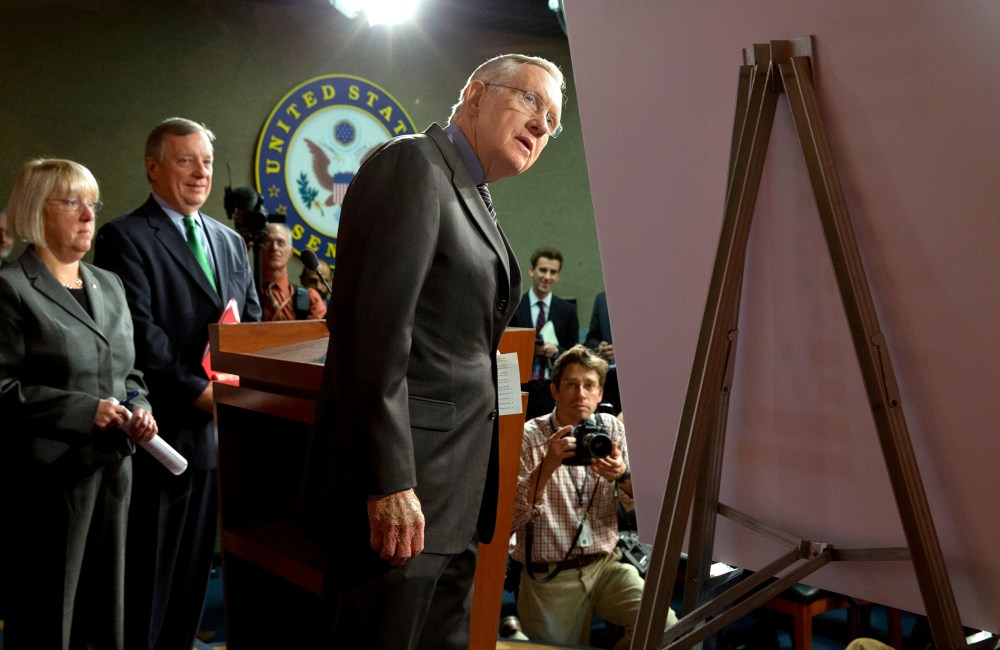
Senate Dems need at least five Republicans to side with them for the budget to pass and be signed into law by President Obama. But not one Senate conservative has officially backed it. And Republican Jeff Sessions of Alabama says his Senate colleagues plan to filibuster the House budget deal, brokered by House Budget Committee chairman Rep. Paul Ryan of Wisconsin and Senate Budget Committee chairwoman Sen. Patty Murray of Washington.
And remember: While the Senate recently passed filibuster reforms, it does not apply to legislative issues like this one.
Republican Sens. Marco Rubio of Florida, Tom Coburn of Oklahoma, Ted Cruz of Texas, Kelly Ayotte of New Hampshire, Lindsey Graham of South Carolina and Rand Paul of Kentucky have all publicly said they were against the deal. There are also reports that Senate Minority Leader Mitch McConnell—who’s up for re-election–plans to vote against it. The Senate is expected to take up the budget agreement on Tuesday.
The budget plan sets discretionary spending at $1.012 trillion for the current fiscal year and raises it to $1.014 trillion for fiscal year 2015. It ends some of the automatic spending cuts, known as sequestration, on federal agencies and replaces them with more targeted cuts.
Critics say they’re opposed to cuts to pension benefits, that the spending plan doesn’t expand unemployment benefits, and doesn’t address the debt ceiling.
The upcoming battle in the Senate caps a week of political infighting in the upper chamber of Congress, which is being attributed to Senate Democrats’ decision last month to “go nuclear.” The move got rid of a 60-vote requirement to get the president’s nominees confirmed.
But Republicans, in turn, employed delaying tactics, running the clock for 30 hours until nearly 1 a.m. on Thursday to confirm Obama’s pick, Nina Pillard, to serve on the powerful D.C. Circuit Court.
The tactic threatens Senate Majority Leader Harry Reid’s desire to finish 2013’s legislative business, as there are several more nominee votes scheduled over the next few days. Some Republicans, still fuming over the rules change, suggested they would not relent. “Assuming we take the Senate in 2014, I think it will end in January 2015,” said Republican Sen. Saxby Chambliss of Georgia. Confirming the nominees, coupled with the budget agreement and the annual defense policy bills give the Senate a full plate before they adjourn on Dec. 20. Ironically, one of the biggest winners of the week is House Speaker John Boehner, who has been pilloried by Tea Party groups. He managed to get his party in line to pass the agreement and blasted conservative groups for their knee-jerk opposition to the budget agreement further dividing tea party Republicans and establishment GOPers.Recommended


