








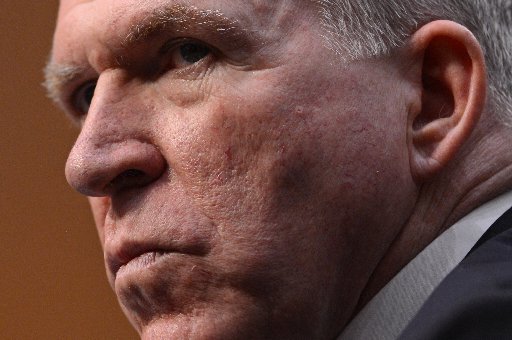
John Brennan, President Obama’s nominee to lead the Central Intelligence Agency, defended the Obama administration’s controversial drone policy during his confirmation hearing Thursday before the Senate Intelligence Committee.
“I never believe it’s better to kill a terrorist than detain him,” the veteran intelligence agent told lawmakers, pointing to the wealth of information a captured terrorist can provide. “We only take such action as a last resort to save lives when it’s determined that no other action can be taken.”
Brennan also disclosed that after reading a 6,000 page committee report, he is uncertain whether the enhanced interrogation technique known as waterboarding yielded valuable intelligence. “At this point… I do not know what the truth is,” he told the committee. He refused to give a yes or no answer on whether the practice constitutes torture, but declared that “waterboarding never should have been employed, and never will be if I have anything to do with it.” Brennan’s chance at a nomination to lead the CIA in the president’s first term was scuttled by controversy over his role in the Bush administration’s controversial interrogation program.
During the three-and-a-half hours of testimony and questioning Thursday afternoon, Brennan disclosed in response to a question from Sen. Saxby Chambliss (R-Ga.) that fifteen years earlier, he opposed a planned strike on Osama bin Laden, months before the al Qaeda leader carried out an attack on two U.S. embassies in east Africa. “Based on what I had known at the time, I didn’t think it was a worthwhile operation and had low chances of success,” Brennan said. Then with the CIA, he was not in a position to call the operation off; President Bill Clinton’s national security adviser Sandy Berger ultimately did so.
While the Senate committee pressed Brennan on a range of issues from drone policy and enhanced interrogation techniques to transparency and media leaks, the Obama administration’s unprecedented use of drones–and newly disclosed legal reasoning for the targeted killing of American citizens abroad–figured prominently in the afternoon’s proceedings. But the issue did not dominate the debate between the nominee and lawmakers.
On Monday NBC News revealed a confidential “white paper” (authored by the Justice Department and presented to the Senate Intelligence and Judiciary committees in June) which concluded that it is legal to kill American citizens who are believed to be “senior operational leaders” of al Qaeda or an associated force, provided that person poses an “imminent threat” to the United States. Critics say the Obama administration has used a more expansive definition of the word “imminence” than it had publicly acknowledged. According to the DOJ memo, engagement in an active, specific plot against the U.S. is not necessary to be considered an “imminent threat.”
In response to the criticism and to calls by lawmakers to divulge the full legal reasoning driving the policy, the Obama administration said it would provide the legal memoranda to Senate and House intelligence committee members. Sen. Ron Wyden (D-OR.), one of the most outspoken critics of the administration’s drone policy, called the release of the legal documents “encouraging” and “a good first step” to ensuring accountability and transparency. But he said he wanted to see “any and all” legal opinions on targeted killing, and that it is “not clear that’s what was provided.” Discussing the existence of legal parameters for targeted killings, Brennan told the assembled senators that if the CIA breaks the law on his watch, “I would damn well make sure this committee had that information. “
Brennan coolly fielded the senators’ questions and remained unemotional when his opening statement was interrupted a handful of times by members of the grassroots social-justice organization Code PINK. Chair Dianne Feinstein restored order after clearing the chamber. In an exceptionally passionate exchange, Brennan disagreed with Sen. James Risch’s allegation that “the leak that the DOJ is looking for is right here in front of us,” regarding Brennan’s comments to media about a May 2012 plot by al Qaeda in Yemen to blow up an airliner bound for the U.S. with a bomb similar to the one attempted in the 2009 Christmas Day plot. Brennan reportedly told media that “there was no active threat during the bin Laden anniversary because… we had inside control of the plot.” Brennan acknowledged making the comment but maintained that it did not reveal any confidential information. “I’m not a subject, I’m not a target, I am a witness,” Brennan told the committee. “I go to bed at night worrying I didn’t do enough that day to protect the American people.” Feinstein asked the committee to submit additional questions by Friday afternoon. The committee will hold a closed hearing early next week, and a full Senate confirmation vote will follow.
Erin Delmore Recommended


