








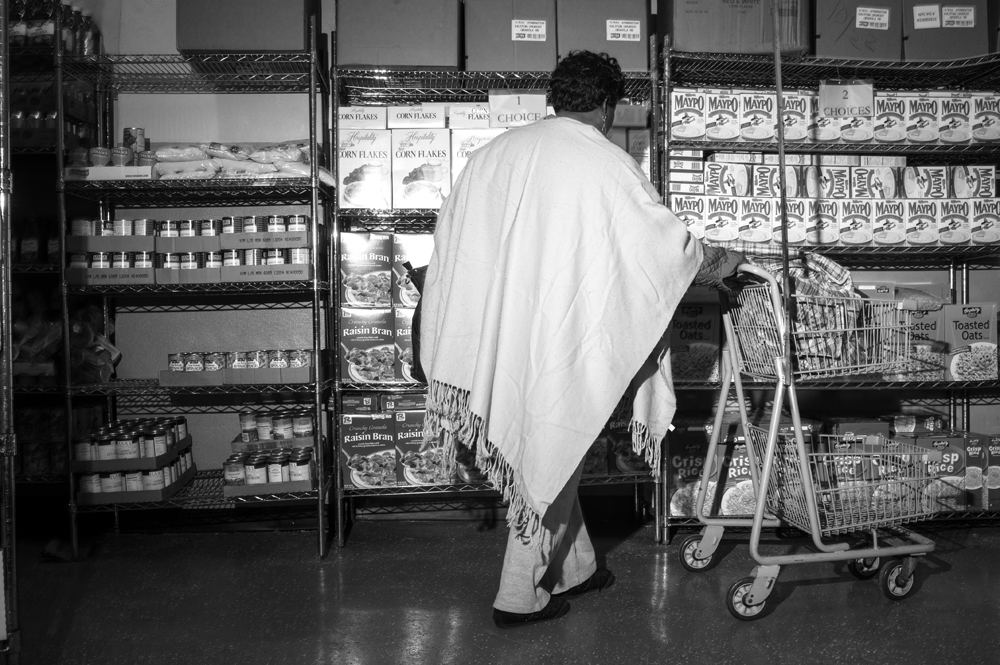
Several major American cities are facing greater need for emergency food assistance, even as they are losing some of the resources they need to provide it. That’s the finding of the U.S. Conference of Mayors’ 2013 Hunger and Homelessness Survey, which takes a look at food insecurity and poverty in 25 cities across the country.
Because the report looks at a select group of municipalities, it is not intended to provide a general snapshot of hunger and homelessness in the United States. Instead, the survey shows how national trends have affected the poor within individual cities like Chicago, Boston, Dallas, Los Angeles, and Washington, D.C.
Of the cities that were polled, 83% reported an increase in demand for emergency food assistance over the course of 2013. A full 72% of those cities also reported that they would have fewer resources to meet that demand in 2014. Edith Murnane, the Director of Food Initiatives in the Boston mayor’s office, said food banks in her city were struggling to meet rising demand in the face of declining federal aid.
“What we’re seeing is the reduction in federal resources impacting folks in Boston,” she said. “And since close to 32% of the budget for the Greater Boston Food Bank comes from federal and state funding, when there are cuts in that funding it impacts their ability to provide for their constituents.”
As msnbc has previously reported, the federal government is aggressively cutting anti-hunger programs, even as America’s poor find themselves in a historic hunger crisis. Thanks to the sequester, food banks across the country lost 5% of their TEFAP funds, which subsidize food storage and distribution. The food stamp program automatically lost $5 billion on November 1, and Congress is expected to cut benefits even further in the near future.
In 2012, nearly 50 million Americans suffered from food insecurity, according to a recent report from the Department of Agriculture. When the 2013 numbers are released, they could be even more dramatic. Food banks across the country have already reported a stark increase in the number of clients seeking emergency food assistance since the November 1 cuts went into effect. The Greater Food Bank of Boston has seen a 10% increase in demand, Murnane told msnbc. Many of those seeking emergency food assistance are employed, and some of them make too much income to qualify for food stamps. The Massachusetts nonprofit Project Bread reports that, among the clients of food pantries it funds in Boston, only 59% receive food stamps and 41% have jobs. While spiking hunger and diminishing emergency food assistance resources are a national issue, the 25 cities included in the Hunger and Homelessness Survey are bucking the broader trend when it comes to homelessness. A slim majority of the cities reported an increase in homelessness, even though homelessness is declining nationally. CORRECTION, 12/20: An earlier version of this article reported that Project Bread operated a food pantry in Boston. In fact, Project Bread funds various independent food pantries in the city of Boston.
Ned Resnikoff is an urban policy analyst, researcher, writer, and editor. His byline has appeared in a variety of publications, including the New York Times, San Francisco Chronicle, Dissent, and The Nation. He writes the newsletter Public Comment, which can be found at publiccomment.blog. Recommended


